
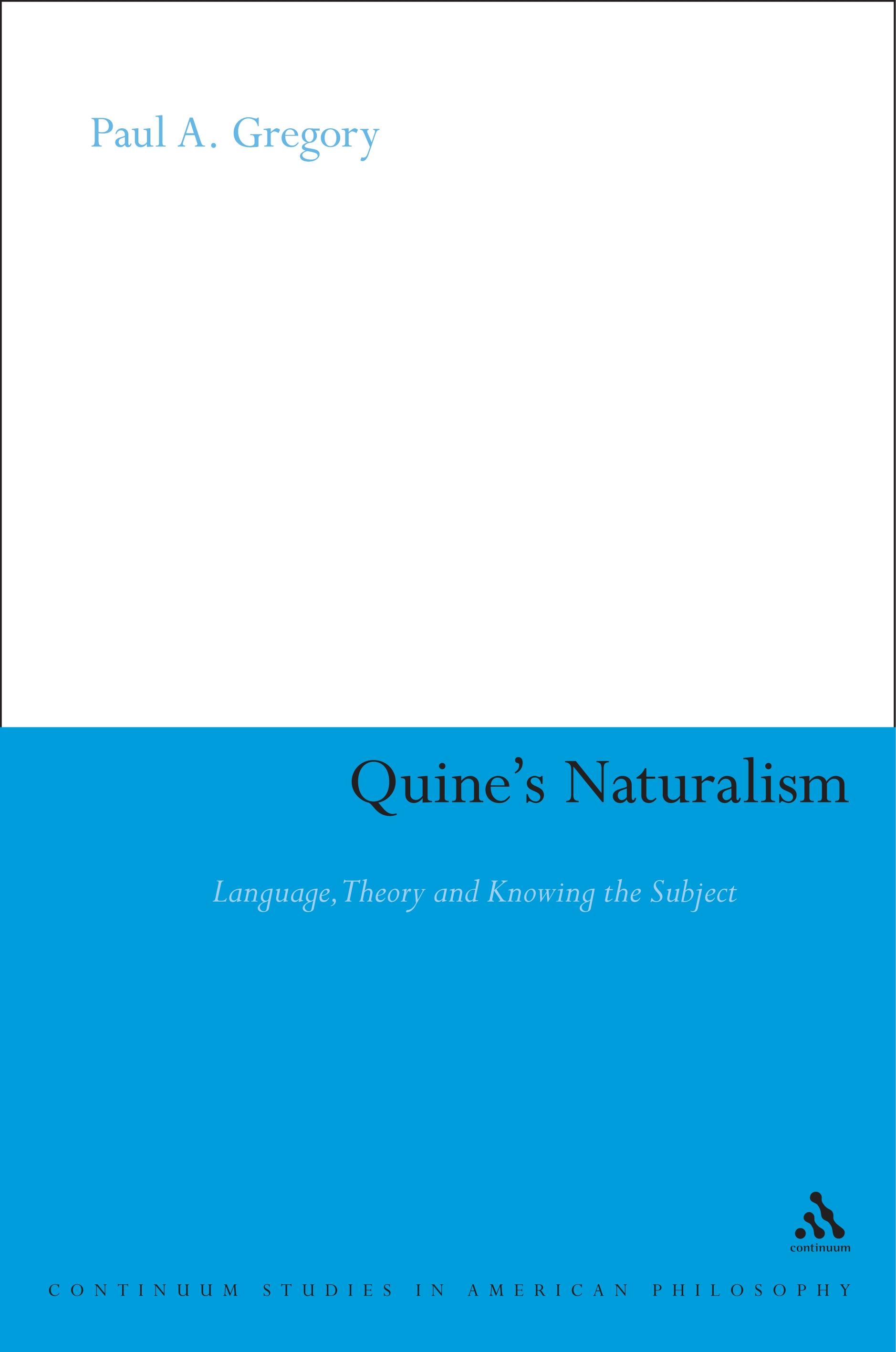
W. V. Quine was the most important naturalistic philosopher of the twentieth century and a major impetus for the recent resurgence of the view that empirical science is our best avenue to knowledge. His views, however, have not been well understood. Critics charge that Quine's naturalized epistemology is circular and that it cannot be normative. Yet, such criticisms stem from a cluster of fundamental traditional assumptions regarding language, theory, and the knowing subject - the very presuppositions that Quine is at pains to reject. Through investigation of Quine's views regarding language, knowledge, and reality, the author offers a new interpretation of Quine's naturalism. The naturalism/anti-naturalism debate can be advanced only by acknowledging and critiquing the substantial theoretical commitments implicit in the traditional view.
Gregory argues that the responses to the circularity and non-normativity objections do just that. His analysis further reveals that Quine's departure from the tradition penetrates the conception of the knowing subject, and he thus offers a new and engaging defence of Quine's naturalism.
Gregory argues that the responses to the circularity and non-normativity objections do just that. His analysis further reveals that Quine's departure from the tradition penetrates the conception of the knowing subject, and he thus offers a new and engaging defence of Quine's naturalism.
Paga facilmente con carta, Klarna, Apple Pay o Google Pay. Non sei soddisfatto? Hai sempre 14 giorni per il rimborso. Leggi di più nei nostri termini. Per qualsiasi domanda, scrivici a hello@memmo.org.
Memmo rende lo studio più facile, ovunque tu sia nel mondo. Qui trovi i tuoi libri di testo e strumenti di studio intelligenti, tutto in un unico posto: riassunti, quiz, podcast e flashcard. E poi c'è Ted, il tuo compagno di studio che risponde a ogni tua domanda. Oltre 50.000 studenti studiano già qui: è stato creato per aiutarti a imparare più velocemente e a stressarti meno.