
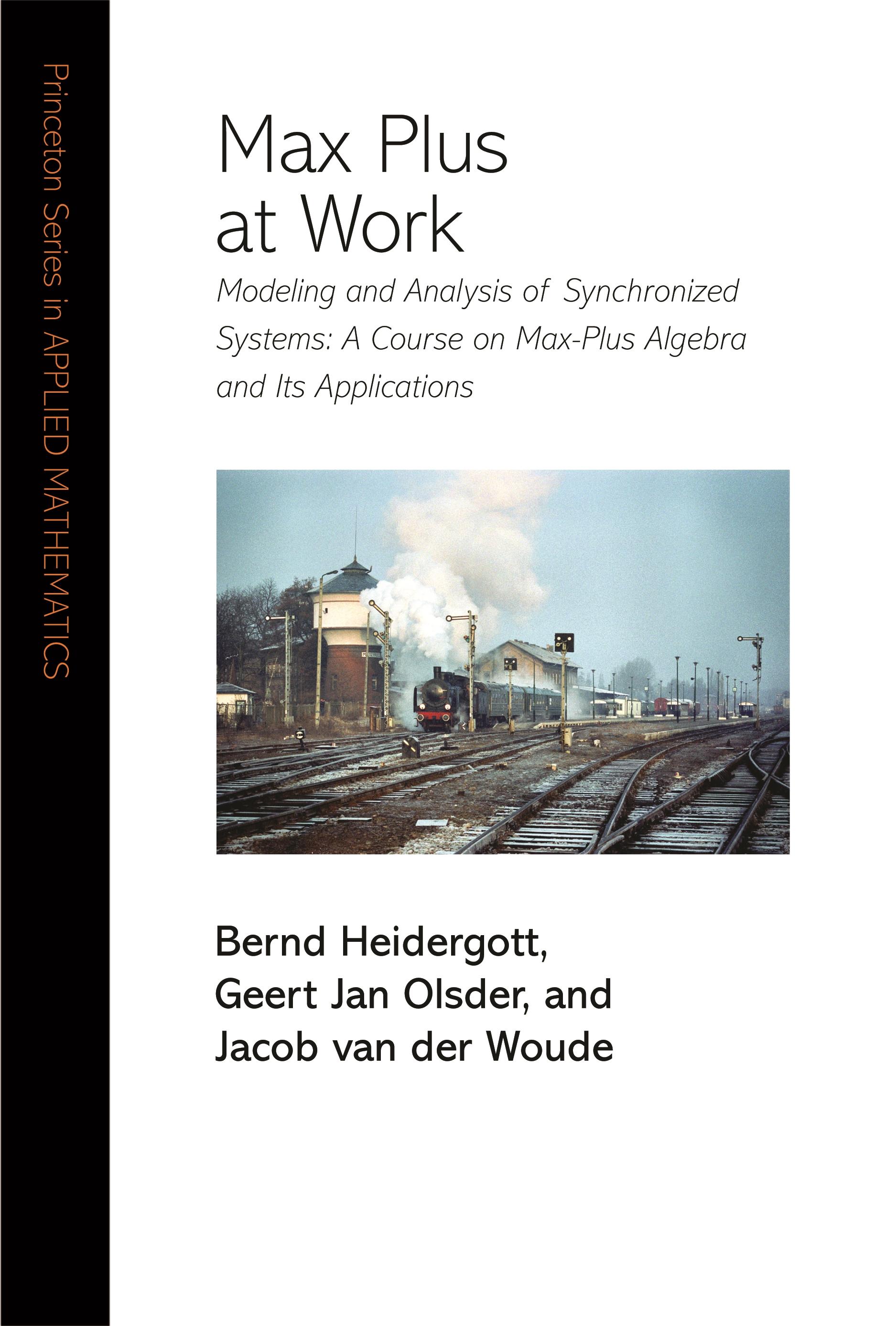
Trains pull into a railroad station and must wait for each other before leaving again in order to let passengers change trains. How do mathematicians then calculate a railroad timetable that accurately reflects their comings and goings? One approach is to use max-plus algebra, a framework used to model Discrete Event Systems, which are well suited to describe the ordering and timing of events. This is the first textbook on max-plus algebra, providing a concise and self-contained introduction to the topic.
Applications of max-plus algebra abound in the world around us. Traffic systems, computer communication systems, production lines, and flows in networks are all based on discrete even systems, and thus can be conveniently described and analyzed by means of max-plus algebra.
The book consists of an introduction and thirteen chapters in three parts. Part One explores the introduction of max-plus algebra and of system descriptions based upon it. Part Two deals with a real application, namely the design of timetables for railway networks. Part Three examines various extensions, such as stochastic systems and min-max-plus systems. The text is suitable for last-year undergraduates in mathematics, and each chapter provides exercises, notes, and a reference section.
Paga facilmente con carta, Klarna, Apple Pay o Google Pay. Non sei soddisfatto? Hai sempre 14 giorni per il rimborso. Leggi di più nei nostri termini. Per qualsiasi domanda, scrivici a hello@memmo.org.
Memmo rende lo studio più facile, ovunque tu sia nel mondo. Qui trovi i tuoi libri di testo e strumenti di studio intelligenti, tutto in un unico posto: riassunti, quiz, podcast e flashcard. E poi c'è Ted, il tuo compagno di studio che risponde a ogni tua domanda. Oltre 50.000 studenti studiano già qui: è stato creato per aiutarti a imparare più velocemente e a stressarti meno.