
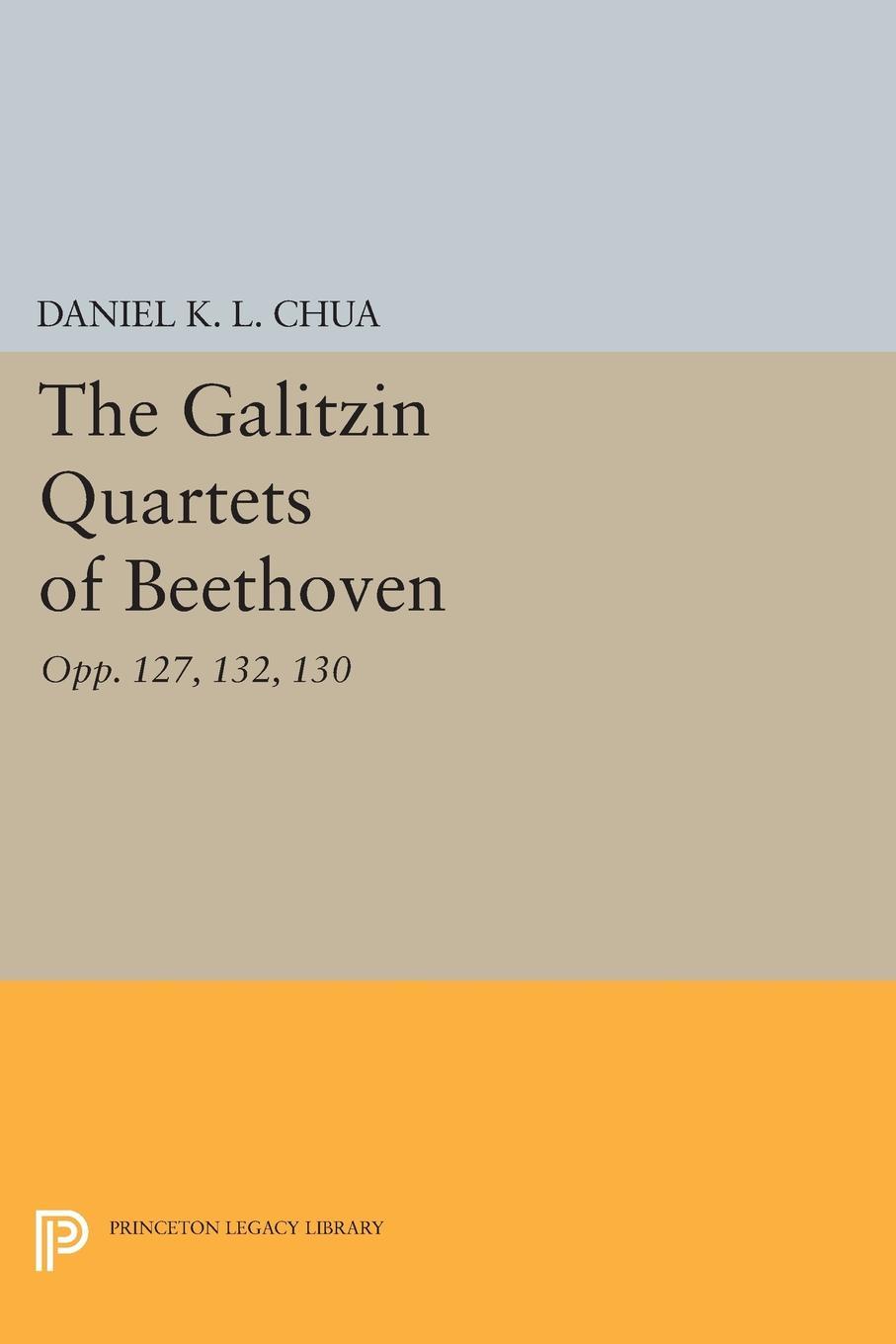
This study is an analysis of the first three of Beethoven's late quartets, Opp. 127, 132, and 130, commissioned by Prince Nikolai Galitzin. The five late quartets, usually considered as a group, were written in the same period as the Missa solemnis and the Ninth Symphony, and are among the composer's most profound musical statements. Daniel K. L. Chua believes that of the five quartets the three that he studies trace a process of disintegration, whereas the last two, Opp. 131 and 135, reintegrate the language that Beethoven himself had destabilized.
Through analyses that unearth peculiar features characteristic of the surface and of the deeper structures of the music, Chua interprets the "Galitzin" quartets as radical critiques of both music and society, a view first proposed by Theodore Adorno. From this perspective, the quartets necessarily undo the act of analysis as well, forcing the analytical traditions associated with Schenker and Schoenberg to break up into an eclectic mixture of techniques. Analysis itself thus becomes problematic and has to move in a dialectical and paradoxical fashion in order to trace Beethoven's logic of disintegration. The result is a new way of reading these works that not only reflects the preoccupations of the German Romantics of that time and the poststructuralists of today, but also opens a discussion of cultural, political, and philosophical issues.
Originally published in 1995.
The Princeton Legacy Library uses the latest print-on-demand technology to again make available previously out-of-print books from the distinguished backlist of Princeton University Press. These editions preserve the original texts of these important books while presenting them in durable paperback and hardcover editions. The goal of the Princeton Legacy Library is to vastly increase access to the rich scholarly heritage found in the thousands of books published by Princeton University Press since its founding in 1905.
Paga facilmente con carta, Klarna, Apple Pay o Google Pay. Non sei soddisfatto? Hai sempre 14 giorni per il rimborso. Leggi di più nei nostri termini. Per qualsiasi domanda, scrivici a hello@memmo.org.
Memmo rende lo studio più facile, ovunque tu sia nel mondo. Qui trovi i tuoi libri di testo e strumenti di studio intelligenti, tutto in un unico posto: riassunti, quiz, podcast e flashcard. E poi c'è Ted, il tuo compagno di studio che risponde a ogni tua domanda. Oltre 50.000 studenti studiano già qui: è stato creato per aiutarti a imparare più velocemente e a stressarti meno.