
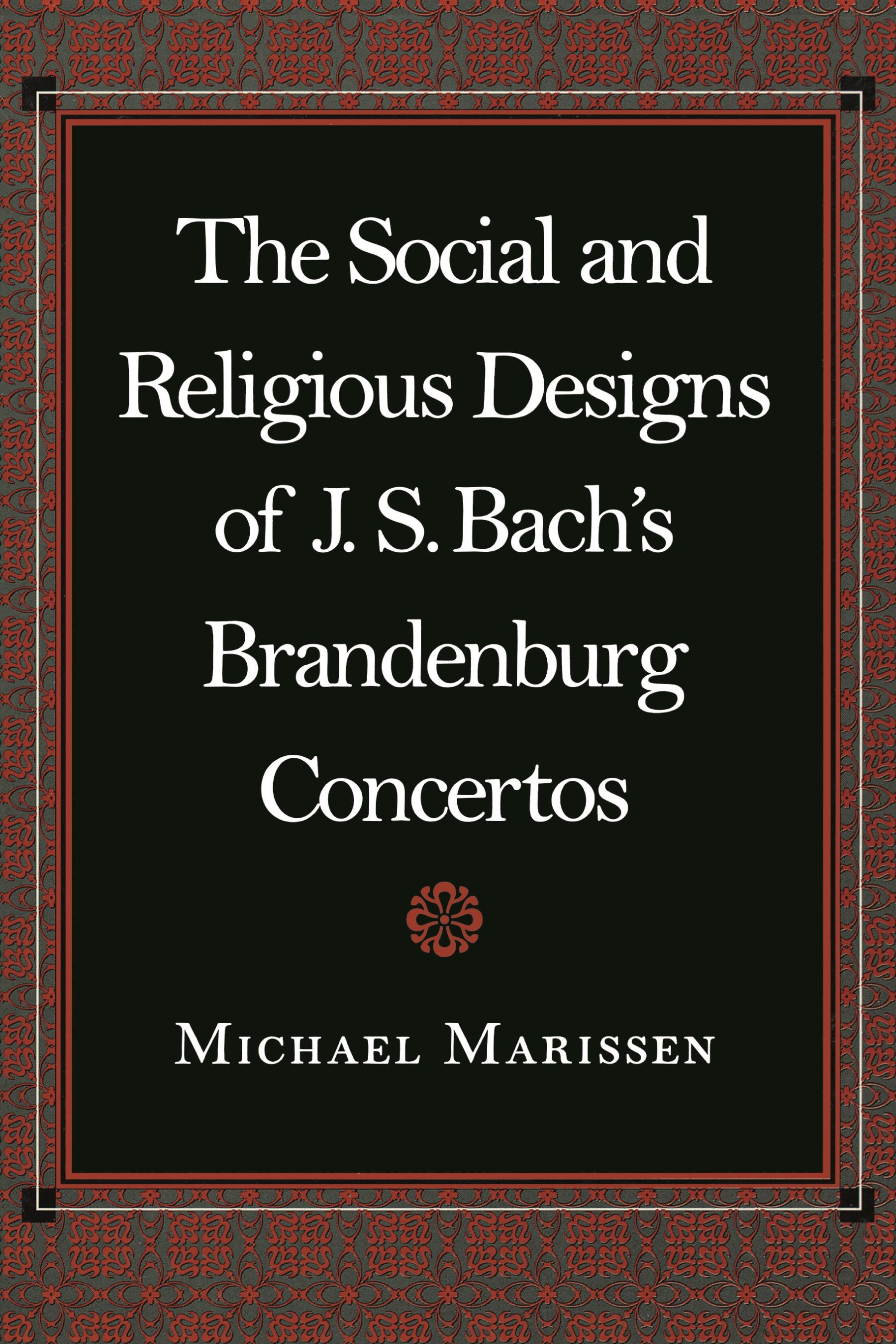
This new investigation of the Brandenburg Concertos explores musical, social, and religious implications of Bach's treatment of eighteenth-century musical hierarchies. By reference to contemporary music theory, to alternate notions of the meaning of "concerto," and to various eighteenth-century conventions of form and instrumentation, the book argues that the Brandenburg Concertos are better understood not as an arbitrary collection of unrelated examples of "pure" instrumental music, but rather as a carefully compiled and meaningfully organized set. It shows how Bach's concertos challenge (as opposed to reflect) existing musical and social hierarchies.
Careful consideration of Lutheran theology and Bach's documented understanding of it reveals, however, that his music should not be understood to call for progressive political action. One important message of Lutheranism, and, in this interpretation, of Bach's concertos, is that in the next world, the heavenly one, the hierarchies of the present world will no longer be necessary. Bach's music more likely instructs its listeners how to think about and spiritually cope with contemporary hierarchies than how to act upon them. In this sense, contrary to currently accepted views, Bach's concertos share with his extensive output of vocal music for the Lutheran liturgy an essentially religious character.
Paga facilmente con carta, Klarna, Apple Pay o Google Pay. Non sei soddisfatto? Hai sempre 14 giorni per il rimborso. Leggi di più nei nostri termini. Per qualsiasi domanda, scrivici a hello@memmo.org.
Memmo rende lo studio più facile, ovunque tu sia nel mondo. Qui trovi i tuoi libri di testo e strumenti di studio intelligenti, tutto in un unico posto: riassunti, quiz, podcast e flashcard. E poi c'è Ted, il tuo compagno di studio che risponde a ogni tua domanda. Oltre 50.000 studenti studiano già qui: è stato creato per aiutarti a imparare più velocemente e a stressarti meno.