
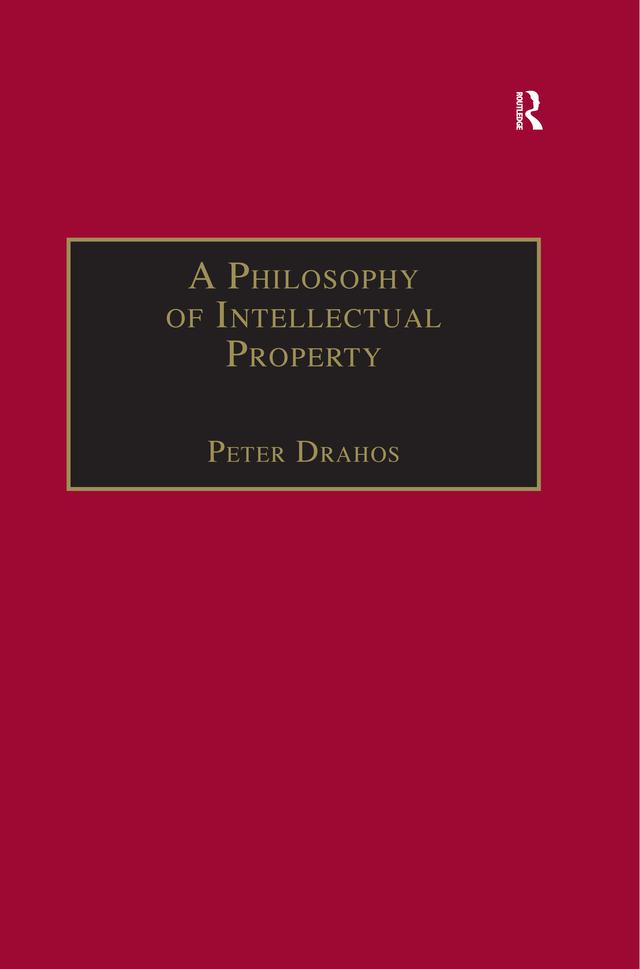
Are intellectual property rights like other property rights? More and more of the world’s knowledge and information is under the control of intellectual property owners. What are the justifications for this? What are the implications for power and for justice of allowing this property form to range across social life? Can we look to traditional property theory to supply the answers or do we need a new approach? Intellectual property rights relate to abstract objects - objects like algorithms and DNA sequences. The consequences of creating property rights in such objects are far reaching. A Philosophy of Intellectual Property argues that lying at the heart of intellectual property are duty-bearing privileges. We should adopt an instrumentalist approach to intellectual property and reject a proprietarian approach - an approach which emphasizes the connection between labour and property rights. The analysis draws on the history of intellectual property, legal materials, the work of Grotius, Pufendorf, Locke, Marx and Hegel, as well as economic, sociological and legal theory. The book is designed to be accessible to specialists in a number of fields as well as students. It will interest philosophers, political scientists, economists, legal scholars as well as those professionals concerned with policy issues raised by modern technologies and the information society.
Paga facilmente con carta, Klarna, Apple Pay o Google Pay. Non sei soddisfatto? Hai sempre 14 giorni per il rimborso. Leggi di più nei nostri termini. Per qualsiasi domanda, scrivici a hello@memmo.org.
Memmo rende lo studio più facile, ovunque tu sia nel mondo. Qui trovi i tuoi libri di testo e strumenti di studio intelligenti, tutto in un unico posto: riassunti, quiz, podcast e flashcard. E poi c'è Ted, il tuo compagno di studio che risponde a ogni tua domanda. Oltre 50.000 studenti studiano già qui: è stato creato per aiutarti a imparare più velocemente e a stressarti meno.
Potrebbe interessarti anche
Acquista il libro0