
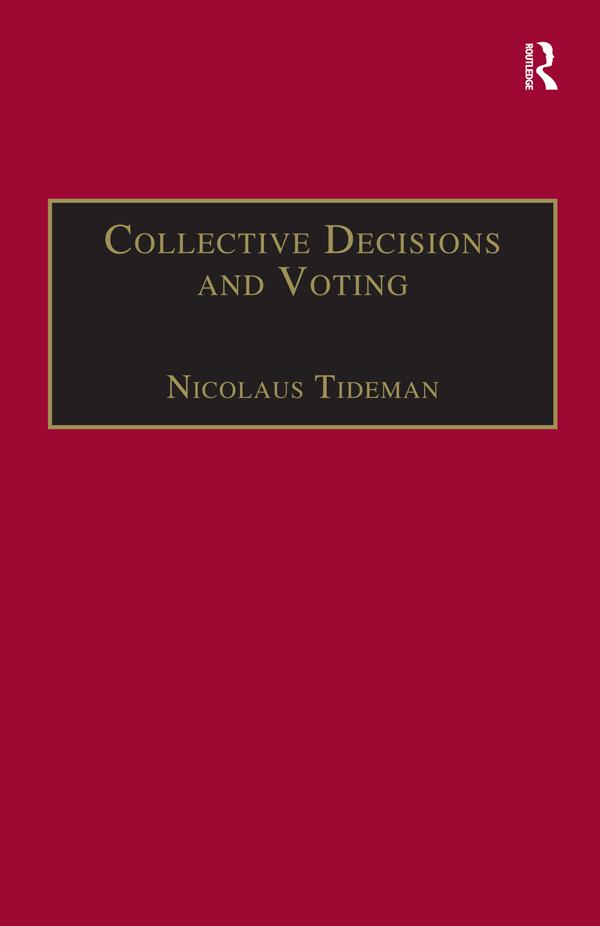
When one thinks about how collective decisions are made, voting is the method that comes naturally to mind. But other methods such as random process and consensus are also used. This book explores just what a collective decision is, classifies the methods of making collective decisions, and identifies the advantages and disadvantages of each method. Classification is the prelude to evaluation. What are the characteristics of a method of making collective decisions, the book asks, that permit us to describe a collective decision as good? The second part of the book is detailed exploration of voting: the dimensions in which voting situations differ, the origins and logic of majority rule, the frequency of cycles in voting, the Arrow and Gibbard-Satterthwaite theorems, criteria for ways of cutting through cycles and the application of these criteria to a variety of rules, voting over continuums, proportional representation, and voting rules that take account of intensities of preferences. Relatively unknown methods of voting give voting a much greater potential than is generally recognized. Collective Decisions and Voting is essential reading for everyone with an interest in voting theory and in how public choices might be made.
Paga facilmente con carta, Klarna, Apple Pay o Google Pay. Non sei soddisfatto? Hai sempre 14 giorni per il rimborso. Leggi di più nei nostri termini. Per qualsiasi domanda, scrivici a hello@memmo.org.
Memmo rende lo studio più facile, ovunque tu sia nel mondo. Qui trovi i tuoi libri di testo e strumenti di studio intelligenti, tutto in un unico posto: riassunti, quiz, podcast e flashcard. E poi c'è Ted, il tuo compagno di studio che risponde a ogni tua domanda. Oltre 50.000 studenti studiano già qui: è stato creato per aiutarti a imparare più velocemente e a stressarti meno.
Potrebbe interessarti anche
Acquista il libro0