
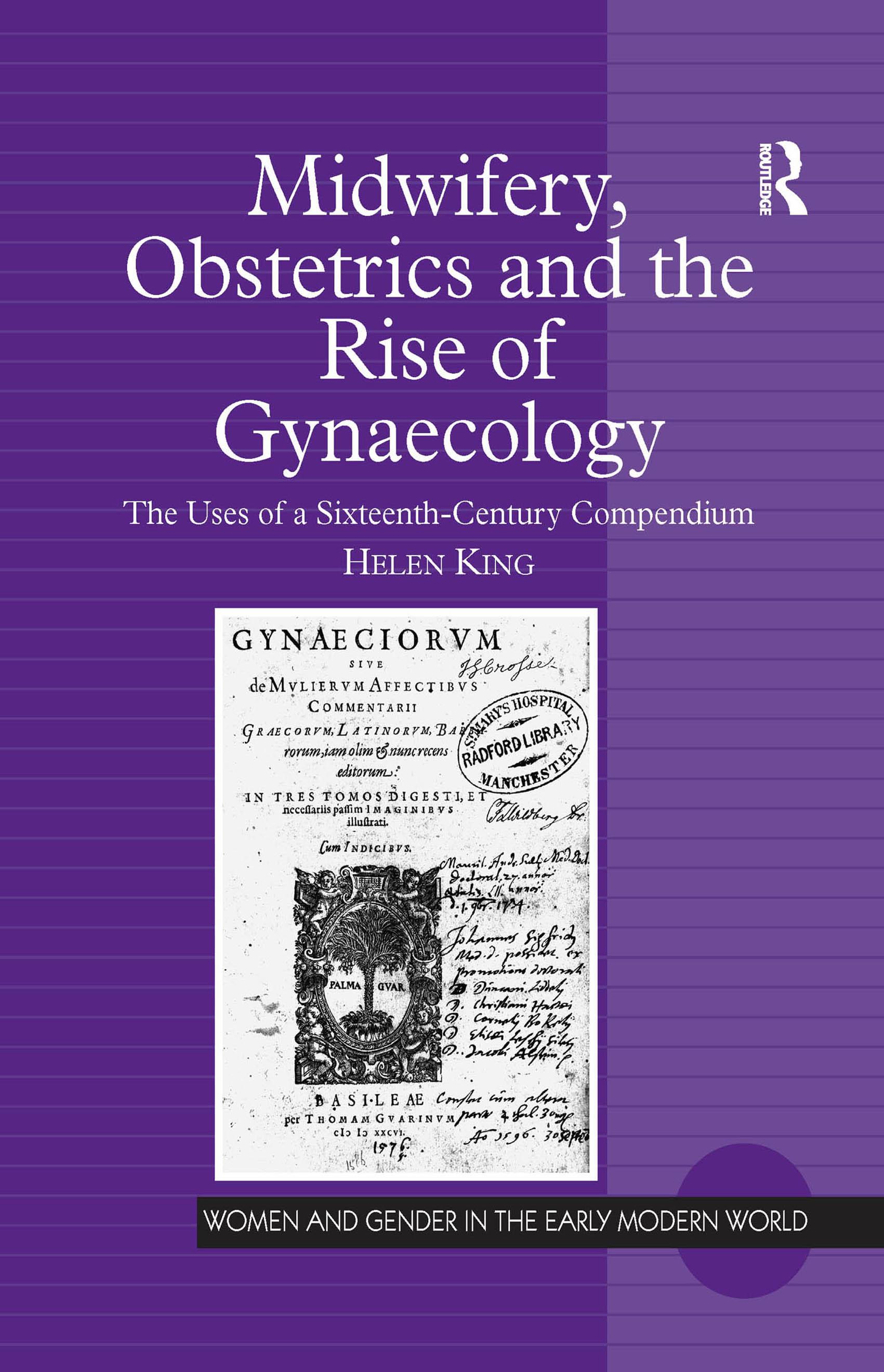
The Gynaeciorum libri, the 'Books on [the diseases of] women,' a compendium of ancient and contemporary texts on gynaecology, is the inspiration for this intensive exploration of the origins of a subfield of medicine. This collection was first published in 1566, with a second edition in 1586/8 and a third, running to 1097 folio pages, in 1597. While examining the origins of the compendium, Helen King here concentrates on its reception, looking at a range of different uses of the book in the history of medicine from the sixteenth to the nineteenth century. Looking at the competition and collaboration among different groups of men involved in childbirth, and between men and women, she demonstrates that arguments about history were as important as arguments about the merits of different designs of forceps. She focuses on the eighteenth century, when the 'man-midwife' William Smellie found his competence to practise challenged on the grounds of his allegedly inadequate grasp of the history of medicine. In his lectures, Smellie remade the 'father of medicine', Hippocrates, as the 'father of midwifery'. The close study of these texts results in a fresh perspective on Thomas Laqueur's model of the defeat of the one-sex body in the eighteenth century, and on the origins of gynaecology more generally. King argues that there were three occasions in the history of western medicine on which it was claimed that women's difference from men was so extensive that they required a separate branch of medicine: the fifth century BC, and the sixteenth and nineteenth centuries. By looking at all three occasions together, and by tracing the links not only between ancient Greek ideas and their Renaissance rediscovery, but also between the Renaissance compendium and its later owners, King analyzes how the claim of female 'difference' was shaped by specific social and cultural conditions. Midwifery, Obstetrics and the Rise of Gynaecology makes a genuine contribution not only to the history of medicine and its subfield of gynaecology, but also to gender and cultural studies.
Paga facilmente con carta, Klarna, Apple Pay o Google Pay. Non sei soddisfatto? Hai sempre 14 giorni per il rimborso. Leggi di più nei nostri termini. Per qualsiasi domanda, scrivici a hello@memmo.org.
Memmo rende lo studio più facile, ovunque tu sia nel mondo. Qui trovi i tuoi libri di testo e strumenti di studio intelligenti, tutto in un unico posto: riassunti, quiz, podcast e flashcard. E poi c'è Ted, il tuo compagno di studio che risponde a ogni tua domanda. Oltre 50.000 studenti studiano già qui: è stato creato per aiutarti a imparare più velocemente e a stressarti meno.
Potrebbe interessarti anche
Acquista il libro0