
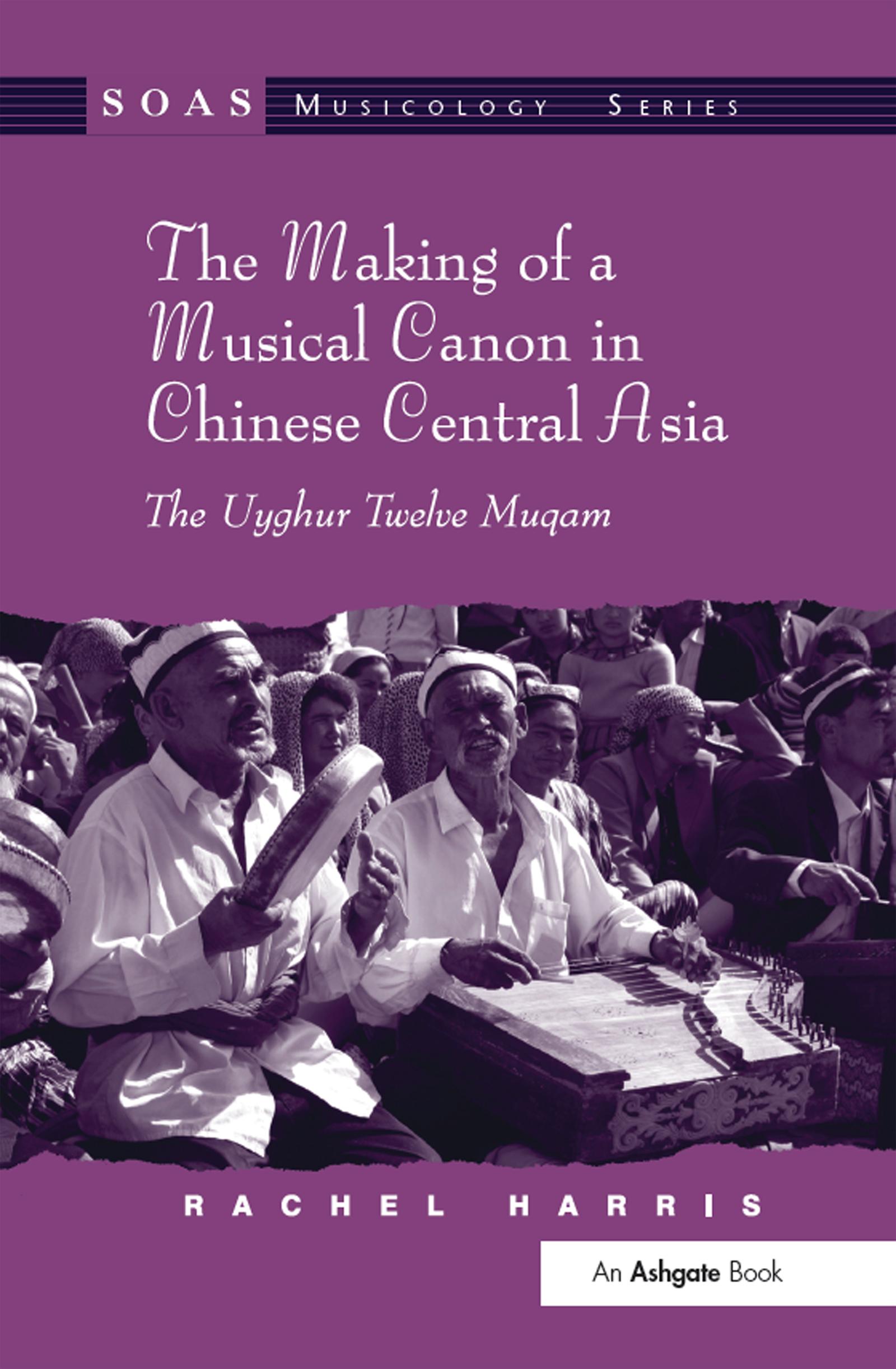
Throughout the course of the twentieth century, as newly formed nations sought ways to develop and formalise their national identity and acquire a range of identifiable national assets, we find new musical canons springing up across the world. But these canons are not arbitrary collections of works imposed on the public by the authorities. Rather they acquire deep resonance and meaning, both as national symbols and as musical repertoires imbued with aesthetic value. This book traces the formation of one such musical canon: the Twelve Muqam, a set of musical suites linked to the Uyghurs, who are one of China's minority nationalities, and culturally Central Asian Muslims. The book draws on Uyghur and Chinese language publications; interviews with musicians and musicologists; field, archive and commercial recordings, and aims towards an understanding of the Twelve Muqam as musical repertoire, juxtaposed with an understanding of the Twelve Muqam as a field of discourse. The book brings together several years' work in this field, but its core arises from a research project under the auspices of the AHRC Centre for Music Performance and Dance.
Paga facilmente con carta, Klarna, Apple Pay o Google Pay. Non sei soddisfatto? Hai sempre 14 giorni per il rimborso. Leggi di più nei nostri termini. Per qualsiasi domanda, scrivici a hello@memmo.org.
Memmo rende lo studio più facile, ovunque tu sia nel mondo. Qui trovi i tuoi libri di testo e strumenti di studio intelligenti, tutto in un unico posto: riassunti, quiz, podcast e flashcard. E poi c'è Ted, il tuo compagno di studio che risponde a ogni tua domanda. Oltre 50.000 studenti studiano già qui: è stato creato per aiutarti a imparare più velocemente e a stressarti meno.
Potrebbe interessarti anche
Acquista il libro0