
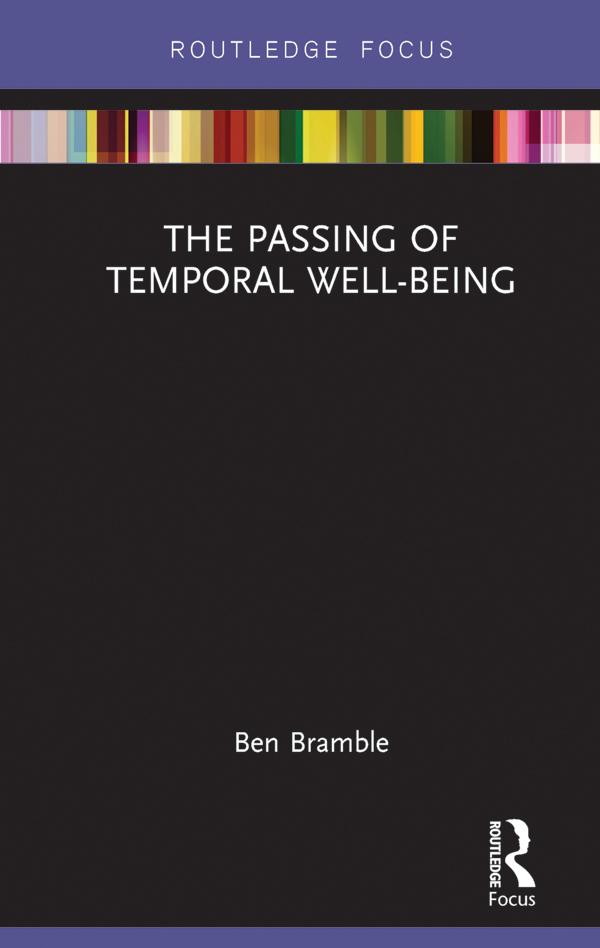
The philosophical study of well-being concerns what makes lives good for their subjects. It is now standard among philosophers to distinguish between two kinds of well-being:
· lifetime well-being, i.e., how good a person’s life was for him or her considered as a whole, and
· temporal well-being, i.e., how well off someone was, or how they fared, at a particular moment in time (momentary well-being) or over a period of time longer than a moment but shorter than a whole life, say, a day, month, year, or chapter of a life (periodic well-being).
Many theories have been offered of each of these kinds of well-being. A common view is that lifetime well-being is in some way constructed out of temporal well-being. This book argues that much of this literature is premised on a mistake. Lifetime well-being cannot be constructed out of temporal well-being, because there is no such thing as temporal well-being. The only genuine kind of well-being is lifetime well-being.
The Passing of Temporal Well-Being will prove essential reading for professional philosophers, especially in moral and political philosophy. It will also be of interest to welfare economists and policy-makers who appeal to well-being
Paga facilmente con carta, Klarna, Apple Pay o Google Pay. Non sei soddisfatto? Hai sempre 14 giorni per il rimborso. Leggi di più nei nostri termini. Per qualsiasi domanda, scrivici a hello@memmo.org.
Memmo rende lo studio più facile, ovunque tu sia nel mondo. Qui trovi i tuoi libri di testo e strumenti di studio intelligenti, tutto in un unico posto: riassunti, quiz, podcast e flashcard. E poi c'è Ted, il tuo compagno di studio che risponde a ogni tua domanda. Oltre 50.000 studenti studiano già qui: è stato creato per aiutarti a imparare più velocemente e a stressarti meno.