
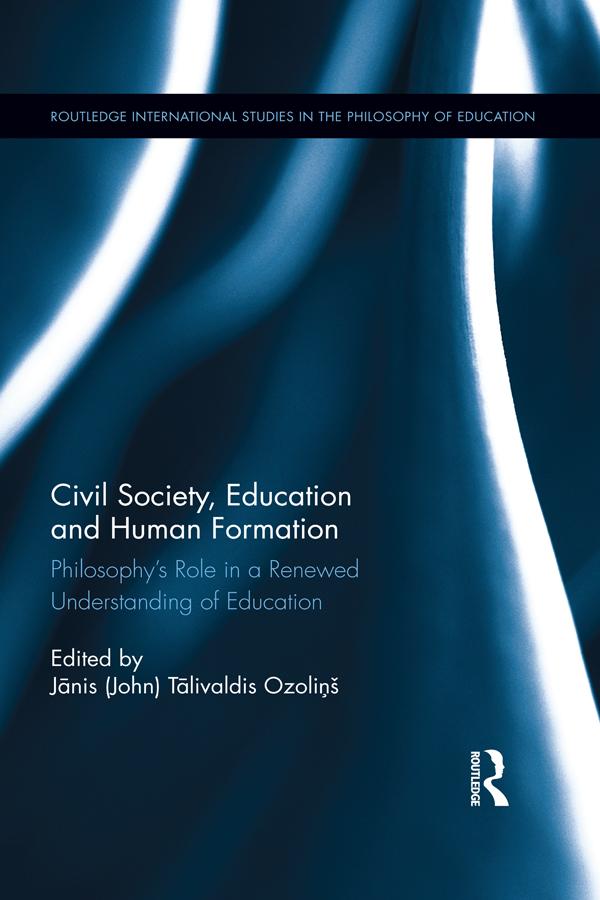
Education has been widely criticised as being too narrowly focused on skills, capacities and the transference of knowledge that can be used in the workplace. As a result of the dominance of economic rationalism and neo-liberalism, it has become commodified and marketed to potential customers. As a consequence, students have become consumers of an educational product and education has become an industry. There is deep dissatisfaction with these neo-liberal developments. What is missing is any conception of education as a key factor in the ‘human formation’ that will lead students to develop the virtues and values that they will need to not only lead successful lives, but also be responsible members of their communities — working for the common good and acting to transform them into just societies.
This volume draws together a number of different perspectives on what is meant by ‘human formation’, argues that for a much richer conception of education, and addresses the lack of attention to human fulfilment. It also highlights the importance of philosophy in the articulation of novel ways of conceptualising education — providing alternatives to the dominant neo-liberal and economic rationalist models. The central question with which the book is concerned is a renewed understanding of education as the formation of persons, of civil society and the role of philosophy in fostering that renewal.
In this volume there are a variety of voices from diverse traditions and cultures. Both East and West are represented and it might be expected that this would result in a divergence of opinion about the purpose of education. However, in spite of the diversity, there is some significant convergence in thinking about the ways in which education ought to serve the needs of both the individual and their communities. What is also particularly useful, and what is fresh about the essays presented here, is that there is also diversity in the philosophical approaches to the problem. This means that the convergence on the importance of ‘human formation’ as the cornerstone of education does not rely on a privileged philosophical method.
Paga facilmente con carta, Klarna, Apple Pay o Google Pay. Non sei soddisfatto? Hai sempre 14 giorni per il rimborso. Leggi di più nei nostri termini. Per qualsiasi domanda, scrivici a hello@memmo.org.
Memmo rende lo studio più facile, ovunque tu sia nel mondo. Qui trovi i tuoi libri di testo e strumenti di studio intelligenti, tutto in un unico posto: riassunti, quiz, podcast e flashcard. E poi c'è Ted, il tuo compagno di studio che risponde a ogni tua domanda. Oltre 50.000 studenti studiano già qui: è stato creato per aiutarti a imparare più velocemente e a stressarti meno.