
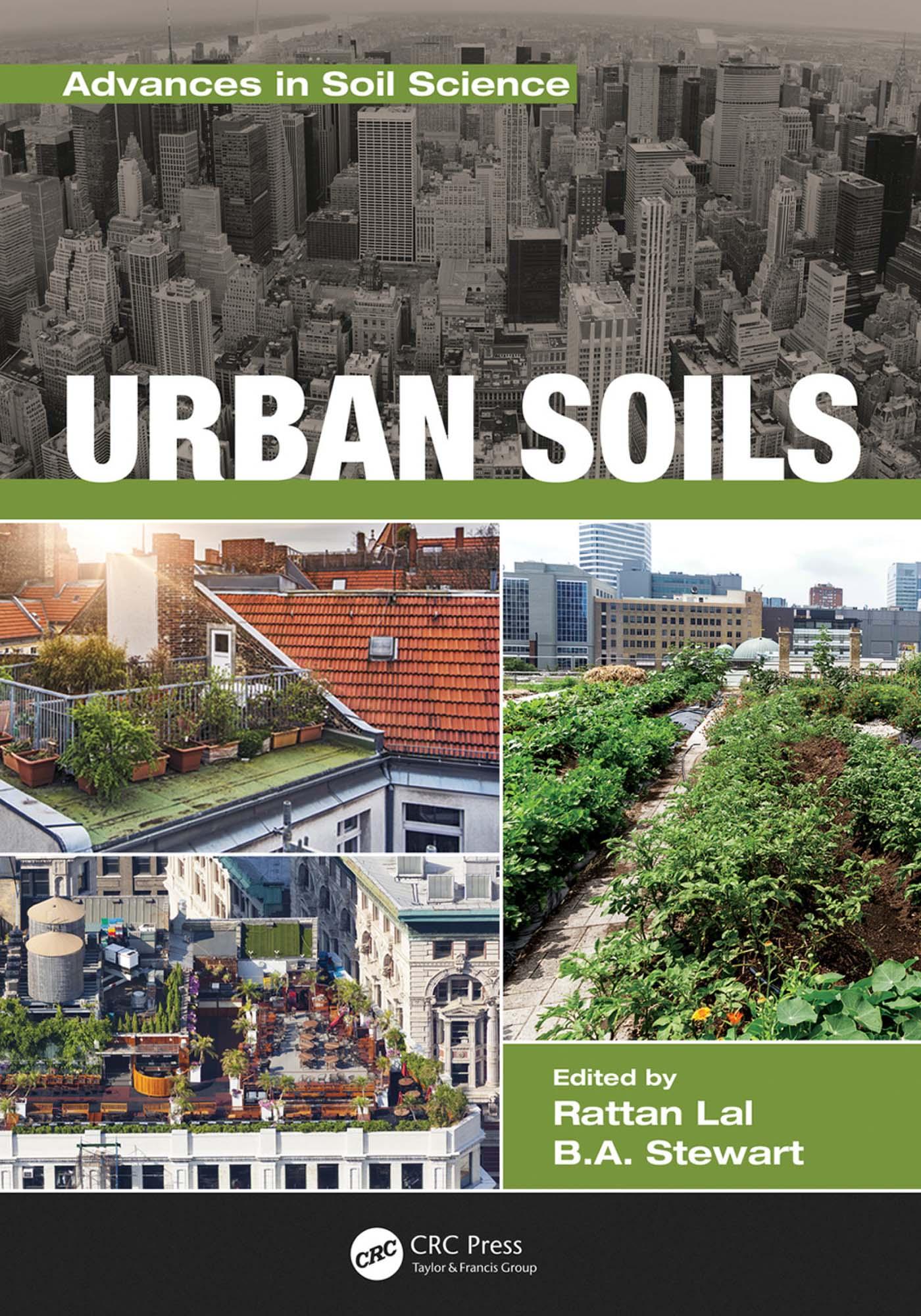
Globally, 30% of the world population lived in urban areas in 1950, 54% in 2016 and 66% projected by 2050. The most urbanized regions include North America, Latin America, and Europe. Urban encroachment depletes soil carbon and the aboveground biomass carbon pools, enhancing the flux of carbon from soil and vegetation into the atmosphere. Thus, urbanization has exacerbated ecological and environmental problems.
Urban soils are composed of geological material that has been drastically disturbed by anthropogenic activities and compromised their role in the production of food, aesthetics of residential areas, and pollutant dynamics. Properties of urban soils are normally not favorable to plant growth—the soils are contaminated by heavy metals and are compacted and sealed. Therefore, the quality of urban soils must be restored to make use of this valuable resource for delivery of essential ecosystem services (e.g., food, water and air quality, carbon sequestration, temperature moderation, biodiversity).
Part of the Advances in Soil Sciences Series, Urban Soils explains properties of urban soils; assesses the effects of urbanization on the cycling of carbon, nitrogen, and water and the impacts of management of urban soils, soil restoration, urban agriculture, and food security; evaluates ecosystem services provisioned by urban soils, and describes synthetic and artificial soils.
Paga facilmente con carta, Klarna, Apple Pay o Google Pay. Non sei soddisfatto? Hai sempre 14 giorni per il rimborso. Leggi di più nei nostri termini. Per qualsiasi domanda, scrivici a hello@memmo.org.
Memmo rende lo studio più facile, ovunque tu sia nel mondo. Qui trovi i tuoi libri di testo e strumenti di studio intelligenti, tutto in un unico posto: riassunti, quiz, podcast e flashcard. E poi c'è Ted, il tuo compagno di studio che risponde a ogni tua domanda. Oltre 50.000 studenti studiano già qui: è stato creato per aiutarti a imparare più velocemente e a stressarti meno.