
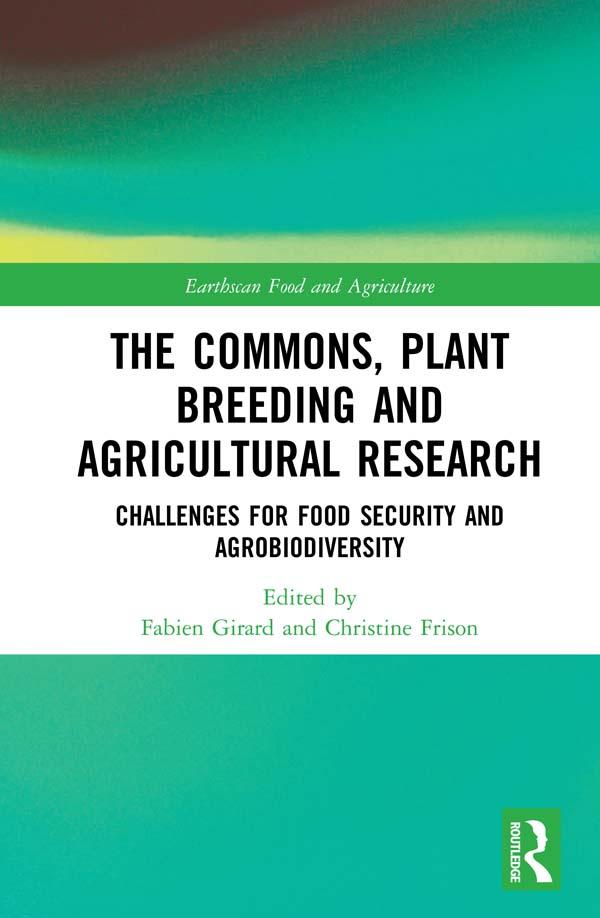
The joint challenges of population increase, food security and conservation of agrobiodiversity demand a rethink of plant breeding and agricultural research from a different perspective. While more food is undeniably needed, the key question is rather about how to produce it in a way that sustains biological diversity and mitigates climate change.
This book shows how social sciences, and more especially law, can contribute towards reconfiguring current legal frameworks in order to achieving a better balance between the necessary requirements of agricultural innovation and the need for protection of agrobiodiversity. On the assumption that the concept of property can be rethought against the background of the 'right to include', so as to endow others with a common 'right to access' genetic resources, several international instruments and contractual arrangements drawn from the plant-breeding field (including the Convention on Biological Diversity, technology exchange clearing houses and open sources licenses) receive special consideration. In addition, the authors explore the tension between ownership and the free circulation and exchange of germplasm and issues such as genetic resources managed by local and indigenous communities, the ITPGRFA and participatory plant-breeding programmes.
As a whole, the book demonstrates the relevance of the 'Commons' for plant breeding and agricultural innovation.
Paga facilmente con carta, Klarna, Apple Pay o Google Pay. Non sei soddisfatto? Hai sempre 14 giorni per il rimborso. Leggi di più nei nostri termini. Per qualsiasi domanda, scrivici a hello@memmo.org.
Memmo rende lo studio più facile, ovunque tu sia nel mondo. Qui trovi i tuoi libri di testo e strumenti di studio intelligenti, tutto in un unico posto: riassunti, quiz, podcast e flashcard. E poi c'è Ted, il tuo compagno di studio che risponde a ogni tua domanda. Oltre 50.000 studenti studiano già qui: è stato creato per aiutarti a imparare più velocemente e a stressarti meno.