
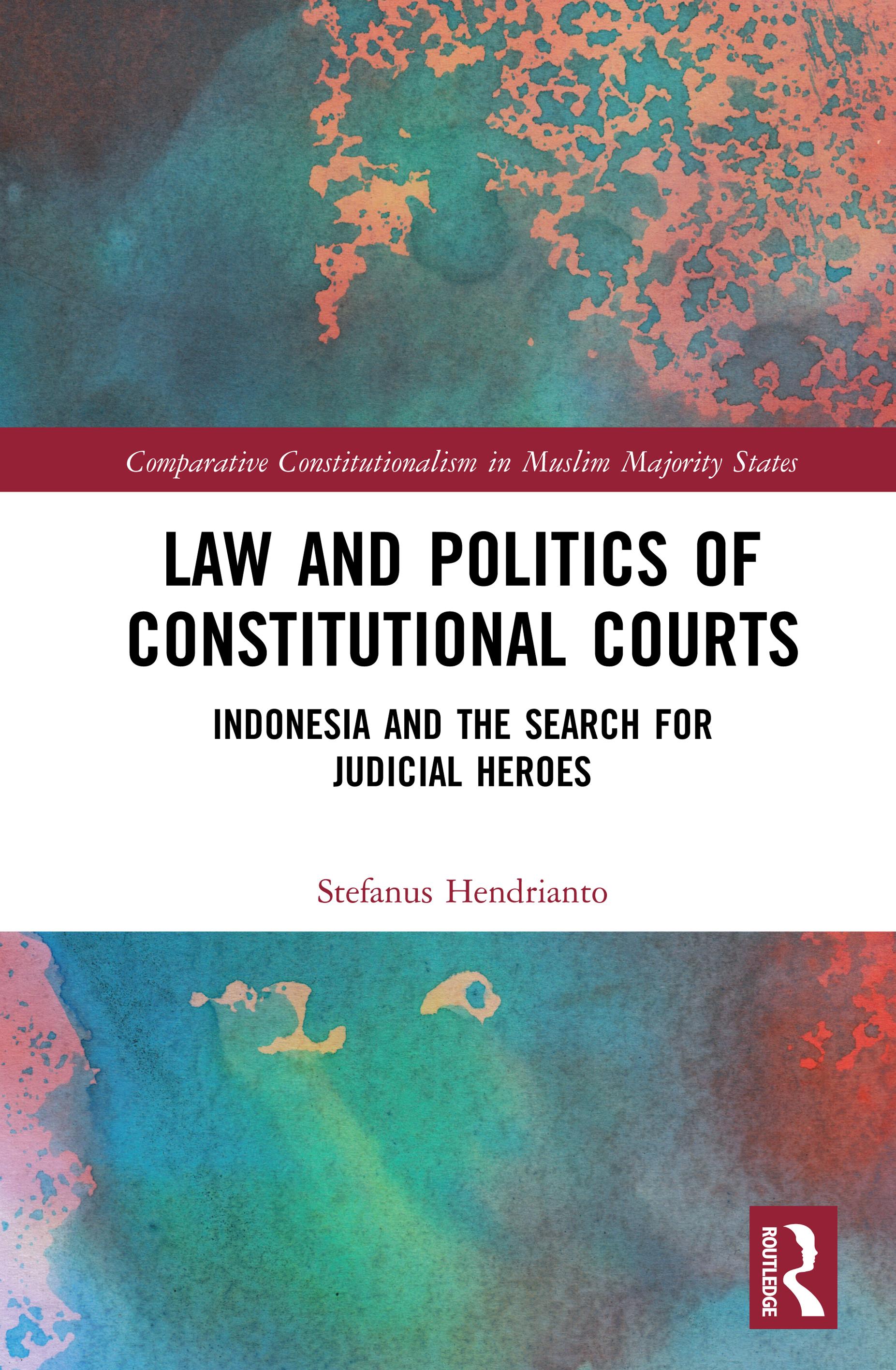
This book critically evaluates different models of judicial leadership in Indonesia to examine the impact that individual chief justices can have on the development of constitutional courts. It explores the importance of this leadership as a factor explaining the dynamic of judicial power. Drawing on an Aristotelean model of heroism and the established idea of judicial heroes to explore the types of leadership that judges can exercise, it illustrates how Indonesia’s recent experience offers a stark contrast between the different models. First, a prudential-minimalist heroic chief justice who knows how to enhance the Court’s authority while fortifying the Court’s status by playing a minimalist role in policy areas. Second, a bold and aggressive heroic chief justice, employing an ambitious constitutional interpretation. The third model is a soldier-type chief justice, who portrays himself as a subordinate of the Executive and Legislature. Contrary perhaps to expectations, the book’s findings show a more cautious initial approach to be the most effective. The experience of Indonesia clearly illustrates the importance of heroic judicial leadership and how the approach chosen by a court can have serious consequences for its success. This book will be a valuable resource for those interested in the law and politics of Indonesia, comparative constitutional law, and comparative judicial politics.
Paga facilmente con carta, Klarna, Apple Pay o Google Pay. Non sei soddisfatto? Hai sempre 14 giorni per il rimborso. Leggi di più nei nostri termini. Per qualsiasi domanda, scrivici a hello@memmo.org.
Memmo rende lo studio più facile, ovunque tu sia nel mondo. Qui trovi i tuoi libri di testo e strumenti di studio intelligenti, tutto in un unico posto: riassunti, quiz, podcast e flashcard. E poi c'è Ted, il tuo compagno di studio che risponde a ogni tua domanda. Oltre 50.000 studenti studiano già qui: è stato creato per aiutarti a imparare più velocemente e a stressarti meno.