
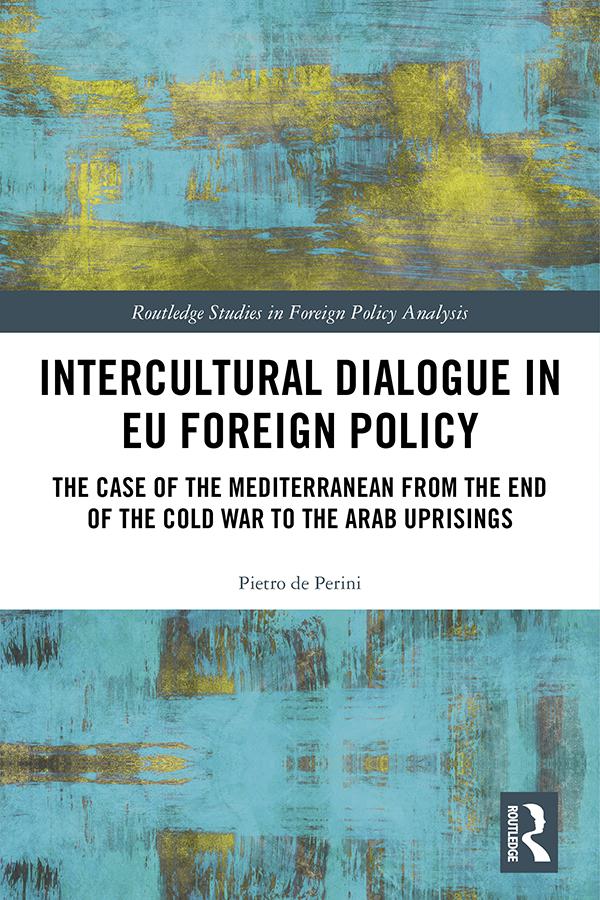
This book provides an original, rigorous and theoretically-grounded investigation into varying EU efforts to advance intercultural dialogue (ICD) in the framework of its foreign policy towards the Mediterranean during the period 1990-2014. From the end of the Cold War, the EU has increasingly invested in both rhetoric and resources on ICD promotion. In spite of this commitment, the EU has never offered a clear and permanent understanding of what this concept entails and has been actually aimed at. By adopting a FPA standpoint and approaching ICD as one of the foreign policy instruments developed by the EU to address the relations with its Mediterranean partners, this book exposes the causes and the modalities of the contradictory development of this relevant and long standing element of EU foreign policy.
De Perini investigates change and continuity in the promotion of this tool, and provides in-depth knowledge of what ICD has actually meant for the EU: from the development and launch of the Euro-Mediterranean Partnership or Barcelona Process, to the revision of the European Neighbourhood Policy following the Arab uprisings. The book shows that the EU’s advancement of ICD in its foreign policy has gone through three distinct phases: ‘emergence’ (1990-2001), ‘consolidation’ (2001-2010) and ‘professionalisation’ (2010-2014). Empirically the book provides the first comprehensive and integrative analysis of all aspects of EU efforts to promote ICD.
The book exposes a series of trends, limits and contradictions of EU foreign policy which are increasingly relevant today. In particular, it shows that over the last twenty-five years, the EU has addressed a set of persistent challenges characterising its relations with Mediterranean countries and people, namely challenges connected to regional conflicts, religious fundamentalisms, xenophobic attitudes towards Arab/Muslim migrants and related social tensions. As these challenges are still major issues in the current EU agenda and in the broader debate about EU foreign policy, this book provides rich and original empirical knowledge to an understanding of how the EU has decided to address these phenomena at different moments of its recent history.
Paga facilmente con carta, Klarna, Apple Pay o Google Pay. Non sei soddisfatto? Hai sempre 14 giorni per il rimborso. Leggi di più nei nostri termini. Per qualsiasi domanda, scrivici a hello@memmo.org.
Memmo rende lo studio più facile, ovunque tu sia nel mondo. Qui trovi i tuoi libri di testo e strumenti di studio intelligenti, tutto in un unico posto: riassunti, quiz, podcast e flashcard. E poi c'è Ted, il tuo compagno di studio che risponde a ogni tua domanda. Oltre 50.000 studenti studiano già qui: è stato creato per aiutarti a imparare più velocemente e a stressarti meno.