
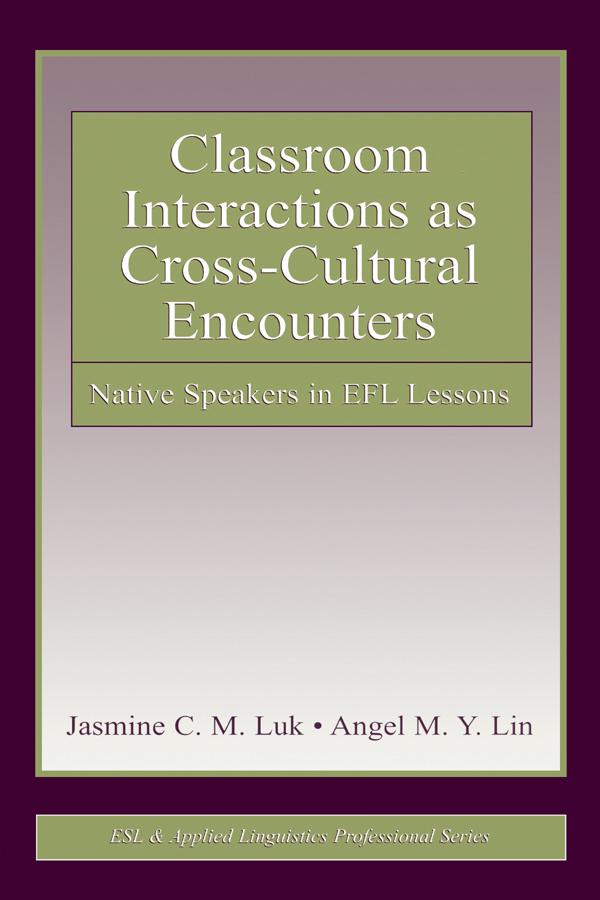
Classroom Interactions as Cross-Cultural Encounters is about native English speakers teaching English as a global language in non-English speaking countries. Through analysis of naturally occurring dialogic encounters, the authors examine the multifaceted ways in which teachers and students utilize diverse communicative resources to construct, display, and negotiate their identities as teachers, learners, and language users, with different pedagogic, institutional, social, and political implications. A range of issues in applied linguistics is addressed, including linguistic imperialism, post-colonial theories, micropolitics of classroom interaction, language and identity, and bilingual classroom practices.
Intended to help TESOL professionals of different cultural backgrounds, working in different sociocultural contexts, to critically understand how non-assimilationist, dialogic intercultultural communication with students can be achieved and built on for mutual cultural and linguistic enrichment and empowerment, this book:
*emphasizes the sociocultural meanings and micropolitics of classroom interactions that reveal the complex realities of power and identity negotiations in cross-cultural interactions in ELT (English Language Teaching) classroom contexts;
*revisits and reconstitutes the notion of native-speakerness and repositions the roles of native and non-native English teachers in the TESOL profession in the contexts of decolonization and globalization;
*highlights the need to mobilize intercultural communicative resources for global communication;
*addresses two major concerns of EFL (English as a Foreign Language) classroom researchers and teachers: student resistance and learning motivation; and
*examines and analyzes the changing ideologies (both explicit and implicit) of teachers and students about English learning in the context of a post-colonial society, and how these ideologies are being enacted, reproduced, but also sometimes contested in EFL classroom interactions.
Each chapter includes Questions for Reflection and Discussion to promote critical thinking and understanding of the issues discussed. Tuning-In discussion questions are provided in the three chapters on classroom data analysis to activate readers interpretive schemas before they examine the actual classroom episodes. The data are from an ethnographic study in post-colonial Hong Kong secondary schools involving four native English-speaker teachers and two bilingual Cantonese-English speaking teachers engaged in intercultural classroom dialogues with their Cantonese Hong Kong students. The rich, naturally occurring classroom data and in-depth analyses provide useful pedagogical materials for courses in EFL teacher education programs on classroom discourse analysis from sociocultural perspectives.
Paga facilmente con carta, Klarna, Apple Pay o Google Pay. Non sei soddisfatto? Hai sempre 14 giorni per il rimborso. Leggi di più nei nostri termini. Per qualsiasi domanda, scrivici a hello@memmo.org.
Memmo rende lo studio più facile, ovunque tu sia nel mondo. Qui trovi i tuoi libri di testo e strumenti di studio intelligenti, tutto in un unico posto: riassunti, quiz, podcast e flashcard. E poi c'è Ted, il tuo compagno di studio che risponde a ogni tua domanda. Oltre 50.000 studenti studiano già qui: è stato creato per aiutarti a imparare più velocemente e a stressarti meno.