
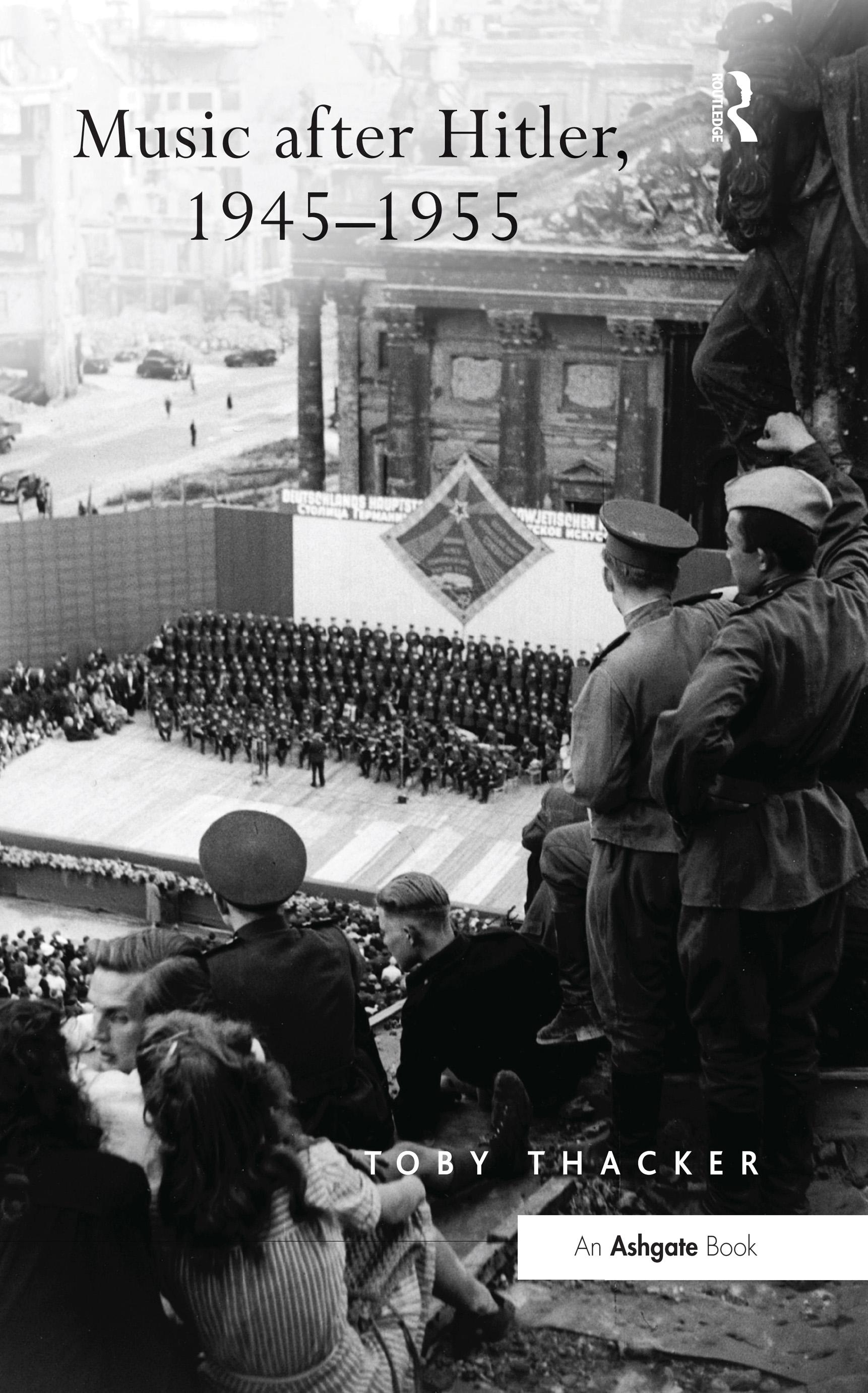
The political control of music in the Third Reich has been analysed from several perspectives, and with ever increasing sophistication. However, music in Germany after 1945 has not received anything like the same treatment. Rather, there is an assumption that two separate musical cultures emerged in East and West alongside the division of Germany into two states with differing economic and political systems. There is a widely accepted view of music in West Germany as 'free', and in the East subject to party control. Toby Thacker challenges these assumptions, asking how and why music was controlled in Germany under Allied Occupation from 1945-1949, and in the early years of 'semi-sovereignty' between 1949 and 1955. The 're-education' of Germany after the Hitler years was a unique historical experiment and the place of music within this is explored here for the first time. While emphasizing political, economic and broader social structures that influenced the production and reception of different musical forms, the book is informed by a sense of human agency, and explores the role of salient individuals in the reconstruction of music in post-war Germany. The focus is not restricted to any one kind of music, but concentrates on those aspects of music, professional and amateur, live and recorded, which appeared to be the mostly highly charged politically to contemporaries. Particular attention is given to 'denazification' and to the introduction of international music. Thacker traces the development of a divide between Communist and liberal-democratic understandings of the place of music in society. The contested celebrations of the Bach Year in 1950 are used to highlight the role of music in the broader cultural confrontation between East and West. Thacker examines the ways in which central governments in East and West Germany sought to control and influence music through mechanisms of censorship and positive support. The book will therefore be of interest not only
Paga facilmente con carta, Klarna, Apple Pay o Google Pay. Non sei soddisfatto? Hai sempre 14 giorni per il rimborso. Leggi di più nei nostri termini. Per qualsiasi domanda, scrivici a hello@memmo.org.
Memmo rende lo studio più facile, ovunque tu sia nel mondo. Qui trovi i tuoi libri di testo e strumenti di studio intelligenti, tutto in un unico posto: riassunti, quiz, podcast e flashcard. E poi c'è Ted, il tuo compagno di studio che risponde a ogni tua domanda. Oltre 50.000 studenti studiano già qui: è stato creato per aiutarti a imparare più velocemente e a stressarti meno.
Potrebbe interessarti anche
Acquista il libro0