
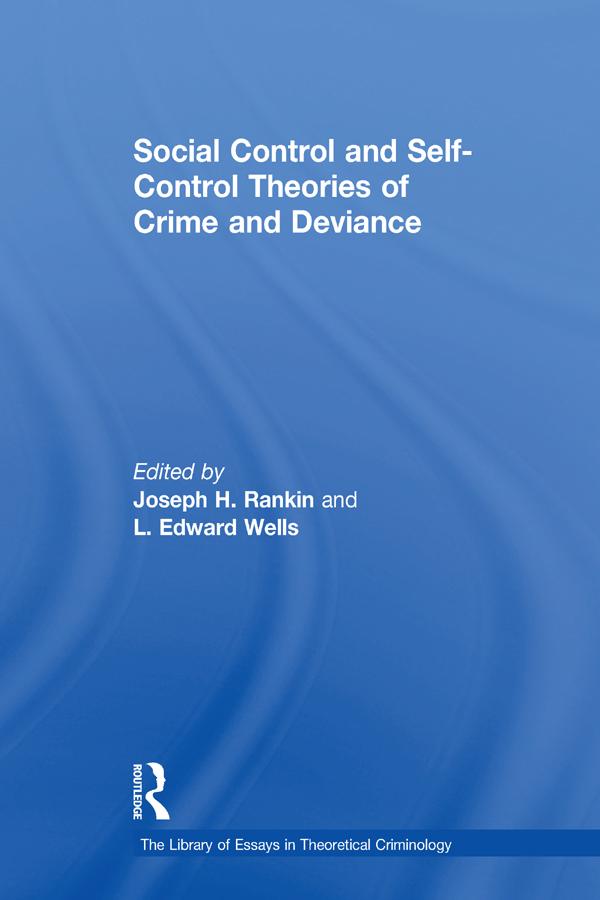
Control theories have dominated criminological theory and research since the 1969 publication of Hirschi's seminal work on the social bond. Social control and self-control theorists are unique in suggesting that patterns in criminal behaviors are better explained by variations in social constraints rather than by individual motivational impulses, thus indicating that their main concerns are the explication and clarification of the techniques, processes, and institutions of informal social control. The four major sections of this volume focus on: the similarities and differences among the major contributors to the early developmental stage of social control theory; the central importance of parents, peers, and schools in the creation of informal control mechanisms and their link to crime and delinquency; the theoretical underpinnings of self-control theory, including empirical tests and criticisms; and theoretical integrations of social control and self-control theories with various motivational theories of crime and delinquency.
Paga facilmente con carta, Klarna, Apple Pay o Google Pay. Non sei soddisfatto? Hai sempre 14 giorni per il rimborso. Leggi di più nei nostri termini. Per qualsiasi domanda, scrivici a hello@memmo.org.
Memmo rende lo studio più facile, ovunque tu sia nel mondo. Qui trovi i tuoi libri di testo e strumenti di studio intelligenti, tutto in un unico posto: riassunti, quiz, podcast e flashcard. E poi c'è Ted, il tuo compagno di studio che risponde a ogni tua domanda. Oltre 50.000 studenti studiano già qui: è stato creato per aiutarti a imparare più velocemente e a stressarti meno.
Potrebbe interessarti anche
Acquista il libro0