
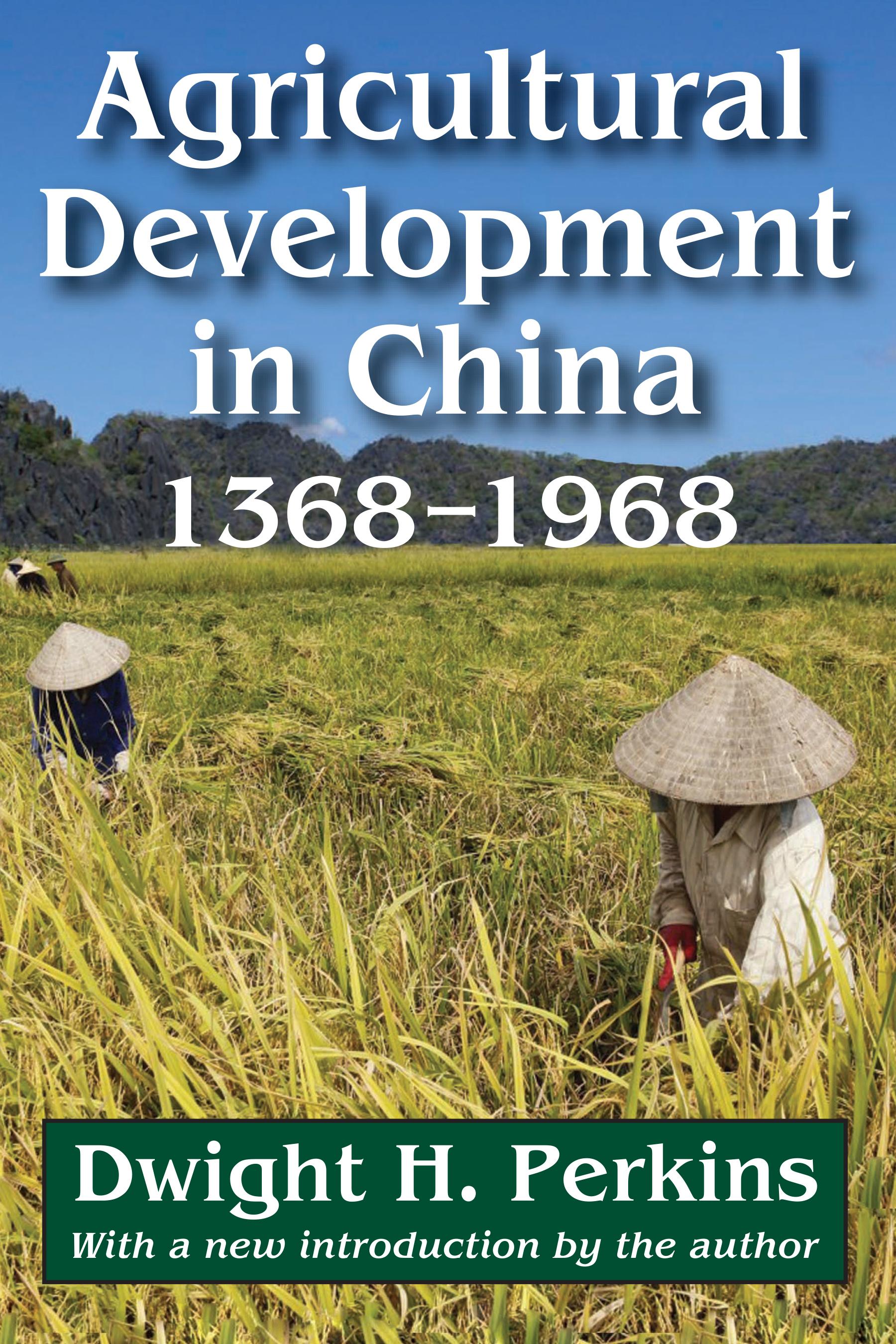
Agricultural Development in China explains how China's farm economy historically responded to the demands of a rising population. Dwight H. Perkins begins in the year A.D. 1368, the founding date of the Ming dynasty. More importantly, it marked the end of nearly two centuries of violent destruction and loss of life primarily connected with the rise and fall of the Mongols. The period beginning with the fourteenth century was also one in which there were no obvious or dramatic changes in farming techniques or in rural institutions. The rise in population and hence in the number of farmers made possible the rise in farm output through increased double cropping, extending irrigation systems, and much else.
Issues explored in this book include the role of urbanization and long distance trade in allowing farmers in a few regions to specialize in crops most suitable to their particular region. Backing up this analysis of agricultural development is a careful examination of the quality of Chinese historical data. This classic volume, now available in a paperback edition, includes a new introduction assessing the continuing importance of this work to understanding the Chinese economy. It will be invaluable for a new generation of economists, historians, and Asian studies specialists and is part of Transaction's Asian Studies series.
Paga facilmente con carta, Klarna, Apple Pay o Google Pay. Non sei soddisfatto? Hai sempre 14 giorni per il rimborso. Leggi di più nei nostri termini. Per qualsiasi domanda, scrivici a hello@memmo.org.
Memmo rende lo studio più facile, ovunque tu sia nel mondo. Qui trovi i tuoi libri di testo e strumenti di studio intelligenti, tutto in un unico posto: riassunti, quiz, podcast e flashcard. E poi c'è Ted, il tuo compagno di studio che risponde a ogni tua domanda. Oltre 50.000 studenti studiano già qui: è stato creato per aiutarti a imparare più velocemente e a stressarti meno.