
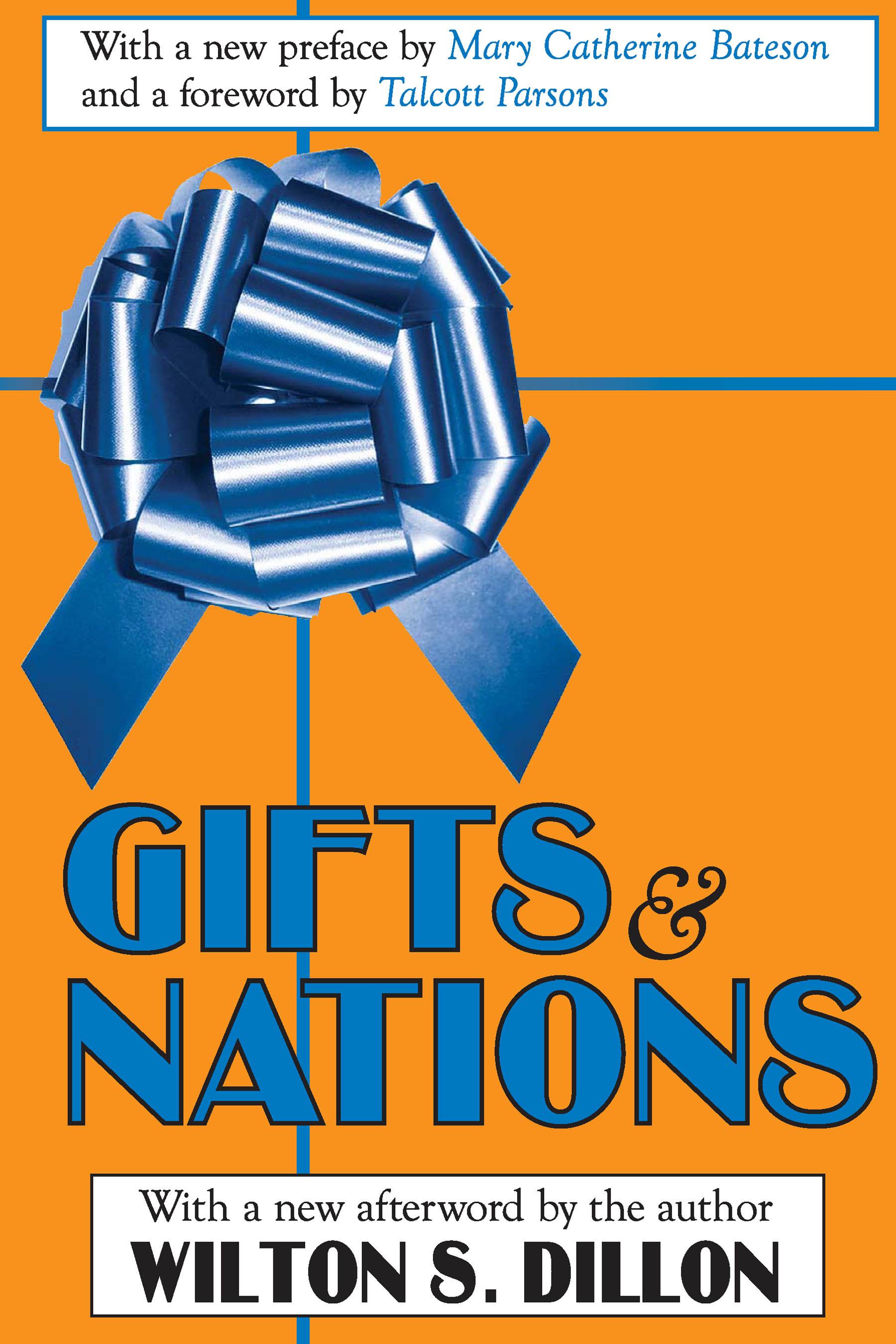
What can men in industrial nations learn from their "primitive" contemporaries, and the habits of earlier civilizations? This book by acclaimed cultural anthropologist Wilton S. Dillon suggests that modern political, religious, and scientific communities--and alliances--would be enhanced greatly if we understood how gift exchange and reciprocity helped to balance earlier institutions and societies.Using the example of the gift behavior of France and the United States during the Marshall Plan period, Gifts and Nations examines the troubles that arise between donors and recipients when a generous donor remains innocent of the recipient's desire to give back things or ideas to which both attach value. Such innocence may produce what the author calls "the Gaullist effect"--a quest for self-esteem, autonomy, and initiative by a person, or a nation, who feels burdened and controlled by undischarged obligations.Gifts and Nations is very much an historical footnote to the rise of PaxAmericana--the American empire having been launched in 1898, enlarged in the aftermath of World War II and the Cold War, and now the subject of global debate. This volume emphasizes that building coalitions and keeping alliances strong require multi-lateralism based on reciprocity.
Paga facilmente con carta, Klarna, Apple Pay o Google Pay. Non sei soddisfatto? Hai sempre 14 giorni per il rimborso. Leggi di più nei nostri termini. Per qualsiasi domanda, scrivici a hello@memmo.org.
Memmo rende lo studio più facile, ovunque tu sia nel mondo. Qui trovi i tuoi libri di testo e strumenti di studio intelligenti, tutto in un unico posto: riassunti, quiz, podcast e flashcard. E poi c'è Ted, il tuo compagno di studio che risponde a ogni tua domanda. Oltre 50.000 studenti studiano già qui: è stato creato per aiutarti a imparare più velocemente e a stressarti meno.
Potrebbe interessarti anche
Acquista il libro0