
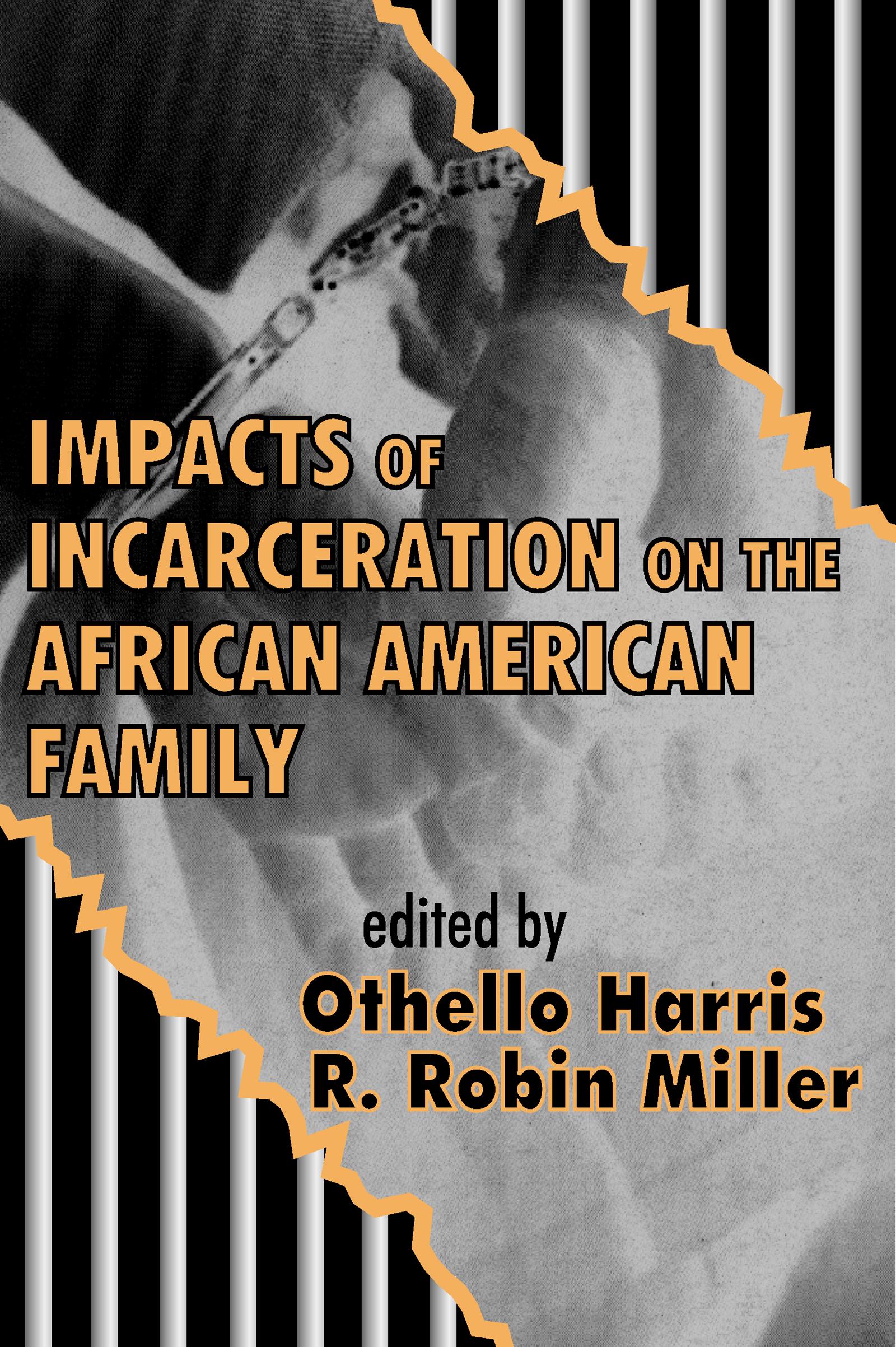
The criminal justice system has driven a wedge between black men and their children. African American men are involved in the criminal justice system, whether through incarceration, probation, or parole, at near epidemic levels. At the same time, the criminal justice system has made little or no institutional efforts to maintain or support continuing relationships between these men and their families. Consequently, African American families are harmed by this in countless ways, from the psychological, physical, and material suffering experienced by the men themselves, to losses felt by their mates, children, and extended family members.
The volume opens with an introduction and brief review by R. Robin Miller, Sandra Lee Browning, and Lisa M. Spruance, outlining the impacts of incarceration on the African American family. Brad Tripp, explores changes in family relationships and the identity of incarcerated African American fathers. Mary Balthazar and Lula King discuss the loss of the protective effect of marital and nonmarital relationships and its impact on incarcerated African American men, and the implications for African American men and those who work with them in the helping professions. Theresa Clark explores the relationship between visits by family and friends and the nature of inmate behavior. In a research note, Olga Grinstead, Bonnie Faigeles, Carrie Bancroft, and Barry Zack investigate the actual costs families incur to maintain contact with family members, be it emotional, social, or financial. Patricia E. O'Connor uses data from sociolinguistic interviews of male inmates from a maximum security prison to study how some of these men manage to continue to fulfill the fatherhood role long-distance. In a concluding chapter, Sandra Lee Browning, Robin Miller, and Lisa Spruance focus on actions of the criminal justice system that undermine the black family, on reasons that black male inmate fathers are studied so rarely, and discuss the role restorative justice may play.
This insightful volume fills a void in the literature on the role of African American men in the functioning of families. It will be of interest to students of African American studies, social workers, and policy makers.
Paga facilmente con carta, Klarna, Apple Pay o Google Pay. Non sei soddisfatto? Hai sempre 14 giorni per il rimborso. Leggi di più nei nostri termini. Per qualsiasi domanda, scrivici a hello@memmo.org.
Memmo rende lo studio più facile, ovunque tu sia nel mondo. Qui trovi i tuoi libri di testo e strumenti di studio intelligenti, tutto in un unico posto: riassunti, quiz, podcast e flashcard. E poi c'è Ted, il tuo compagno di studio che risponde a ogni tua domanda. Oltre 50.000 studenti studiano già qui: è stato creato per aiutarti a imparare più velocemente e a stressarti meno.