
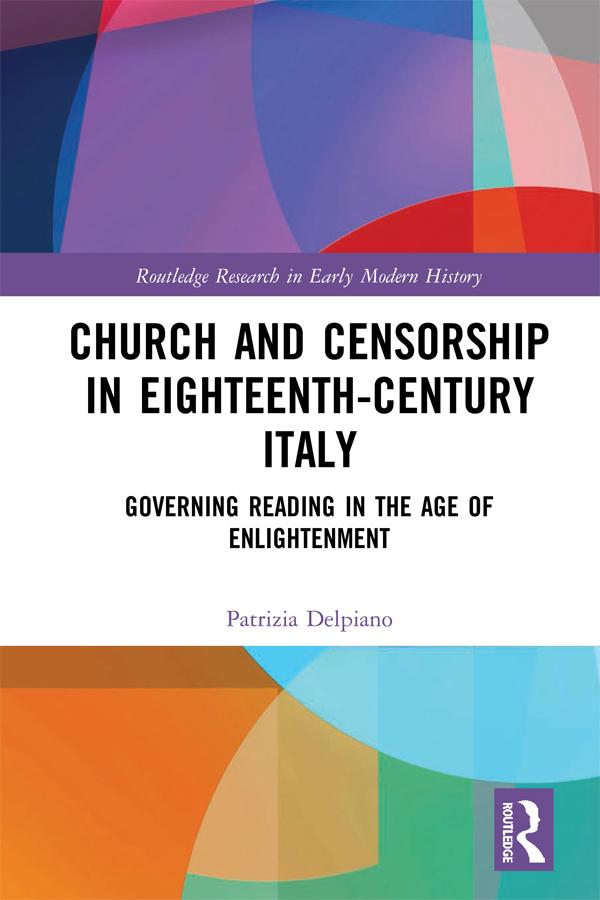
Dealing with the issue of ecclesiastical censorship and control over reading and readers, this study challenges the traditional view that during the eighteenth century the Catholic Church in Italy underwent an inexorable decline. It reconstructs the strategies used by the ecclesiastical leadership to regulate the press and culture during a century characterized by important changes, from the spread of the Enlightenment to the creation of a state censorship apparatus. Based on the archival records of the Roman Inquisition and the Congregation of the Index of Forbidden Books preserved in the Vatican, it provides a comprehensive analysis of the Catholic Church’s endeavour to keep literature and reading in check by means of censorship and the promotion of a "good" press.
The crisis of the Inquisition system did not imply a general diminution of the Church’s involvement in controlling the press. Rather than being effective instruments of repression, the Inquisition and the Index combined to create an ideological apparatus to resist new ideas and to direct public opinion. This was a network mainly inspired by Counter-Enlightenment principles which would go on to influence the Church’s action well beyond the eighteenth century.
This book is an English translation of Il governo della lettura: Chiesa e libri nell’Italia del Settecento (Bologna: Il Mulino, 2007).
Paga facilmente con carta, Klarna, Apple Pay o Google Pay. Non sei soddisfatto? Hai sempre 14 giorni per il rimborso. Leggi di più nei nostri termini. Per qualsiasi domanda, scrivici a hello@memmo.org.
Memmo rende lo studio più facile, ovunque tu sia nel mondo. Qui trovi i tuoi libri di testo e strumenti di studio intelligenti, tutto in un unico posto: riassunti, quiz, podcast e flashcard. E poi c'è Ted, il tuo compagno di studio che risponde a ogni tua domanda. Oltre 50.000 studenti studiano già qui: è stato creato per aiutarti a imparare più velocemente e a stressarti meno.