
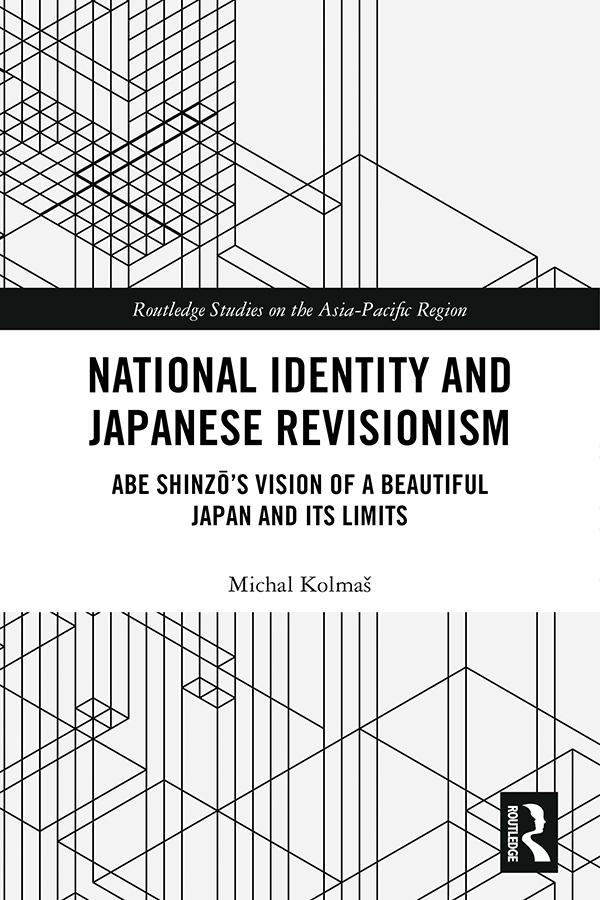
Over the course of the twentieth century, Japan has experienced a radical shift in its self-perception. After World War II, Japan embraced a peaceful and anti-militarist identity, which was based on its war-prohibiting Constitution and the foreign policy of the Yoshida doctrine. For most of the twentieth century, this identity was unusually stable. In the last couple of decades, however, Japan’s self-perception and foreign policy seem to have changed. Tokyo has conducted a number of foreign policy actions as well as symbolic internal gestures that would have been unthinkable a few decades ago and that symbolize a new and more confident Japan. Japanese politicians – including Prime Minister Abe Shinzō – have adopted a new discourse depicting pacifism as a hindrance, rather than asset, to Japan’s foreign policy. Does that mean that “Japan is back”?
In order to better understand the dynamics of contemporary Japan, Kolmaš joins up the dots between national identity theory and Japanese revisionism. The book shows that while political elites and a portion of the Japanese public call for re-articulation of Japan’s peaceful identity, there are still societal and institutional forces that prevent this change from entirely materializing.
Pagine: 162
Categoria: Statsvetenskap & Politik
e-ISBN: 9781351334396
Peso di spedizione: 1.2 kg
Spedito in: 1-2 giorni
Paga facilmente con carta, Klarna, Apple Pay o Google Pay. Non sei soddisfatto? Hai sempre 14 giorni per il rimborso. Leggi di più nei nostri termini. Per qualsiasi domanda, scrivici a hello@memmo.org.
Memmo rende lo studio più facile, ovunque tu sia nel mondo. Qui trovi i tuoi libri di testo e strumenti di studio intelligenti, tutto in un unico posto: riassunti, quiz, podcast e flashcard. E poi c'è Ted, il tuo compagno di studio che risponde a ogni tua domanda. Oltre 50.000 studenti studiano già qui: è stato creato per aiutarti a imparare più velocemente e a stressarti meno.
Potrebbe interessarti anche
Acquista il libro0