
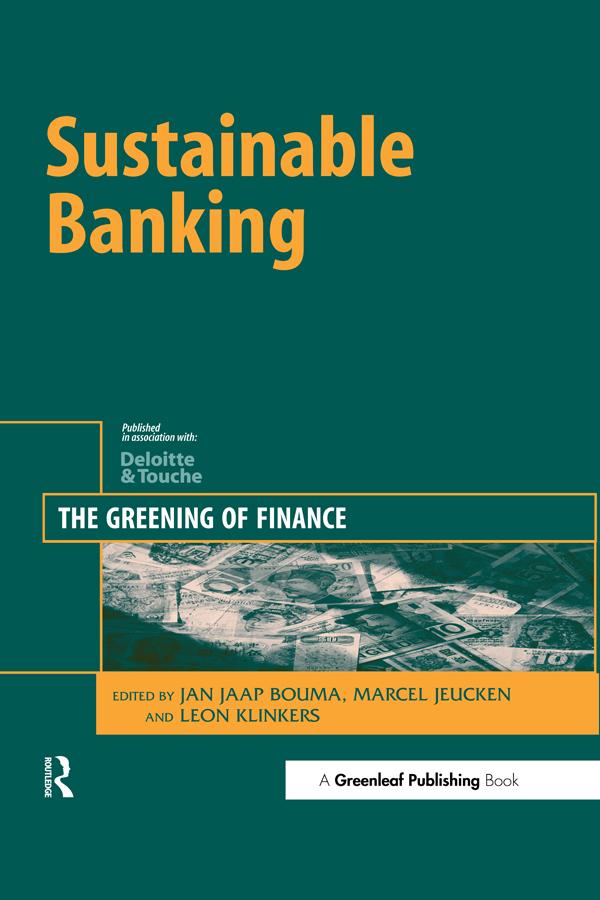
This comprehensive addition to the debate on sustainable development has been produced in order to take a global pulse on how the financial services sector is responding to the growing challenge of shareholder and stakeholder expectations on social and environmental performance. In the opinion of many commentators in this new book, given the intermediary role banks play within economies, their potential contribution toward sustainable development is enormous. Indeed, for banks, the conclusion that corporate sustainability has become an investable concept that increases long-term shareholder value is becoming difficult to deny.To date, banks have been relatively slow to examine their exposure to risk (the environmental and social performance of their clients) and the business opportunities of sustainable development (the products and services they offer). Not before time, Sustainable Banking concludes that this is beginning to change, with both risk and opportunity becoming established elements in banking policies towards environmental sustainability. In addition, banks have now begun to take notice of and address their own environmental performance. Through the use of case studies and detailed analysis, the book examines the environmental policies of banks, the importance of transparency and communication with their stakeholders, environmental and ethical investment funds, current practice by the providers of financial services with regard to environmental risk management and, finally, the key role of government, NGOs and multilateral banks in delivering sustainability.Sustainable banking has not, however, been achieved and nor will it be in the immediate future. As globalisation proceeds apace, Sustainable Banking argues that improvements are necessary in banks' attitudes toward transparency and accountability with regard to their lending policies. In addition, in order to promote best practice, the leading banks need to start measuring their customers' environmental performance in order to persuade polluting clients that minimum compliance to regulations will no longer suffice. The book finds many shining examples in the co-operative, mutual and social sectors for the big players to emulate. Environmental and ethical considerations in such loan portfolios have proven to be profitable and "best-in-class" larger banks are now also reaping benefits.The unprecedented scope of the book has attracted contributors from four continents including Deloitte & Touche, Rabobank, The World Bank, The European Bank for Reconstruction and Development, The United Nations Environment Programme, The World Business Council for Sustainable Development, UBS, Henderson Investors, KPMG, The World Resources Institute and SAM Sustainability.
Pagine: 480
Categoria: Redovisning, Finans & Investering
e-ISBN: 9781351282383
Peso di spedizione: 1.2 kg
Spedito in: 1-2 giorni
Paga facilmente con carta, Klarna, Apple Pay o Google Pay. Non sei soddisfatto? Hai sempre 14 giorni per il rimborso. Leggi di più nei nostri termini. Per qualsiasi domanda, scrivici a hello@memmo.org.
Memmo rende lo studio più facile, ovunque tu sia nel mondo. Qui trovi i tuoi libri di testo e strumenti di studio intelligenti, tutto in un unico posto: riassunti, quiz, podcast e flashcard. E poi c'è Ted, il tuo compagno di studio che risponde a ogni tua domanda. Oltre 50.000 studenti studiano già qui: è stato creato per aiutarti a imparare più velocemente e a stressarti meno.
Potrebbe interessarti anche
Acquista il libro0