
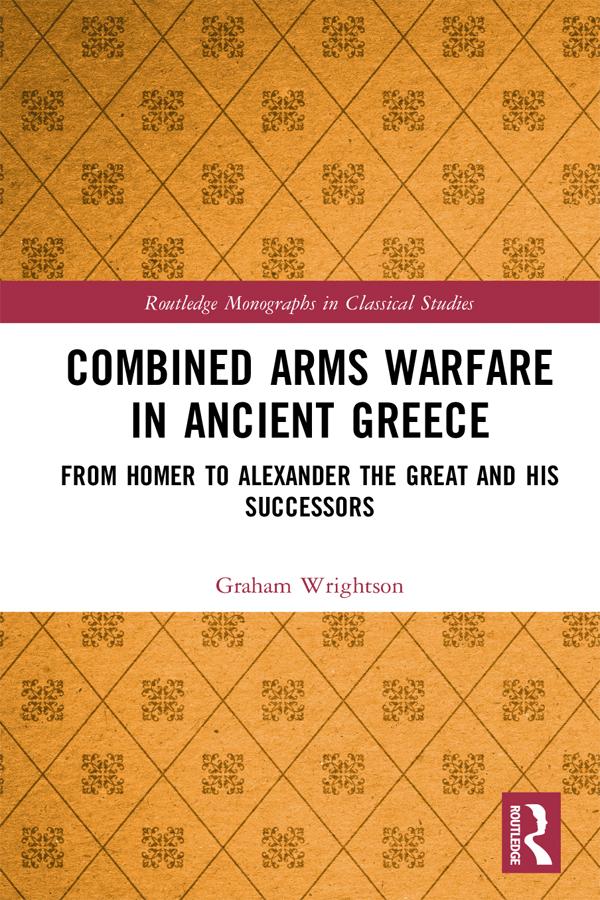
Combined Arms Warfare in Ancient Greece examines the timelines of military developments that led from the hoplite-based armies of the ancient Greeks to the hugely successful and multi-faceted armies of Philip II, Alexander the Great, and his Successors. It concentrates on the introduction and development of individual units and their tactical coordination and use in battle in what is termed "combined arms": the effective integration of different unit types into one cohesive battle plan and army allowing each unit to focus on its strengths without having to worry about its weaknesses.
This volume traces the development, and argues for the vital importance, of the use of combined arms in Greek warfare from the Archaic period onwards, especially concerning the Macedonian hegemony, through to its developmental completion in the form of fully "integrated warfare" at the battle of Ipsus in 301 BCE. It argues crucially that warfare should never be viewed in isolation in individual states, regions, conflicts or periods but taken as a collective whole tracing the mutual influence of other cultures and the successful innovations that always result.
Wrightson analyses Greek and Macedonian warfare through the lens of modern military theoretical terminology, making this study accessible to those with a general interest in military history as well as those studying this specific period.
Paga facilmente con carta, Klarna, Apple Pay o Google Pay. Non sei soddisfatto? Hai sempre 14 giorni per il rimborso. Leggi di più nei nostri termini. Per qualsiasi domanda, scrivici a hello@memmo.org.
Memmo rende lo studio più facile, ovunque tu sia nel mondo. Qui trovi i tuoi libri di testo e strumenti di studio intelligenti, tutto in un unico posto: riassunti, quiz, podcast e flashcard. E poi c'è Ted, il tuo compagno di studio che risponde a ogni tua domanda. Oltre 50.000 studenti studiano già qui: è stato creato per aiutarti a imparare più velocemente e a stressarti meno.