
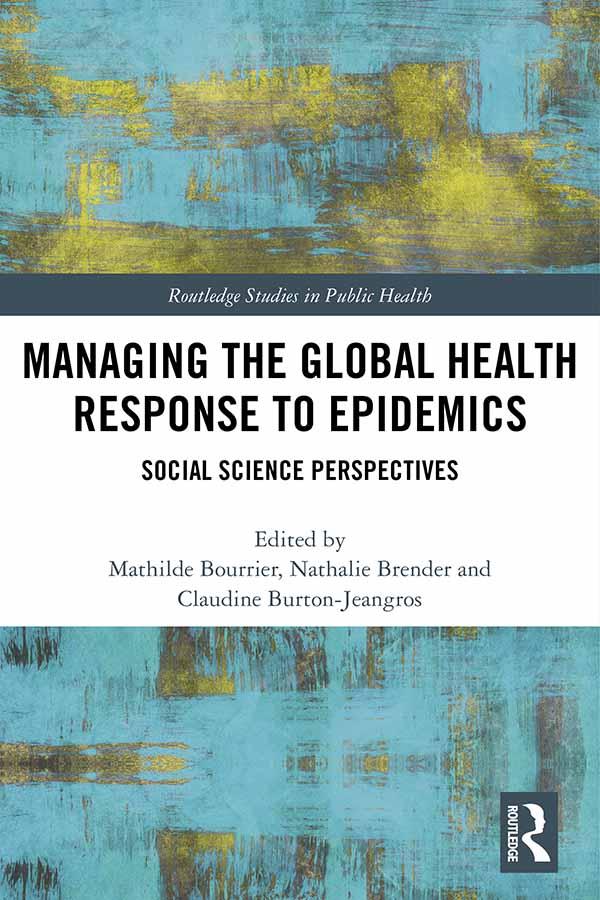
Recent epidemics have prompted large-scale international interventions, aimed at mitigating the spread of disease in a globalized world. During a crisis, however, global health actions including planning and organizing, communicating about risk, and cost benefit evaluations aren’t usually part of a single, integrated global response. Arguing that an uncoordinated approach can be challenged by local conditions and expectations, generating a wide range of resistance and difficulties, this volume provides important insights for future outbreak management and global health governance.
Drawing on experiences with A(H1N1) and Ebola virus disease, the book is divided into three parts looking at how responses to global health crises have developed, lessons learned from particular pandemics and the ethical implications of our management of them. Individual chapters focus on, among other issues, financing, cost–benefit analysis, matrix management, risk communication and organizational strategies.
Taking a social science perspective, this valuable book outlines the current state of global health emergency responses and explores ways in which they can be improved. It is a useful read for academics and practitioners interested in global health, the sociology of health and illness, health economics and emergency management.
Paga facilmente con carta, Klarna, Apple Pay o Google Pay. Non sei soddisfatto? Hai sempre 14 giorni per il rimborso. Leggi di più nei nostri termini. Per qualsiasi domanda, scrivici a hello@memmo.org.
Memmo rende lo studio più facile, ovunque tu sia nel mondo. Qui trovi i tuoi libri di testo e strumenti di studio intelligenti, tutto in un unico posto: riassunti, quiz, podcast e flashcard. E poi c'è Ted, il tuo compagno di studio che risponde a ogni tua domanda. Oltre 50.000 studenti studiano già qui: è stato creato per aiutarti a imparare più velocemente e a stressarti meno.