
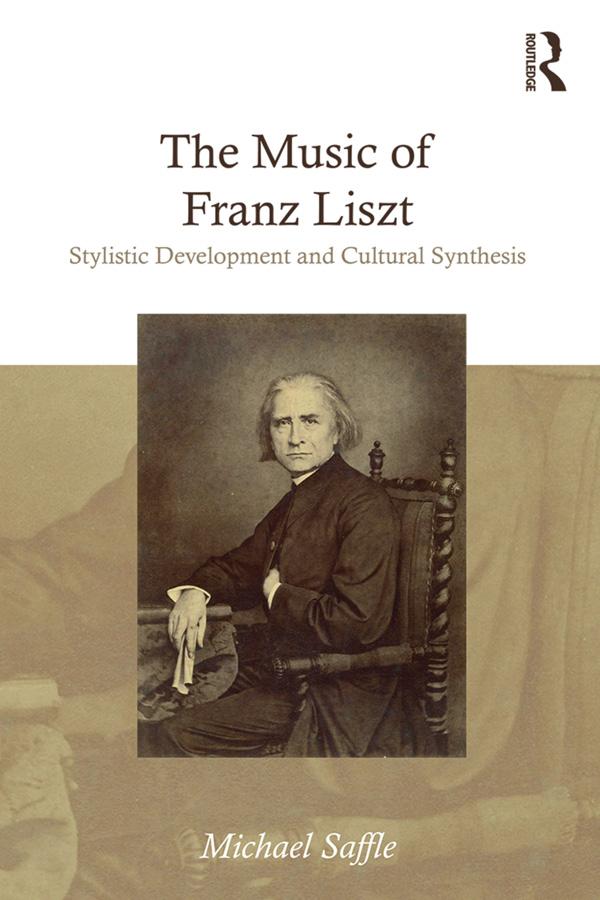
Much of Franz Liszt's musical legacy has often been dismissed as 'trivial’ or 'merely showy,' more or less peripheral contributions to nineteenth-century European culture. But Liszt was a mainstream composer in ways most of his critics have failed to acknowledge; he was also an incessant and often extremely successful innovator. Liszt's mastery of fantasy and sonata traditions, his painstaking settings of texts ranging from erotic verse to portions of the Catholic liturgy, and the remarkable self-awareness he demonstrated even in many of his most 'entertaining' pieces: all these things stamp him not only as a master of Romanticism and an early Impressionist, but as a precursor of Postmodern 'pop.' Liszt's Music places Liszt in historical and cultural focus. At the same time, it examines his principal contributions to musical literature -- from his earliest operatic paraphrases to his final explorations of harmonic and formal possibilities. Liszt's compositional methods, including his penchant for revision, problems associated with early editions of some of his works, and certain aspects of class and gender issues are also discussed. The first book-length assessment of Liszt as composer since Humphrey Searle’s 1956 volume, Liszt's Music is illustrated with well over 100 musical examples.
Paga facilmente con carta, Klarna, Apple Pay o Google Pay. Non sei soddisfatto? Hai sempre 14 giorni per il rimborso. Leggi di più nei nostri termini. Per qualsiasi domanda, scrivici a hello@memmo.org.
Memmo rende lo studio più facile, ovunque tu sia nel mondo. Qui trovi i tuoi libri di testo e strumenti di studio intelligenti, tutto in un unico posto: riassunti, quiz, podcast e flashcard. E poi c'è Ted, il tuo compagno di studio che risponde a ogni tua domanda. Oltre 50.000 studenti studiano già qui: è stato creato per aiutarti a imparare più velocemente e a stressarti meno.