
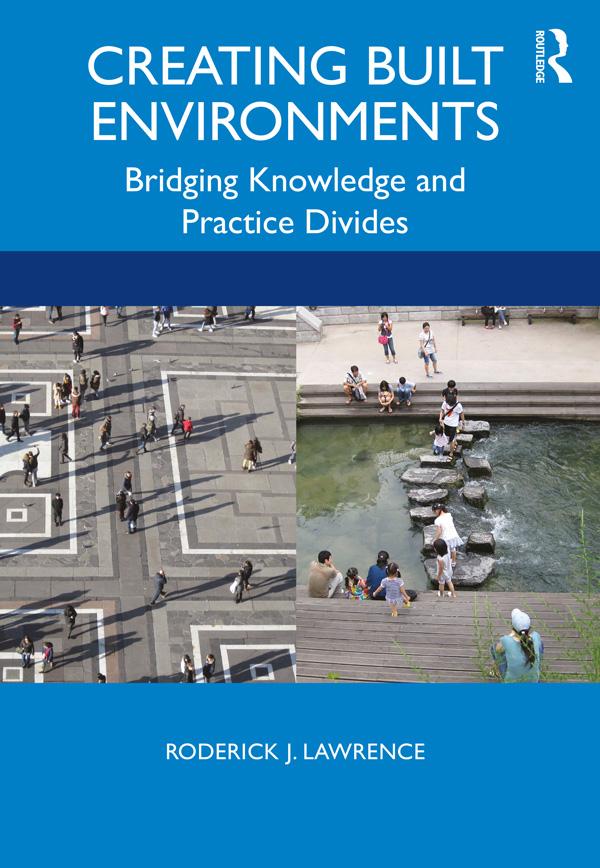
Built environments are complex, emergent, systemic, and require contextual analysis. They should be understood before reconsidering how professionals and researchers of the built environment are educated and trained to reduce the gap between knowledge, practice and real-world circumstances. There is an urgent need to rethink the role of policy makers, researchers, practitioners and laypeople in the construction, renovation and reuse of the built environment in order to deal with numerous environmental/ecological, economic/financial and social/ethical challenges of providing a habitat for current and future generations in a world of continual change. These challenges are too complex to be dealt with only by one discipline or profession. Combinations of different types of knowledge, knowing in praxis and tacit knowledge are needed.
This book presents and illustrates recent innovative contributions with case studies focusing on five strategic domains and the interrelations between them. These transdisciplinary contributions apply concepts, methods and tools that facilitate convergence and concerted action between participants collaborating in policy definition and project implementation. The methods and tools include experiments in living-labs, prototypes on site and virtual simulations, as well as participatory approaches including citizen science, the development of alternative scenarios, and visioning plausible futures.
Paga facilmente con carta, Klarna, Apple Pay o Google Pay. Non sei soddisfatto? Hai sempre 14 giorni per il rimborso. Leggi di più nei nostri termini. Per qualsiasi domanda, scrivici a hello@memmo.org.
Memmo rende lo studio più facile, ovunque tu sia nel mondo. Qui trovi i tuoi libri di testo e strumenti di studio intelligenti, tutto in un unico posto: riassunti, quiz, podcast e flashcard. E poi c'è Ted, il tuo compagno di studio che risponde a ogni tua domanda. Oltre 50.000 studenti studiano già qui: è stato creato per aiutarti a imparare più velocemente e a stressarti meno.