
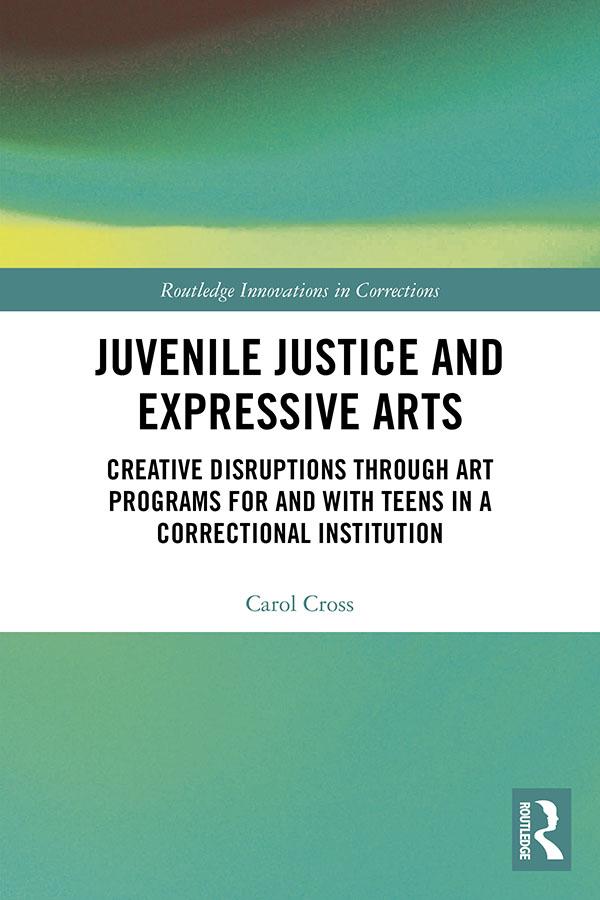
Juvenile Justice and Expressive Arts: Creative Disruptions through Art Programs for and with Teens in a Correctional Institution explores art programming as a sustainable educational initiative to support incarcerated teens’ successful reintegration to society. Responding to a lack of scholarly research on juvenile offenders and the role of art as education in correctional facilities, Carol Cross presents a qualitative study that examines critical pedagogy, adolescent development, and research into the governance and policies surrounding youth at a Canadian correctional facility. Through observational and interview data, action research, and visual analysis, the reader gains an insider's perspective into the lives of teens affected by crime and violence and the potential of art education to aid in increasing their self-esteem, social and emotional wellbeing, and personal development. Visual art and written stories created by male and female juvenile offenders are woven throughout the chapters to illustrate the use of creative expression as education and therapy.
Suitable for scholars and researchers in juvenile justice and corrections as well as policymakers and practitioners in the field, this book will provoke dialogue on best practices for the rehabilitation and reintegration of institutionalized children and youth.
Paga facilmente con carta, Klarna, Apple Pay o Google Pay. Non sei soddisfatto? Hai sempre 14 giorni per il rimborso. Leggi di più nei nostri termini. Per qualsiasi domanda, scrivici a hello@memmo.org.
Memmo rende lo studio più facile, ovunque tu sia nel mondo. Qui trovi i tuoi libri di testo e strumenti di studio intelligenti, tutto in un unico posto: riassunti, quiz, podcast e flashcard. E poi c'è Ted, il tuo compagno di studio che risponde a ogni tua domanda. Oltre 50.000 studenti studiano già qui: è stato creato per aiutarti a imparare più velocemente e a stressarti meno.