
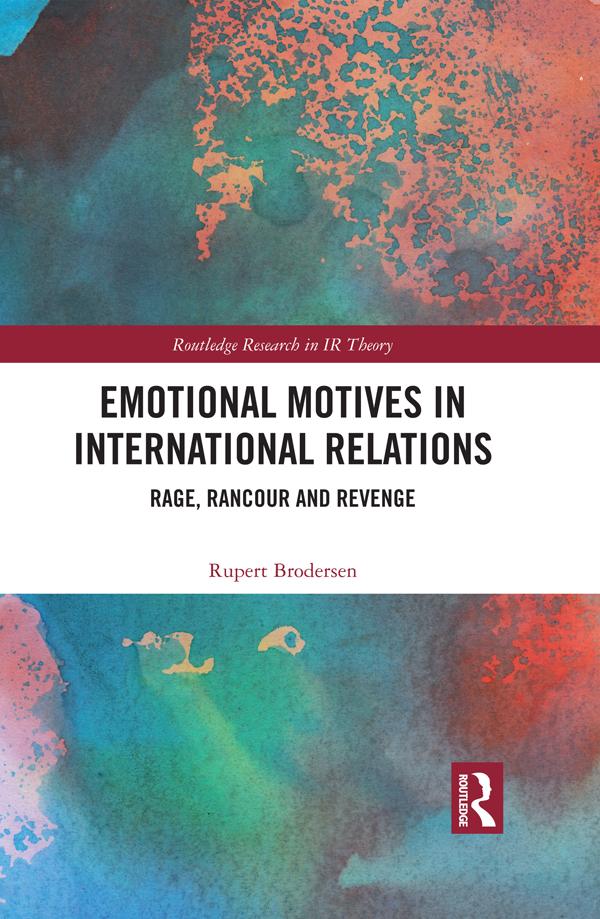
The study of emotions in International Relations is gaining wide-spread attention. Within the "emotional turn" in IR the emotion of rage however has not been given sufficient attention, instead being used as short-hand for irrationality and excess.
Rage is arguably one of the oldest and most destructive emotions in human affairs. This book offers an innovative approach that seeks to split rage into its traditional manifestation of aggression and violence, and into a less visible, passive manifestation of Nietzschean Ressentiment. This model facilitates a comprehensive understanding of revisionist motivation, from the violence of ISIS to the oppositionism of Putin’s Russia. The aim is to illustrate how a lack of violence can belie vengeful impulses and a silent rage, and how acts of violence, regardless of brutality, are often framed as a type of justice and "moral imperative" in the mind of the aggressor. This book raises serious questions and concerns about legitimacy and order in global affairs, and offers a firm theoretical basis for the exploration of present day conflicts.
Paga facilmente con carta, Klarna, Apple Pay o Google Pay. Non sei soddisfatto? Hai sempre 14 giorni per il rimborso. Leggi di più nei nostri termini. Per qualsiasi domanda, scrivici a hello@memmo.org.
Memmo rende lo studio più facile, ovunque tu sia nel mondo. Qui trovi i tuoi libri di testo e strumenti di studio intelligenti, tutto in un unico posto: riassunti, quiz, podcast e flashcard. E poi c'è Ted, il tuo compagno di studio che risponde a ogni tua domanda. Oltre 50.000 studenti studiano già qui: è stato creato per aiutarti a imparare più velocemente e a stressarti meno.