
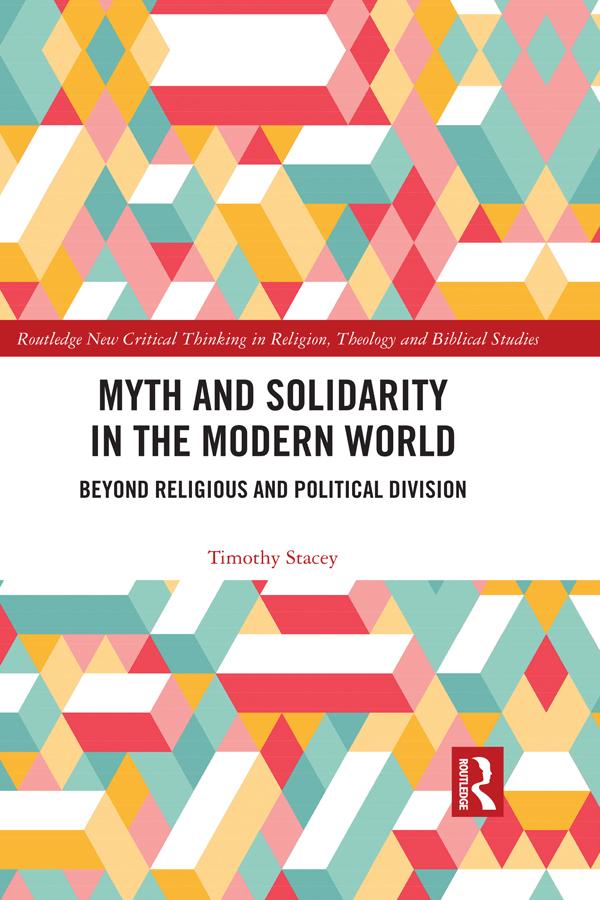
In the context of the rise of reactionary politics across the globe, this book seeks new ways of developing solidarity across religious, political and economic differences. Drawing on an increasingly influential Christian theological movement, postliberalism, it claims that the dominance of liberal, secular rationality has blinded people to the fundamental role of transcendence and myth in developing solidarity. The result is either atrophy, or a retrenching in divisive myths of faith, race, nation or economic status.
Liberalism is now a dominant force across the globe. But its resonance in the Anglo-Saxon West, from which it originates and has been most fully realized, is relatively underexplored. The book thus follows two simultaneous lines of enquiry. Firstly, a genealogical study of social scientific and policy iterations of the relationship between belief and solidarity in the Anglo-Saxon West, placing postliberal theory into dialogue with the sociology and anthropology of religion, politics and economics. Secondly, it draws from original ethnographic research with groups in London, UK, that seek to develop solidarity in the face of deep-seated difference.
By bringing a new way of framing these contentious debates about contemporary society, this research offers tools for more productive conversations around religious and political topics, in particular concluding with a clear policy proposal. It is, therefore, a useful resource for both academics of theology and religious studies, political philosophy, sociology and anthropology; and for politicians, policy makers and practitioners hoping to develop solidarity in the modern world.
Paga facilmente con carta, Klarna, Apple Pay o Google Pay. Non sei soddisfatto? Hai sempre 14 giorni per il rimborso. Leggi di più nei nostri termini. Per qualsiasi domanda, scrivici a hello@memmo.org.
Memmo rende lo studio più facile, ovunque tu sia nel mondo. Qui trovi i tuoi libri di testo e strumenti di studio intelligenti, tutto in un unico posto: riassunti, quiz, podcast e flashcard. E poi c'è Ted, il tuo compagno di studio che risponde a ogni tua domanda. Oltre 50.000 studenti studiano già qui: è stato creato per aiutarti a imparare più velocemente e a stressarti meno.