
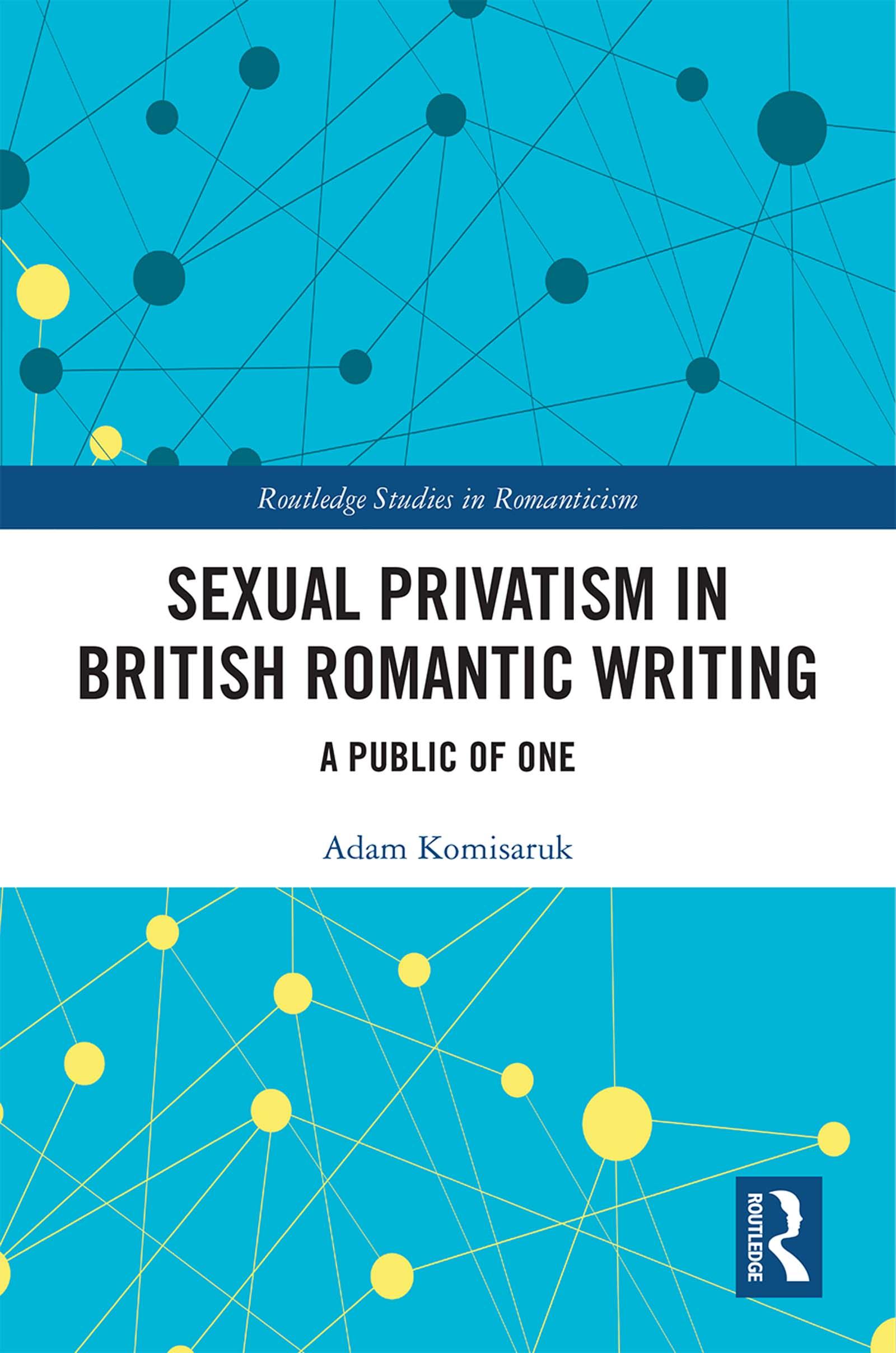
The Romantic age, though often associated with free erotic expression, was ambivalent about what if anything sex had to do with the public sphere. Late-eighteenth- and early-nineteenth-century British texts often repressed the very sexual energies they claimed to be bringing into the open. The delineation of what could and could not be said and done in the name of physical pleasure was of a piece with the capitalist consecration of the social trust to the individual profit-motive. Both these practices, moreover, presupposed a determinate self with sovereignty over its own interests. Writings from and about some nominally public institutions were thus characterized by privatism—a sexual, economic and ontological withdrawal from otherness.
Sexual Privatism in British Romantic Writing: A Public of One explores how this threefold ideology was both propagated and resisted, wittingly and unwittingly, successfully and unsuccessfully, in such Romantic "publics" as rape-law, sodomy-law, adultery-law, high-profile scandals, the population debates, and club-culture. It includes readings of imaginative literature by William Beckford, William Blake, Erasmus Darwin, Mary Hays, Percy Shelley and Mary Wollstonecraft; works of political economy by Jeremy Bentham, William Cobbett, William Godwin, William Hazlitt and Thomas Robert Malthus; as well as contemporary legal treatises, popular journalism and satirical pamphlets.
Paga facilmente con carta, Klarna, Apple Pay o Google Pay. Non sei soddisfatto? Hai sempre 14 giorni per il rimborso. Leggi di più nei nostri termini. Per qualsiasi domanda, scrivici a hello@memmo.org.
Memmo rende lo studio più facile, ovunque tu sia nel mondo. Qui trovi i tuoi libri di testo e strumenti di studio intelligenti, tutto in un unico posto: riassunti, quiz, podcast e flashcard. E poi c'è Ted, il tuo compagno di studio che risponde a ogni tua domanda. Oltre 50.000 studenti studiano già qui: è stato creato per aiutarti a imparare più velocemente e a stressarti meno.