
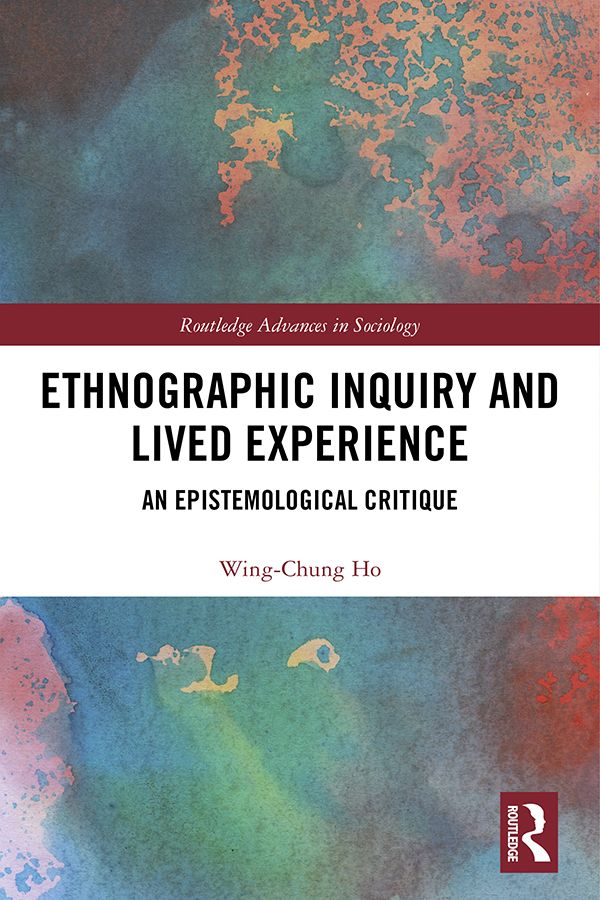
Ho addresses two fundamental theoretical questions about how best to practice ethnographic inquiries to obtain qualitative, experience-near, and shareable accounts of human living. The first question is regarding the epistemology of ethnography. Ho posits that writing is epistemologically prior to the researcher’s fieldwork experience in the production of ethnographic knowledge. This stance is developed using the theories of hermeneutics put forward by Paul Ricoeur and Hans-Georg Gadamer who both consider that once a text is produced, its meaning is dissociated from the intention of the author. The second question is: what is the putative object that the ethnographer writes about? Ho argues that "lived experience" (Erlebnis) offers such an ethnographic object. Since the lived experience that an ethnographer experiences during fieldwork cannot be studied directly, further theorizations of lived experience are necessary. Ho underscores both the non-discursivity and transcendence of lived experience in the lifeworld, and the way power is clandestinely imbued in everyday life in shaping subjectivity and practice. This theorization brings together Alfred Schutz’s lifeworld theory and Michel Foucault’s power/knowledge nexus. The result is a general theory of experience that is pertinent for ethnographic inquiries.
By addressing these two fundamental questions and offering novel angles from which to answer them, this book offers refreshed epistemological guidelines for conducting ethnographic research for scientific reasoning. More importantly, this book also provides a crucial knowledge base for comprehending the current epistemological debates inherent in the production of ethnographic knowledge and furthering discussions in the field.
Paga facilmente con carta, Klarna, Apple Pay o Google Pay. Non sei soddisfatto? Hai sempre 14 giorni per il rimborso. Leggi di più nei nostri termini. Per qualsiasi domanda, scrivici a hello@memmo.org.
Memmo rende lo studio più facile, ovunque tu sia nel mondo. Qui trovi i tuoi libri di testo e strumenti di studio intelligenti, tutto in un unico posto: riassunti, quiz, podcast e flashcard. E poi c'è Ted, il tuo compagno di studio che risponde a ogni tua domanda. Oltre 50.000 studenti studiano già qui: è stato creato per aiutarti a imparare più velocemente e a stressarti meno.