
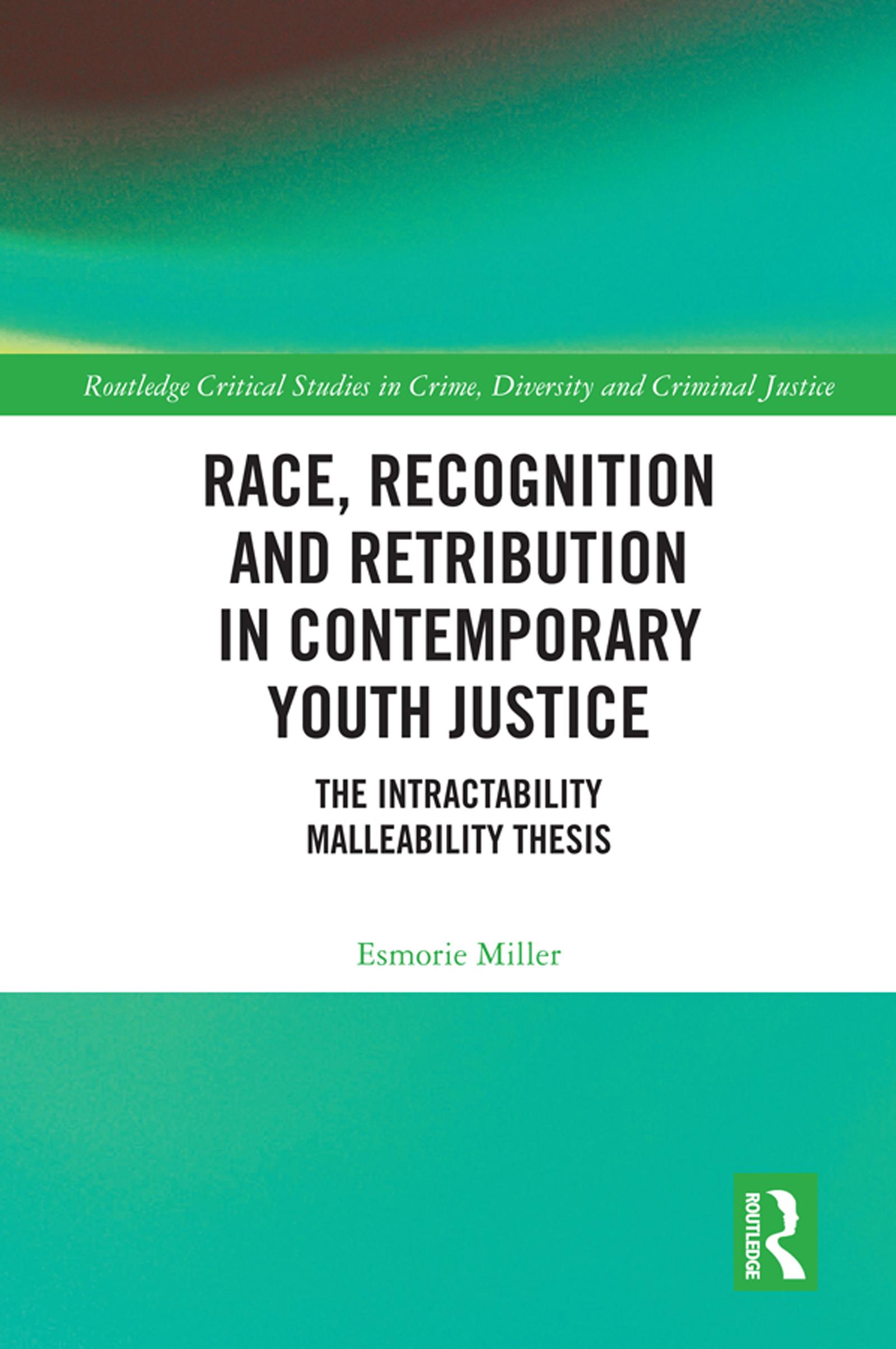
Race, Recognition and Retribution in Contemporary Youth Justice provides a cross-national, sociohistorical investigation of the legacy of racial discrimination, which informs contemporary youth justice practice in Canada and England. The book links racial disparities in youth justice, especially exclusion from ideologies of care and notions of future citizenship, with historical practices of exclusion.
Despite the logic of care found in both rehabilitative and retributive forms of youth justice, Black inner-city youth remain excluded from lenience and social welfare considerations. This exclusion reflects a historical legacy of racial discrimination apparent in the harsher sanctions levied against Black, innercity youth. In exploring race’s role in this arrangement, the book asks: To what extent were Black youth excluded from historic considerations of the lenience and social care, built into the logic of youth justice in England and Canada? To what extent are the disproportionately high incarceration rates, for Black, inner-city youth in the contemporary system, a reflection of a historic exclusion from considerations of lenience and social care? How might contemporary justice efforts be reoriented to explicitly prioritize considerations of lenience and social care ahead of penalty for Black, inner-city youth?
Examining the entrenched structural continuities of racial discrimination, the book draws on archival and interview data, with interviewees including professionals who work with inner-city youth. In concert with the archival and interview data, the book offers the intractability/malleability I/M thesis, an integrated social theoretical logic with the capacity to expand the customary analytical scope for understanding the contemporary entrenched normalization of racialized youth as punishable. The aim is to advance a historicized account, exploring youth’s positioning as constitutive of a continuity of racialized peoples’, in general, and youth’s, in particular, historic exclusion from the benefits of modern rights, including lenience and care. The I/M logic takes its analytical currency from a combined critical race theory (CRT) and recognition theory. The book argues that a truly progressive era of youth justice necessitates cultivating policy and practice which explicitly prioritizes considerations of lenience and social care, ahead of reliance on penalty.
This multidisciplinary book is valuable reading for academics and students researching criminology, sociology, politics, anthropology, critical race studies, and history. It will also appeal to practitioners in the field of youth justice, policymakers, and third-sector organizations.
Paga facilmente con carta, Klarna, Apple Pay o Google Pay. Non sei soddisfatto? Hai sempre 14 giorni per il rimborso. Leggi di più nei nostri termini. Per qualsiasi domanda, scrivici a hello@memmo.org.
Memmo rende lo studio più facile, ovunque tu sia nel mondo. Qui trovi i tuoi libri di testo e strumenti di studio intelligenti, tutto in un unico posto: riassunti, quiz, podcast e flashcard. E poi c'è Ted, il tuo compagno di studio che risponde a ogni tua domanda. Oltre 50.000 studenti studiano già qui: è stato creato per aiutarti a imparare più velocemente e a stressarti meno.