
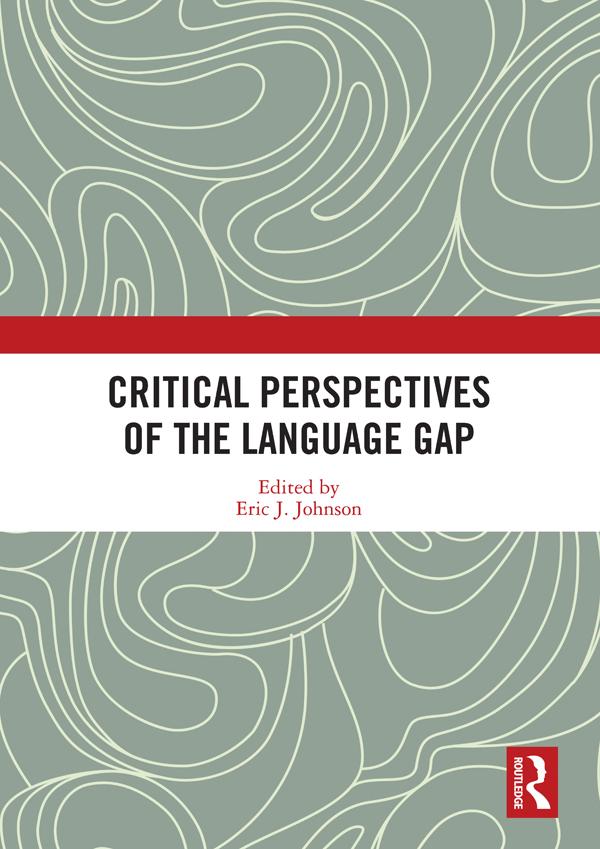
This volume is an orchestrated critique of the notion that individuals from lower socioeconomic status communities have inferior language skills as compared to middle- and upper-class groups. The idea of this so-called “language gap” stems in large part from Hart and Risley’s (1995) publication Meaningful Differences in the Everyday Experience of Young American Children. Hart and Risley proposed that by age 3, children from more economically affluent households were exposed to approximately 30 million more words than children from low-income backgrounds. They also claimed that this gap in exposure to words negatively impacts cognitive development and eventual academic achievement. The contributing authors in this book contest the original concept of a “language-gap” as well as the recent swell of academic research and public programs that it has produced. The chapters interrogate the linguistic, academic, cultural, and social implications of the “language-gap” by providing critical accounts grounded in the scholarly disciplines of sociolinguistics, anthropology, and education.
This book was originally published as a special issue of the International Multilingual Research Journal.
Paga facilmente con carta, Klarna, Apple Pay o Google Pay. Non sei soddisfatto? Hai sempre 14 giorni per il rimborso. Leggi di più nei nostri termini. Per qualsiasi domanda, scrivici a hello@memmo.org.
Memmo rende lo studio più facile, ovunque tu sia nel mondo. Qui trovi i tuoi libri di testo e strumenti di studio intelligenti, tutto in un unico posto: riassunti, quiz, podcast e flashcard. E poi c'è Ted, il tuo compagno di studio che risponde a ogni tua domanda. Oltre 50.000 studenti studiano già qui: è stato creato per aiutarti a imparare più velocemente e a stressarti meno.