
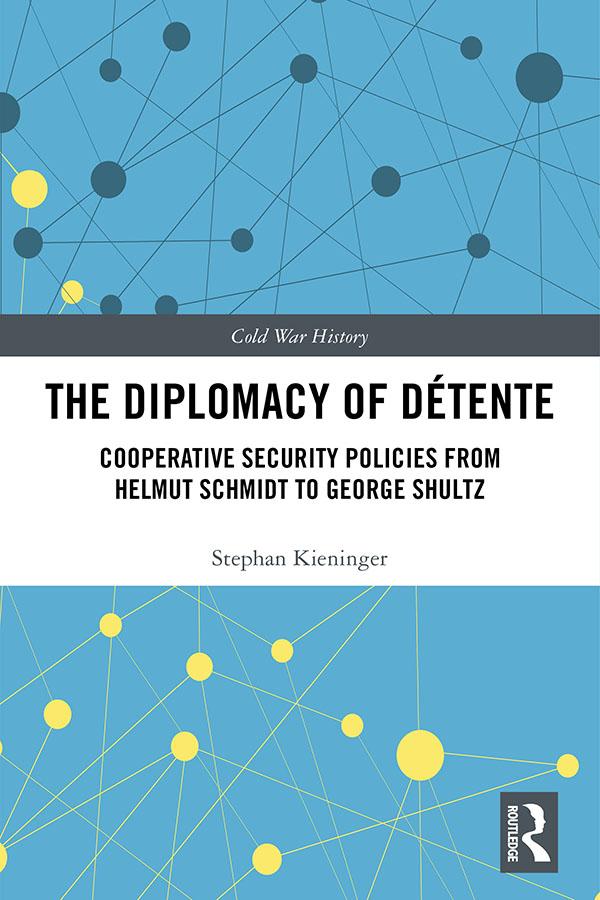
This book investigates the underlying reasons for the longevity of détente and its impact on East–West relations.
The volume examines the relevance of trade across the Iron Curtain as a means to facilitate mutual trust, as well as the emergence of new habits of transparency regardless of recurring military crises. A major theme of the book concerns Helmut Schmidt’s foreign policy and his contribution to the resilience of cooperative security policies in East–West relations. It examines Schmidt’s crucial role in the Euromissile crisis, his Ostpolitik diplomacy and his pan-European trade initiatives to engage the Soviet Union in a joint perspective of trade, industry and technology. Another key theme concerns the crisis in US–Soviet relations and the challenges of meaningful leadership communication between Washington and Moscow in the absence of backchannel diplomacy during the Carter years. The book depicts the freeze in US–Soviet relations after the Soviet invasion in Afghanistan, the declaration of martial law in Poland, and Helmut Schmidt’s efforts to serve as a mediator and interpreter working for a relaunch of US–Soviet dialogue. Eventually, the book highlights George Shultz’s pivotal role in the Reagan Administration’s efforts to improve US-Soviet relations, well before Mikhail Gorbachev’s arrival.
This book will be of interest to students of Cold War studies, diplomatic history, foreign policy and international relations.
Paga facilmente con carta, Klarna, Apple Pay o Google Pay. Non sei soddisfatto? Hai sempre 14 giorni per il rimborso. Leggi di più nei nostri termini. Per qualsiasi domanda, scrivici a hello@memmo.org.
Memmo rende lo studio più facile, ovunque tu sia nel mondo. Qui trovi i tuoi libri di testo e strumenti di studio intelligenti, tutto in un unico posto: riassunti, quiz, podcast e flashcard. E poi c'è Ted, il tuo compagno di studio che risponde a ogni tua domanda. Oltre 50.000 studenti studiano già qui: è stato creato per aiutarti a imparare più velocemente e a stressarti meno.