
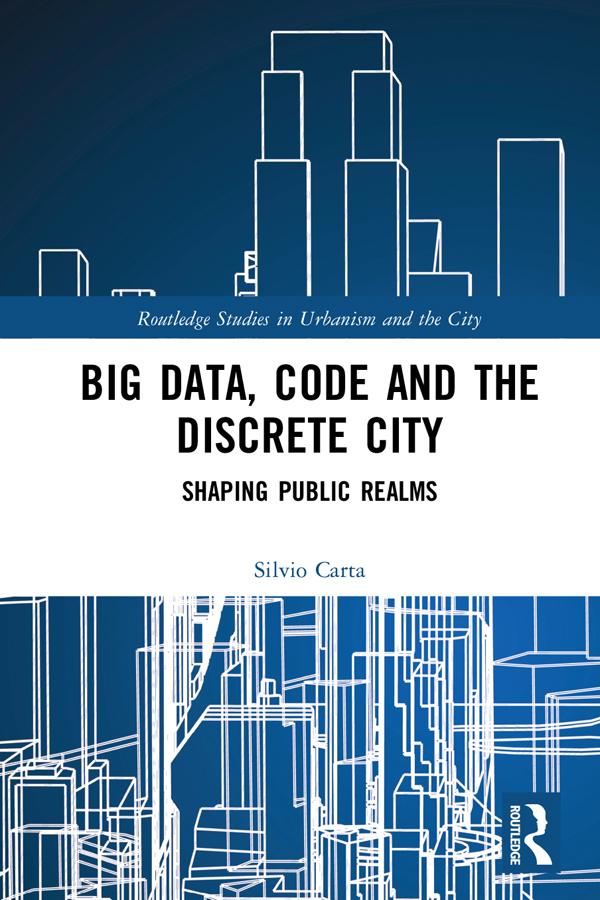
Big Data, Code and the Discrete City explores how digital technologies are gradually changing the way in which the public space is designed by architects, managed by policymakers and experienced by individuals. Smart city technologies are superseding the traditional human experience that has characterised the making of the public space until today. This book examines how computers see the public space and the effect of algorithms, artificial intelligences and automated processes on the human experience in public spaces.
Divided into three parts, the first part of this book examines the notion of discreteness in its origins and applications to computer sciences. The second section presents a dual perspective: it explores the ways in which public spaces are constructed by the computer-driven logic and then translated into control mechanisms, design strategies and software-aided design. This perspective also describes the way in which individuals perceive this new public space, through its digital logic, and discrete mechanisms (from Wi-Fi coverage to self-tracking). Finally, in the third part, this book scrutinises the discrete logic with which computers operate, and how this is permeating into aspects of city life.
This book is valuable for anyone interested in urban studies and digital technologies, and more specifically in big data, urban informatics and public space.
Paga facilmente con carta, Klarna, Apple Pay o Google Pay. Non sei soddisfatto? Hai sempre 14 giorni per il rimborso. Leggi di più nei nostri termini. Per qualsiasi domanda, scrivici a hello@memmo.org.
Memmo rende lo studio più facile, ovunque tu sia nel mondo. Qui trovi i tuoi libri di testo e strumenti di studio intelligenti, tutto in un unico posto: riassunti, quiz, podcast e flashcard. E poi c'è Ted, il tuo compagno di studio che risponde a ogni tua domanda. Oltre 50.000 studenti studiano già qui: è stato creato per aiutarti a imparare più velocemente e a stressarti meno.