
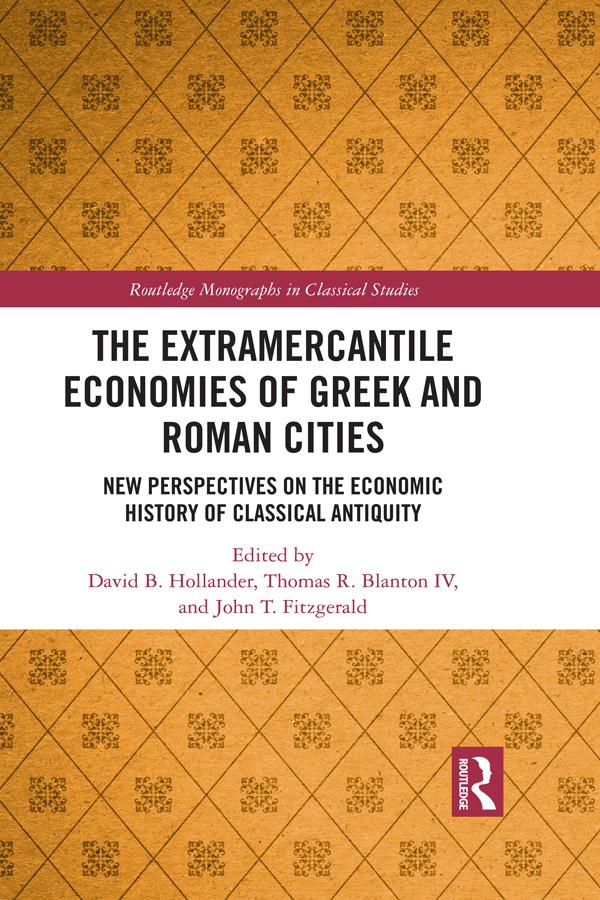
Recent work on the ancient economy has tended to concentrate on market exchange, but other forces also caused goods to change hands. Such nonmarket transfers ranged from small private gifts to the wholesale confiscation of cities, lands, and their peoples. The papers presented in this volume examine aspects of this extramercantile economy, particularly benefaction and the role of associations, as well as their impact on the market economy.
This volume brings together ancient historians, New Testament scholars, and classicists to assess critically the New Institutional Economics framework. Combining theoretical approaches with detailed investigations of particular regions and topics, its chapters examine Greek economic thought, the benefits of membership in private associations, and the economic role of civic euergetism from classical Athens to the municipalities of Roman Spain.
The Extramercantile Economies of Greek and Roman Cities will be of use to those interested in the economic context of ancient religions, the role of associations in the economy, theoretical approaches to the study of the ancient economy, labor and politics in the ancient city, as well as how Greek philosophers, from Xenophon to Philodemus, developed ethical ideas about economic behavior.
Paga facilmente con carta, Klarna, Apple Pay o Google Pay. Non sei soddisfatto? Hai sempre 14 giorni per il rimborso. Leggi di più nei nostri termini. Per qualsiasi domanda, scrivici a hello@memmo.org.
Memmo rende lo studio più facile, ovunque tu sia nel mondo. Qui trovi i tuoi libri di testo e strumenti di studio intelligenti, tutto in un unico posto: riassunti, quiz, podcast e flashcard. E poi c'è Ted, il tuo compagno di studio che risponde a ogni tua domanda. Oltre 50.000 studenti studiano già qui: è stato creato per aiutarti a imparare più velocemente e a stressarti meno.