
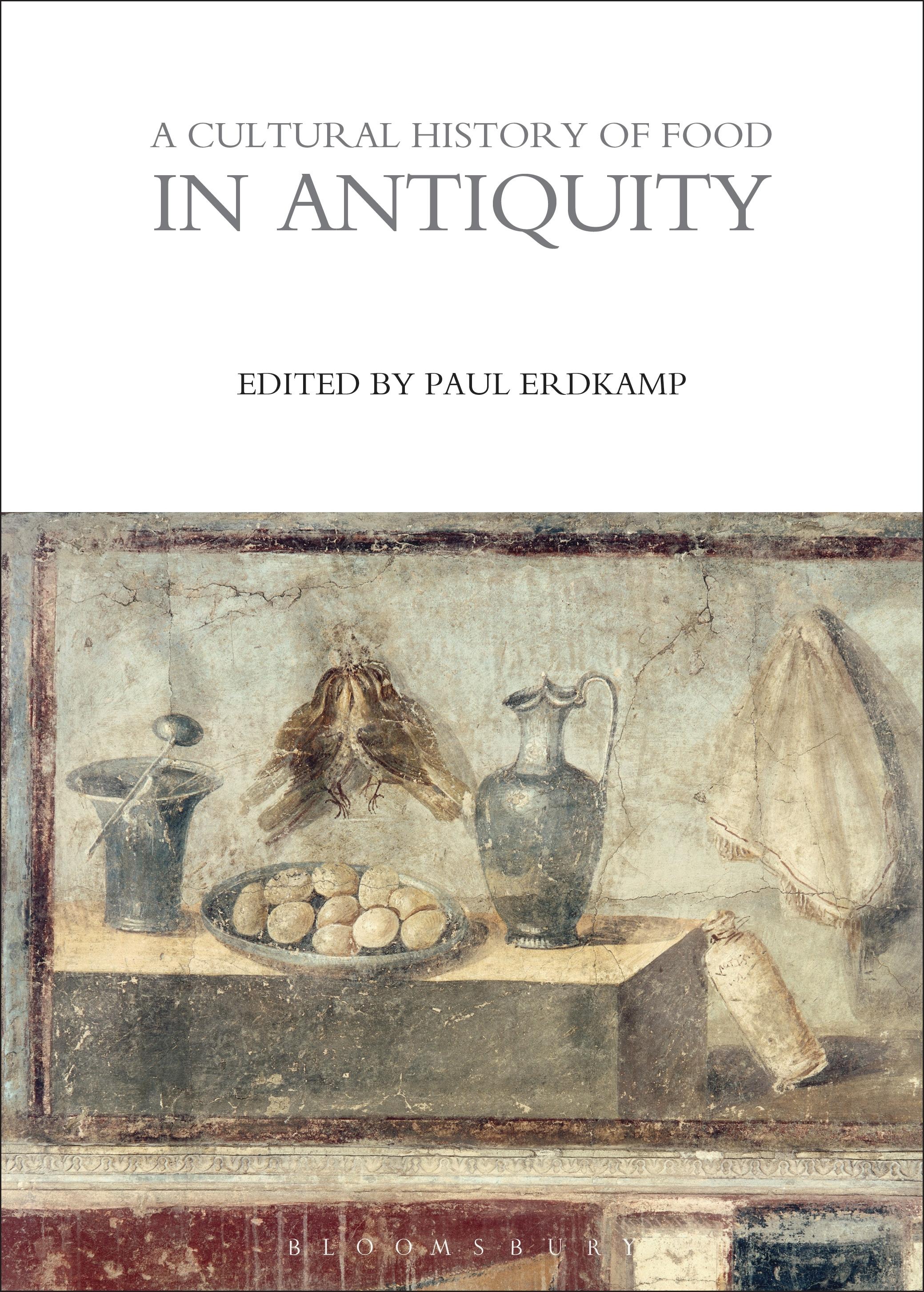
From Archaic Greece until the Late Roman Empire (c. 800 BCE to c. 500 CE), food was more than a physical necessity; it was a critical factor in politics, economics and culture. On the one hand, the Mediterranean landscape and climate encouraged particular crops – notably cereals, vines and olives – but, with the risks of crop failure ever-present, control of food resources was vital to economic and political power. On the other hand, diet and dining reflected complex social hierarchies and relationships. What was eaten, with whom and when was a fundamental part of the expression of one's role and place in society. In addition, symbolism and ritual suffused foodstuffs, their preparation and consumption.
A Cultural History of Food in Antiquity presents an overview of the period with essays on food production, food systems, food security, safety and crises, food and politics, eating out, professional cooking, kitchens and service work, family and domesticity, body and soul, representations of food, and developments in food production and consumption globally.
A Cultural History of Food in Antiquity presents an overview of the period with essays on food production, food systems, food security, safety and crises, food and politics, eating out, professional cooking, kitchens and service work, family and domesticity, body and soul, representations of food, and developments in food production and consumption globally.
Paga facilmente con carta, Klarna, Apple Pay o Google Pay. Non sei soddisfatto? Hai sempre 14 giorni per il rimborso. Leggi di più nei nostri termini. Per qualsiasi domanda, scrivici a hello@memmo.org.
Memmo rende lo studio più facile, ovunque tu sia nel mondo. Qui trovi i tuoi libri di testo e strumenti di studio intelligenti, tutto in un unico posto: riassunti, quiz, podcast e flashcard. E poi c'è Ted, il tuo compagno di studio che risponde a ogni tua domanda. Oltre 50.000 studenti studiano già qui: è stato creato per aiutarti a imparare più velocemente e a stressarti meno.