
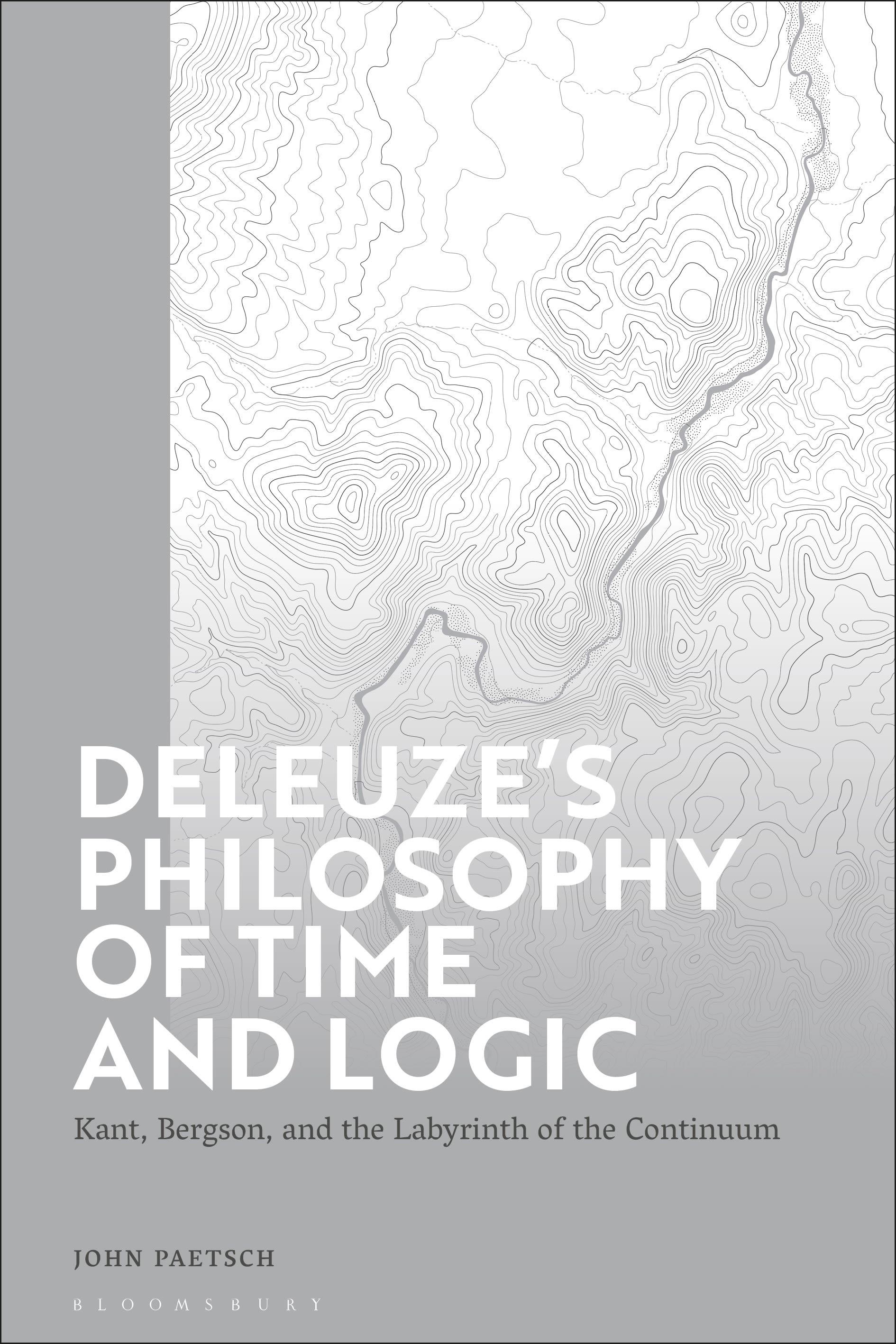
In this compelling study Charles John Paetsch explores the overlooked relationship between time and logic in Gilles Deleuze's philosophy.
Drawing on the work of philosophers and mathematicians, from Kant and Peirce to Bergson and Brandom, this book plots an original path through Deleuze's thought and transcendental empiricism.
Divided into 2 parts, each with a transcendental and a logical focus respectively, Part I introduces the concept of time in Deleuze's philosophy. Having dismissed all previous philosophies of time as deficient, with the notable exception of Bergson, Paetsch reveals how, in critiquing theories of temporality, Deleuze turns in particular to Kant. In doing so, Deleuze innovatively reconsiders transcendental philosophy in light of Bergson's theses on durée (lived duration). Building on the first part, Part II then investigates Deleuze's understanding of logic and its relation to time. Both Deleuze and Bergson claimed that time undermines the central principles of every logical system. And yet, this book examines how Deleuze steps beyond logic, contending that a mathematical expression of 'durative continuity' could inaugurate a novel philosophy of physics.
Engaging with key Deleuzian texts, including Logic of Sense, Difference and Repetition, and A Thousand Plateaus, Deleuze's Philosophy of Time and Logic provides a bold new interpretation of fundamental questions concerning time, how we understand it, and how it affects what we think. It will be of interest to scholars across continental philosophy, logic, philosophy of mathematics, and metaphysics.
Drawing on the work of philosophers and mathematicians, from Kant and Peirce to Bergson and Brandom, this book plots an original path through Deleuze's thought and transcendental empiricism.
Divided into 2 parts, each with a transcendental and a logical focus respectively, Part I introduces the concept of time in Deleuze's philosophy. Having dismissed all previous philosophies of time as deficient, with the notable exception of Bergson, Paetsch reveals how, in critiquing theories of temporality, Deleuze turns in particular to Kant. In doing so, Deleuze innovatively reconsiders transcendental philosophy in light of Bergson's theses on durée (lived duration). Building on the first part, Part II then investigates Deleuze's understanding of logic and its relation to time. Both Deleuze and Bergson claimed that time undermines the central principles of every logical system. And yet, this book examines how Deleuze steps beyond logic, contending that a mathematical expression of 'durative continuity' could inaugurate a novel philosophy of physics.
Engaging with key Deleuzian texts, including Logic of Sense, Difference and Repetition, and A Thousand Plateaus, Deleuze's Philosophy of Time and Logic provides a bold new interpretation of fundamental questions concerning time, how we understand it, and how it affects what we think. It will be of interest to scholars across continental philosophy, logic, philosophy of mathematics, and metaphysics.
Paga facilmente con carta, Klarna, Apple Pay o Google Pay. Non sei soddisfatto? Hai sempre 14 giorni per il rimborso. Leggi di più nei nostri termini. Per qualsiasi domanda, scrivici a hello@memmo.org.
Memmo rende lo studio più facile, ovunque tu sia nel mondo. Qui trovi i tuoi libri di testo e strumenti di studio intelligenti, tutto in un unico posto: riassunti, quiz, podcast e flashcard. E poi c'è Ted, il tuo compagno di studio che risponde a ogni tua domanda. Oltre 50.000 studenti studiano già qui: è stato creato per aiutarti a imparare più velocemente e a stressarti meno.