
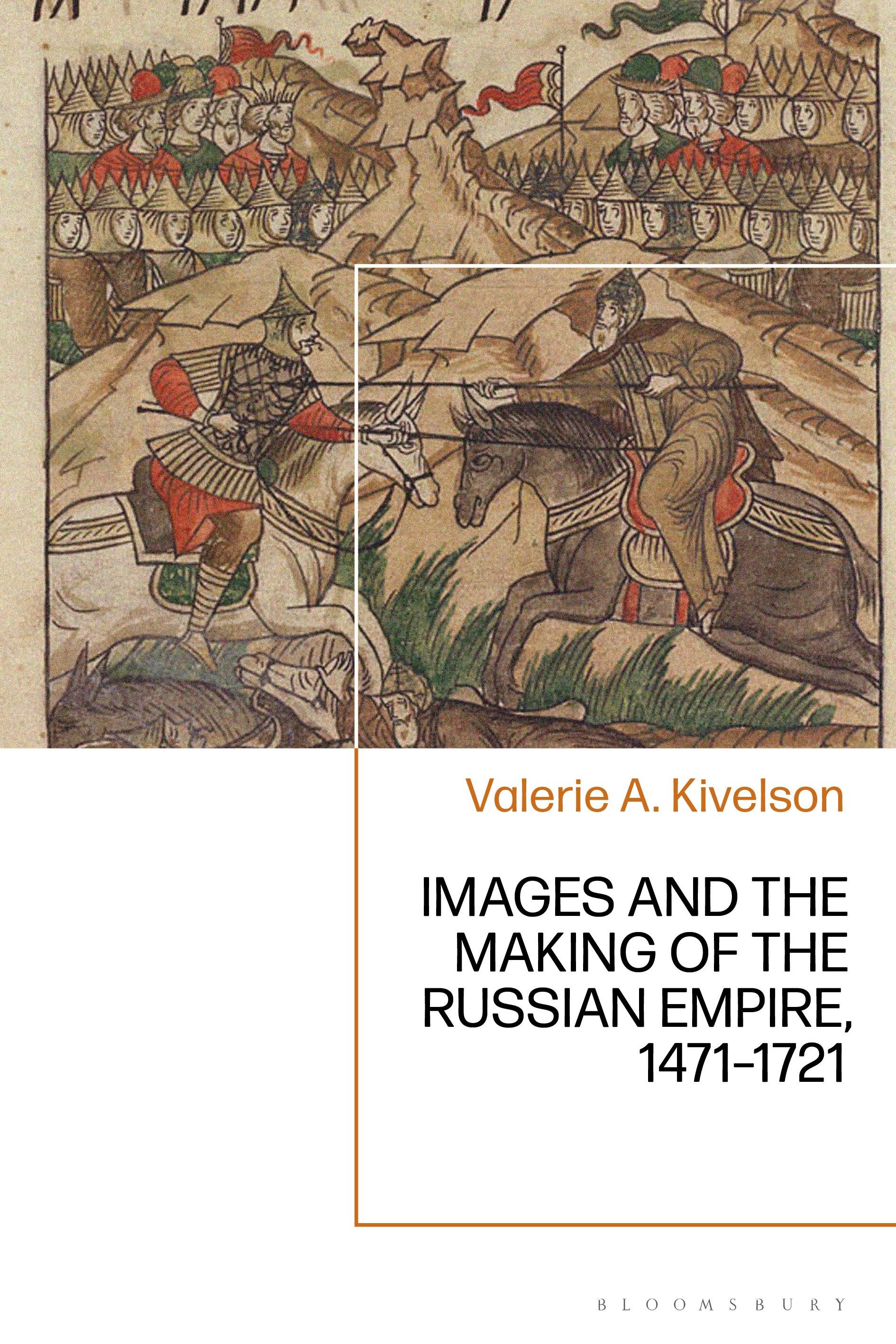
Exploring the visual record of the Muscovite tsardom, this book demonstrates that, in imperial settings, images actually do things.
Richly illustrated with 120 arresting, little-known images, it considers how those images functioned as active agents for and against empire. Images and the Making of the Russian Empire moves out from the throne room of the Kremlin to engravers' workshops of Chernihiv and Kyiv, to the Amur River basin, to the icy peaks of Kamchatka, wherever imagery and empire intersected – which was everywhere.
The book presents an unexpected array of pictorial material, including Muscovite illuminated histories, Ukrainian political-theological prints, and Siberian reindeer herders' pictographic signature marks. Valerie A. Kivelson demonstrates how pictures created by conquerors and conquered, by elites and subjects, by the powerful and the disempowered, advanced and shaped the tsardom as it grew into an ethnically and religiously diverse empire, in ways that have remained unnoticed until now. Through its novel visual methodology, it offers original perspectives on both Moscow's ambitions and the ways in which populations coming under tsarist control pushed back and reshaped the regime's own understanding of what it meant to be an imperial state.
Richly illustrated with 120 arresting, little-known images, it considers how those images functioned as active agents for and against empire. Images and the Making of the Russian Empire moves out from the throne room of the Kremlin to engravers' workshops of Chernihiv and Kyiv, to the Amur River basin, to the icy peaks of Kamchatka, wherever imagery and empire intersected – which was everywhere.
The book presents an unexpected array of pictorial material, including Muscovite illuminated histories, Ukrainian political-theological prints, and Siberian reindeer herders' pictographic signature marks. Valerie A. Kivelson demonstrates how pictures created by conquerors and conquered, by elites and subjects, by the powerful and the disempowered, advanced and shaped the tsardom as it grew into an ethnically and religiously diverse empire, in ways that have remained unnoticed until now. Through its novel visual methodology, it offers original perspectives on both Moscow's ambitions and the ways in which populations coming under tsarist control pushed back and reshaped the regime's own understanding of what it meant to be an imperial state.
Paga facilmente con carta, Klarna, Apple Pay o Google Pay. Non sei soddisfatto? Hai sempre 14 giorni per il rimborso. Leggi di più nei nostri termini. Per qualsiasi domanda, scrivici a hello@memmo.org.
Memmo rende lo studio più facile, ovunque tu sia nel mondo. Qui trovi i tuoi libri di testo e strumenti di studio intelligenti, tutto in un unico posto: riassunti, quiz, podcast e flashcard. E poi c'è Ted, il tuo compagno di studio che risponde a ogni tua domanda. Oltre 50.000 studenti studiano già qui: è stato creato per aiutarti a imparare più velocemente e a stressarti meno.