
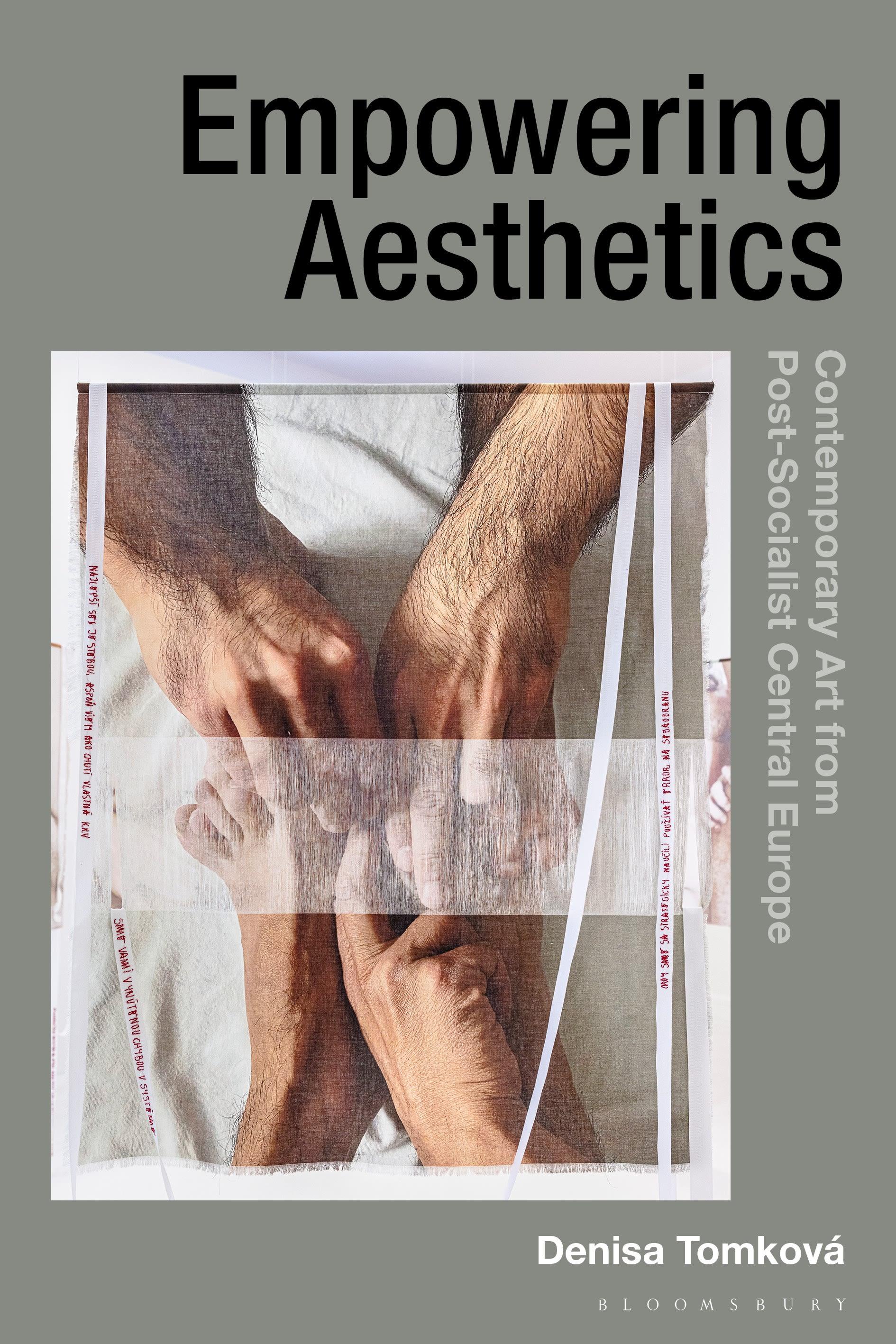
The artistic strategies explored in this book are essential tools in fostering emancipatory consciousness in marginalized communities. Empowering Aesthetics weaves together case studies from the post-socialist Central European region (the Czech Republic, Hungary, Poland, and Slovakia) to show how art can provide critical support to gender, sexual and racialized groups. The empowering aesthetics employed by the artists in this book are not only urgent and critical, but also vitally personal, each chapter building a clear understanding of what social equality looks like in these specific political and geographic contexts. These practices are a response to the rise of nationalism, homophobia, transphobia, and xenophobia in the region.
Engaging with contemporary philosophy and feminist, queer and decolonial (art) theory (Sara Ahmed, Judith Butler, Angela Dimitrakaki, Boris Groys, Jack Halberstam, Grant Kester, Ewa Majewska, Paul B. Preciado, Legacy Russell, Madina Tlostanova, etc.), this book highlights a shift in the understanding of the artwork and aesthetic experience that is enduring rather than immediate, drawing attention to a given community. The projects discussed in this book are created with the artist and the wider community or family in mind and are created in intersubjective connection with others. This volume highlights that empowering aesthetics perform an important function in challenging these narratives while contributing to building an inclusive collective memory that emancipates systematically marginalized individuals and communities.
Engaging with contemporary philosophy and feminist, queer and decolonial (art) theory (Sara Ahmed, Judith Butler, Angela Dimitrakaki, Boris Groys, Jack Halberstam, Grant Kester, Ewa Majewska, Paul B. Preciado, Legacy Russell, Madina Tlostanova, etc.), this book highlights a shift in the understanding of the artwork and aesthetic experience that is enduring rather than immediate, drawing attention to a given community. The projects discussed in this book are created with the artist and the wider community or family in mind and are created in intersubjective connection with others. This volume highlights that empowering aesthetics perform an important function in challenging these narratives while contributing to building an inclusive collective memory that emancipates systematically marginalized individuals and communities.
Paga facilmente con carta, Klarna, Apple Pay o Google Pay. Non sei soddisfatto? Hai sempre 14 giorni per il rimborso. Leggi di più nei nostri termini. Per qualsiasi domanda, scrivici a hello@memmo.org.
Memmo rende lo studio più facile, ovunque tu sia nel mondo. Qui trovi i tuoi libri di testo e strumenti di studio intelligenti, tutto in un unico posto: riassunti, quiz, podcast e flashcard. E poi c'è Ted, il tuo compagno di studio che risponde a ogni tua domanda. Oltre 50.000 studenti studiano già qui: è stato creato per aiutarti a imparare più velocemente e a stressarti meno.