
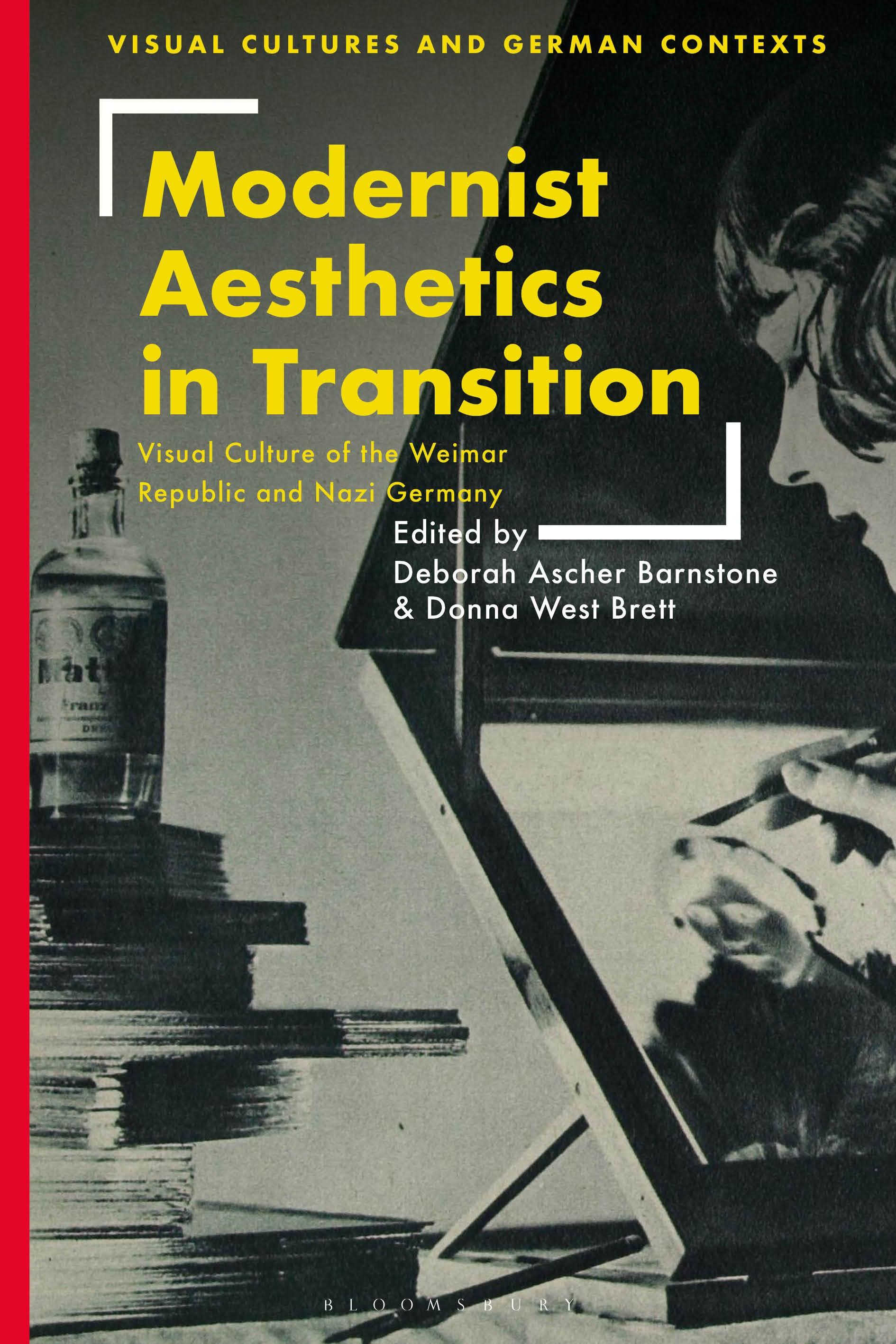
How did German aesthetic values change during the Weimar Republic and after its immediate collapse at the beginning of the National Socialist period? Contrary to conventional narratives that depict modernist aesthetics as static, shaping principles of modern art and design, this volume argues for their complexity and ever-shifting nature.
Illuminating the vital exchanges that occurred across multiple art forms during a period of unmatched cultural activity, this multi-disciplinary volume explores the cultural transition between Weimar- and National Socialist-era Germany and offers a fresh perspective on the fate of modernism during a time of censorship and social stigma. Featuring essays on architecture, painting, photography, film, sculpture, cabaret, typography, and commercial design, the volume explores competing and comparable themes across German art from 1919-1945 and addresses how modern approaches like New Vision coexisted with more traditional and established artistic modes.
Such visual complexity is evident from the volume's eclectic coverage: these include 'sexology' and eroticism, visual grammar in typography and architecture, the reception of Weimar art in the National Socialist period, and the formation and transformation of queer and Jewish identities. The volume encompasses subjects as different as shadow in the animated films of Lotte Reininger, filmic adaptations of Heinrich Zille's social commentary in the 1920s, the photography of László Moholy-Nagy, and depictions of female sexuality in Magnus Hirschfeld's oeuvre. By bridging multiple artistic fields, this highly interdisciplinary work provides a fresh perspective on the ever-changing art and aesthetic principles of early-20th-century Germany.
Illuminating the vital exchanges that occurred across multiple art forms during a period of unmatched cultural activity, this multi-disciplinary volume explores the cultural transition between Weimar- and National Socialist-era Germany and offers a fresh perspective on the fate of modernism during a time of censorship and social stigma. Featuring essays on architecture, painting, photography, film, sculpture, cabaret, typography, and commercial design, the volume explores competing and comparable themes across German art from 1919-1945 and addresses how modern approaches like New Vision coexisted with more traditional and established artistic modes.
Such visual complexity is evident from the volume's eclectic coverage: these include 'sexology' and eroticism, visual grammar in typography and architecture, the reception of Weimar art in the National Socialist period, and the formation and transformation of queer and Jewish identities. The volume encompasses subjects as different as shadow in the animated films of Lotte Reininger, filmic adaptations of Heinrich Zille's social commentary in the 1920s, the photography of László Moholy-Nagy, and depictions of female sexuality in Magnus Hirschfeld's oeuvre. By bridging multiple artistic fields, this highly interdisciplinary work provides a fresh perspective on the ever-changing art and aesthetic principles of early-20th-century Germany.
Paga facilmente con carta, Klarna, Apple Pay o Google Pay. Non sei soddisfatto? Hai sempre 14 giorni per il rimborso. Leggi di più nei nostri termini. Per qualsiasi domanda, scrivici a hello@memmo.org.
Memmo rende lo studio più facile, ovunque tu sia nel mondo. Qui trovi i tuoi libri di testo e strumenti di studio intelligenti, tutto in un unico posto: riassunti, quiz, podcast e flashcard. E poi c'è Ted, il tuo compagno di studio che risponde a ogni tua domanda. Oltre 50.000 studenti studiano già qui: è stato creato per aiutarti a imparare più velocemente e a stressarti meno.