
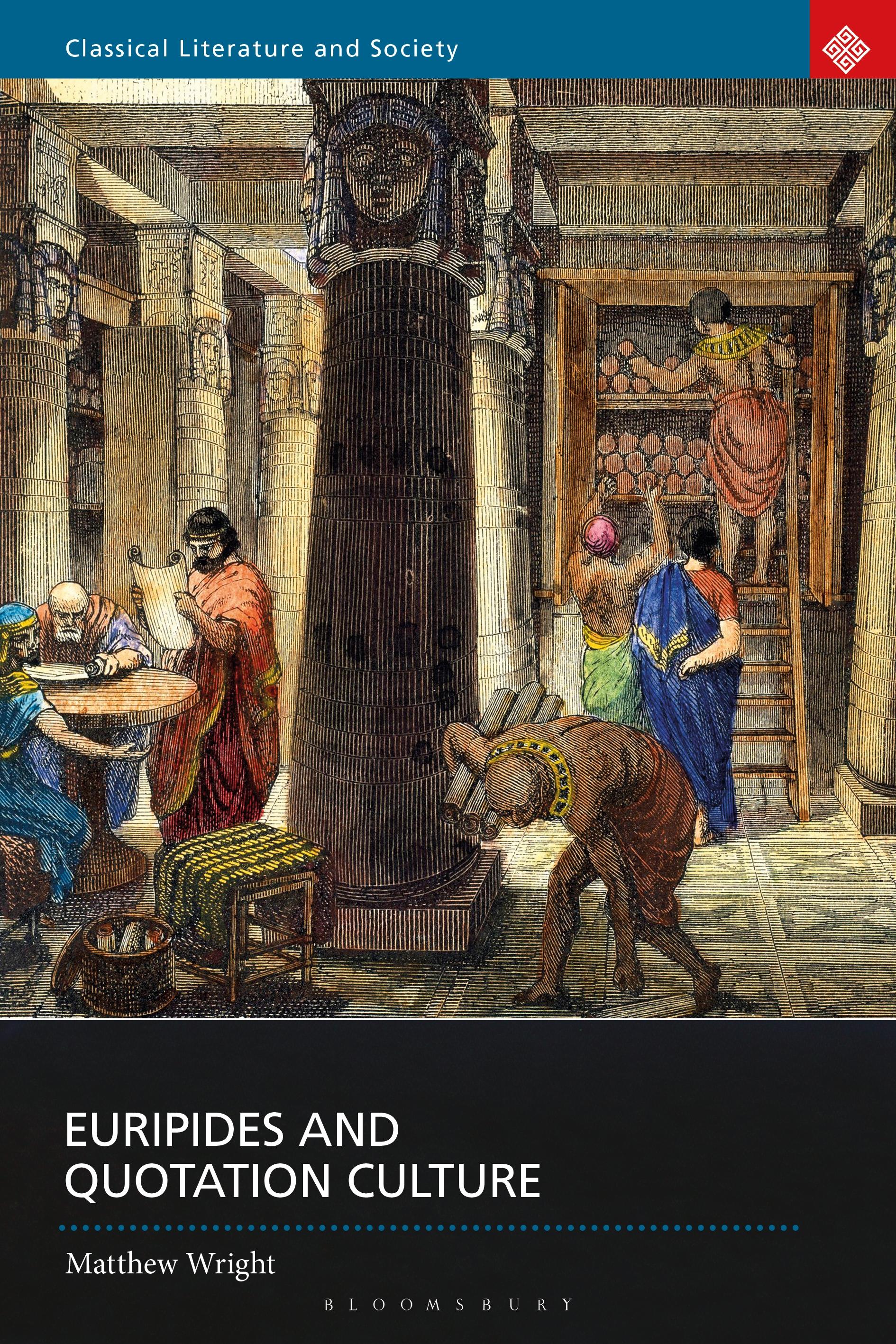
Presenting a new approach to Euripides' plays, this book explores the playwright's ancient tragedies in relation to quotation culture. Treating extant works and lost works side-by-side, Matthew Wright presents a selective survey of ways in which Euripidean tragedy was quoted within antiquity, both in social contexts (on the comic stage, at symposia, in law courts, in education) and in different literary genres (drama, biography, oratory, philosophy, literary scholarship, history and anthologies). There is also a discussion of the connection between quotability and classic status, where Wright asks what quotations can tell us about ancient reading habits. The implication is that Euripides actively participated in quotation culture by deliberately making certain portions of his plays stand out as especially quotable.
Within classical antiquity, Euripides was the most widely quoted author apart from Homer. His plays are full of 'quotable quotes', which were repeated so often that they acquired a life of their own. Hundreds of famous verses from Euripidean drama circulated widely within the ancient world, even after the plays in which they originally featured became forgotten or vanished completely. Indeed, the majority of Euripides' tragedies now survive only in the form of scattered quotations, otherwise known to us as 'fragments'. It is this corpus of fragmentary quotations, along with his extant plays, that makes Euripides such an interesting case study in the world of quotation culture. This book is the first of its kind to understand Euripides' work through this lens, as well as opening up quotation culture as a major theme of interest within classical scholarship.
Within classical antiquity, Euripides was the most widely quoted author apart from Homer. His plays are full of 'quotable quotes', which were repeated so often that they acquired a life of their own. Hundreds of famous verses from Euripidean drama circulated widely within the ancient world, even after the plays in which they originally featured became forgotten or vanished completely. Indeed, the majority of Euripides' tragedies now survive only in the form of scattered quotations, otherwise known to us as 'fragments'. It is this corpus of fragmentary quotations, along with his extant plays, that makes Euripides such an interesting case study in the world of quotation culture. This book is the first of its kind to understand Euripides' work through this lens, as well as opening up quotation culture as a major theme of interest within classical scholarship.
Paga facilmente con carta, Klarna, Apple Pay o Google Pay. Non sei soddisfatto? Hai sempre 14 giorni per il rimborso. Leggi di più nei nostri termini. Per qualsiasi domanda, scrivici a hello@memmo.org.
Memmo rende lo studio più facile, ovunque tu sia nel mondo. Qui trovi i tuoi libri di testo e strumenti di studio intelligenti, tutto in un unico posto: riassunti, quiz, podcast e flashcard. E poi c'è Ted, il tuo compagno di studio che risponde a ogni tua domanda. Oltre 50.000 studenti studiano già qui: è stato creato per aiutarti a imparare più velocemente e a stressarti meno.