
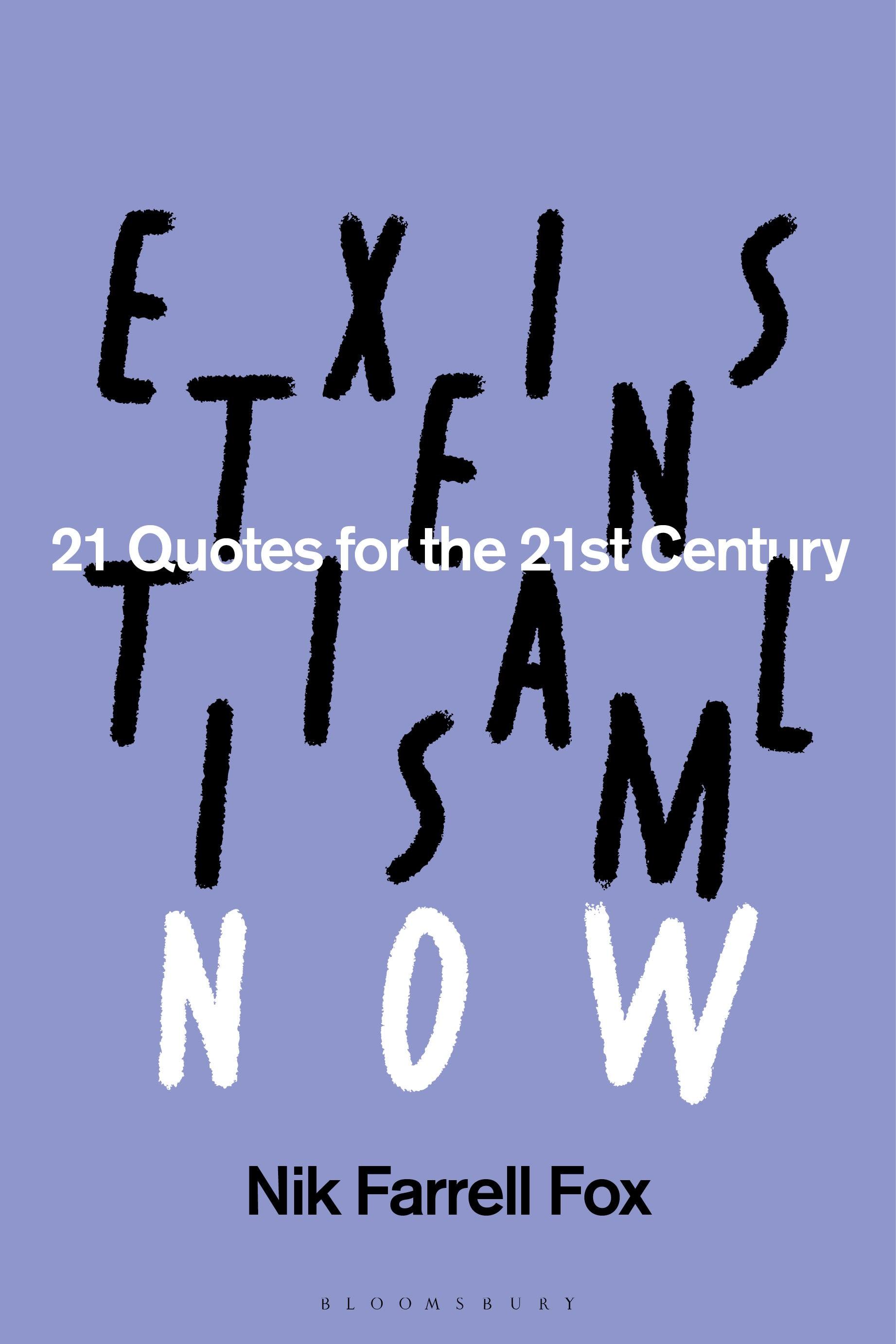
What does it mean to live freely, authentically, and responsibly in the twenty-first century? What use do we have for existentialism today? Is it just a tangle of irrational and individualist pessimism, or does it speak to our contemporary minds?
Stereotypically ascribed to the cliques of Bohemia, pretentious café dwellers and tyro philosophers, existentialism is probably the most misunderstood and caricatured of philosophical movements. Rather than offering a dry history of ideas or an angsty guide to intellectual despair however, Existentialism Now shows that existentialist understandings of concepts like freedom, embodiment, ambiguity, authenticity and responsibility speak urgently to the pressures and possibilities of contemporary modern life.
21 iconic quotations from Kierkegaard, Nietzsche, Beauvoir, Fanon, Sartre, Heidegger, Merleau-Ponty and others bring the electrifying force of existentialist thought to bear on our contemporary moment. Lines including: “One is not born, but rather becomes, woman”, “Hell is other people”, and “Remain true to the earth” offer pathmarks for navigating a world shaken by ecological crisis, political polarisation and technological acceleration, and are launch points for exploring gender, race, trauma, anxiety, technology, ecology, politics, violence, love, and the future of humanity. Ultimately, Nik Farrell Fox argues that we can overturn the misinterpretations that plague existentialism and find instead their renewed relevance to contemporary thought.
Stereotypically ascribed to the cliques of Bohemia, pretentious café dwellers and tyro philosophers, existentialism is probably the most misunderstood and caricatured of philosophical movements. Rather than offering a dry history of ideas or an angsty guide to intellectual despair however, Existentialism Now shows that existentialist understandings of concepts like freedom, embodiment, ambiguity, authenticity and responsibility speak urgently to the pressures and possibilities of contemporary modern life.
21 iconic quotations from Kierkegaard, Nietzsche, Beauvoir, Fanon, Sartre, Heidegger, Merleau-Ponty and others bring the electrifying force of existentialist thought to bear on our contemporary moment. Lines including: “One is not born, but rather becomes, woman”, “Hell is other people”, and “Remain true to the earth” offer pathmarks for navigating a world shaken by ecological crisis, political polarisation and technological acceleration, and are launch points for exploring gender, race, trauma, anxiety, technology, ecology, politics, violence, love, and the future of humanity. Ultimately, Nik Farrell Fox argues that we can overturn the misinterpretations that plague existentialism and find instead their renewed relevance to contemporary thought.
Paga facilmente con carta, Klarna, Apple Pay o Google Pay. Non sei soddisfatto? Hai sempre 14 giorni per il rimborso. Leggi di più nei nostri termini. Per qualsiasi domanda, scrivici a hello@memmo.org.
Memmo rende lo studio più facile, ovunque tu sia nel mondo. Qui trovi i tuoi libri di testo e strumenti di studio intelligenti, tutto in un unico posto: riassunti, quiz, podcast e flashcard. E poi c'è Ted, il tuo compagno di studio che risponde a ogni tua domanda. Oltre 50.000 studenti studiano già qui: è stato creato per aiutarti a imparare più velocemente e a stressarti meno.