
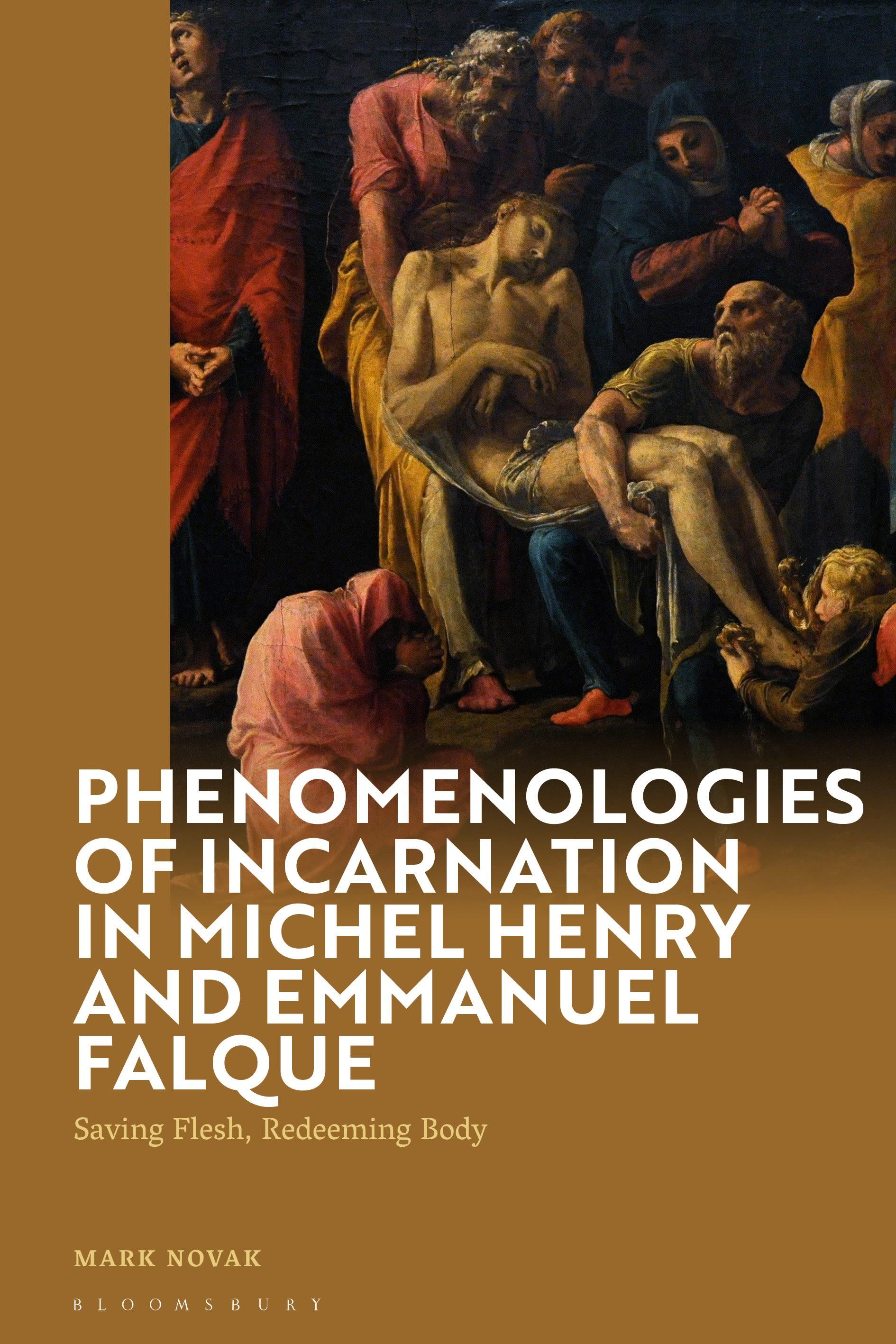
Bringing Michel Henry and Emmanuel Falque into dialogue, Mark Novak explores how they both articulate a phenomenology of the body and flesh in relation to incarnation.
As key proponents of the 'theological turn' in phenomenology, this volume illustrates how philosophical foundations inform Henry and Falque's theological views and uncovers the differences, and in some cases, surprising similarities between the two thinkers' positions on this central Christian tenet.
Beginning with a succinct overview of the origins of phenomenology and the shift towards embodiment, Novak surveys a number of different theories from Husserl's foundational distinction between flesh (Leib) and body (Körper) to Heidegger, Merleau-Ponty and Dominique Janicaud. With this, focus turns to Henry and Falque. Methodically examining each thinker's key texts on flesh and the body, Novak proposes that their views on incarnation are not as different as philosophers might think. Even despite Falque's claim that Henry's views on the incarnation neglect materiality by understanding the human being as flesh, Novak demonstrates how Falque's critical response to Henry's idea ironically mirrors it. By turning to material forces to better describe the body in his recent work, Falque recapitulates Henry's understanding of flesh.
Phenomenologies of Incarnation in Michel Henry and Emmanuel Falque provides a much-needed introduction to the phenomenology of embodiment and its important implications for philosophical theology.
As key proponents of the 'theological turn' in phenomenology, this volume illustrates how philosophical foundations inform Henry and Falque's theological views and uncovers the differences, and in some cases, surprising similarities between the two thinkers' positions on this central Christian tenet.
Beginning with a succinct overview of the origins of phenomenology and the shift towards embodiment, Novak surveys a number of different theories from Husserl's foundational distinction between flesh (Leib) and body (Körper) to Heidegger, Merleau-Ponty and Dominique Janicaud. With this, focus turns to Henry and Falque. Methodically examining each thinker's key texts on flesh and the body, Novak proposes that their views on incarnation are not as different as philosophers might think. Even despite Falque's claim that Henry's views on the incarnation neglect materiality by understanding the human being as flesh, Novak demonstrates how Falque's critical response to Henry's idea ironically mirrors it. By turning to material forces to better describe the body in his recent work, Falque recapitulates Henry's understanding of flesh.
Phenomenologies of Incarnation in Michel Henry and Emmanuel Falque provides a much-needed introduction to the phenomenology of embodiment and its important implications for philosophical theology.
Paga facilmente con carta, Klarna, Apple Pay o Google Pay. Non sei soddisfatto? Hai sempre 14 giorni per il rimborso. Leggi di più nei nostri termini. Per qualsiasi domanda, scrivici a hello@memmo.org.
Memmo rende lo studio più facile, ovunque tu sia nel mondo. Qui trovi i tuoi libri di testo e strumenti di studio intelligenti, tutto in un unico posto: riassunti, quiz, podcast e flashcard. E poi c'è Ted, il tuo compagno di studio che risponde a ogni tua domanda. Oltre 50.000 studenti studiano già qui: è stato creato per aiutarti a imparare più velocemente e a stressarti meno.