
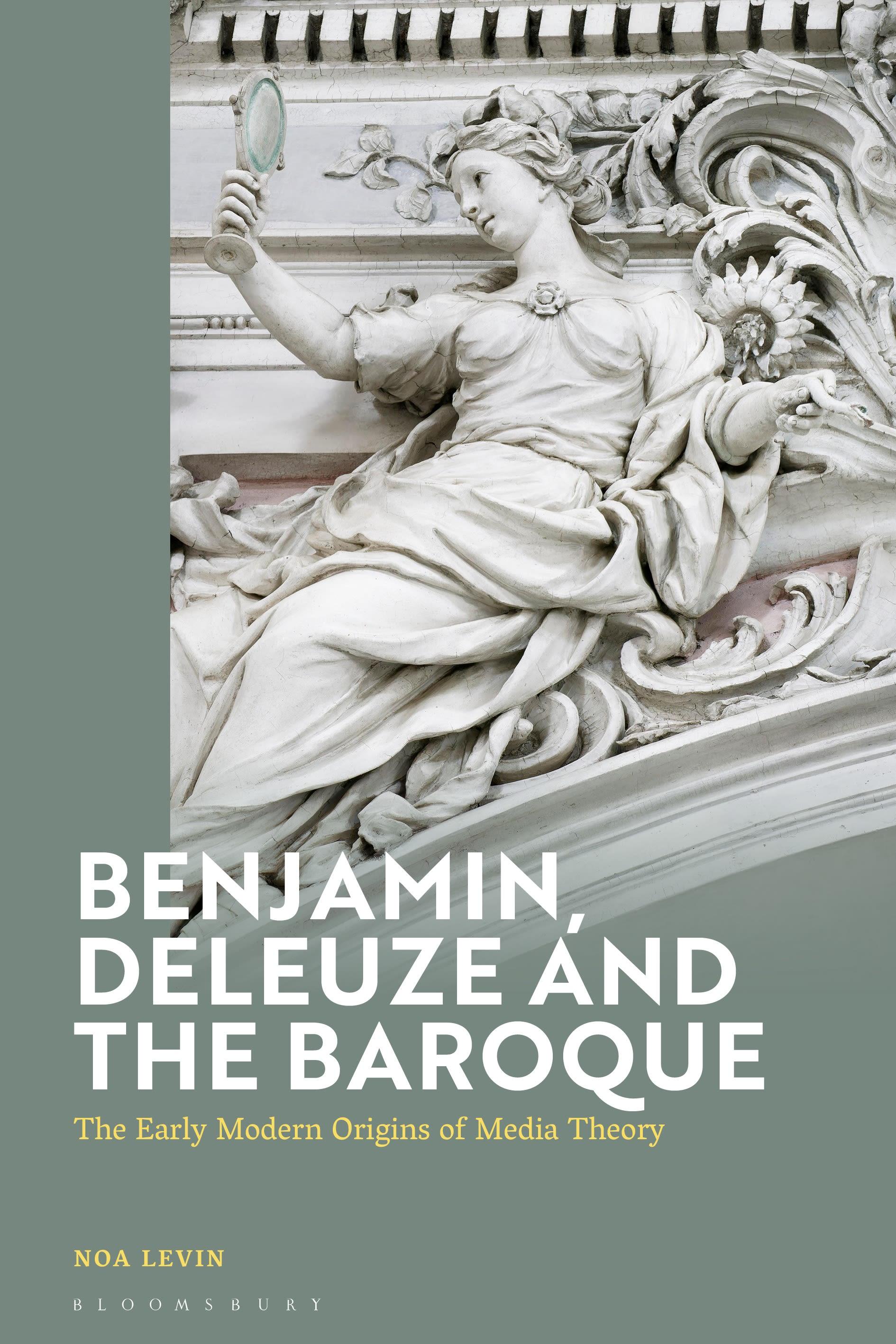
For Walter Benjamin and Gilles Deleuze, who both authored seminal theoretical works on early cinema and photography, the history of modern media begins much earlier, in Baroque culture and science. Benjamin, Deleuze and the Baroque argues that their media theories were informed by their respective readings of the philosophy and mathematics of G.W. Leibniz, and the Baroque can thus be seen as the locus of modern media.
By critically comparing Benjamin and Deleuze's interpretations of the Baroque, Levin demonstrates the extent to which their theories of visual culture are intertwined with critiques of Enlightenment historiography and politics. Using a hermeneutic comparative approach, this book argues that the juxtaposition of Benjamin's reception of Leibniz with Deleuze's highlights the extent to which both authors' theories of image and media were informed by Leibniz's concepts of expression and perspectivism, themselves inspired by ground-breaking evolutions in optics and perspective. Providing close readings of Deleuze's The Fold and Benjamin's Origin of the German Trauerspiel, which remain understudied in the English language, it explores how, in their dual roles of philosopher and cultural critic, the pair may illuminate our own age of multiple crises through the Baroque.
By critically comparing Benjamin and Deleuze's interpretations of the Baroque, Levin demonstrates the extent to which their theories of visual culture are intertwined with critiques of Enlightenment historiography and politics. Using a hermeneutic comparative approach, this book argues that the juxtaposition of Benjamin's reception of Leibniz with Deleuze's highlights the extent to which both authors' theories of image and media were informed by Leibniz's concepts of expression and perspectivism, themselves inspired by ground-breaking evolutions in optics and perspective. Providing close readings of Deleuze's The Fold and Benjamin's Origin of the German Trauerspiel, which remain understudied in the English language, it explores how, in their dual roles of philosopher and cultural critic, the pair may illuminate our own age of multiple crises through the Baroque.
Paga facilmente con carta, Klarna, Apple Pay o Google Pay. Non sei soddisfatto? Hai sempre 14 giorni per il rimborso. Leggi di più nei nostri termini. Per qualsiasi domanda, scrivici a hello@memmo.org.
Memmo rende lo studio più facile, ovunque tu sia nel mondo. Qui trovi i tuoi libri di testo e strumenti di studio intelligenti, tutto in un unico posto: riassunti, quiz, podcast e flashcard. E poi c'è Ted, il tuo compagno di studio che risponde a ogni tua domanda. Oltre 50.000 studenti studiano già qui: è stato creato per aiutarti a imparare più velocemente e a stressarti meno.