
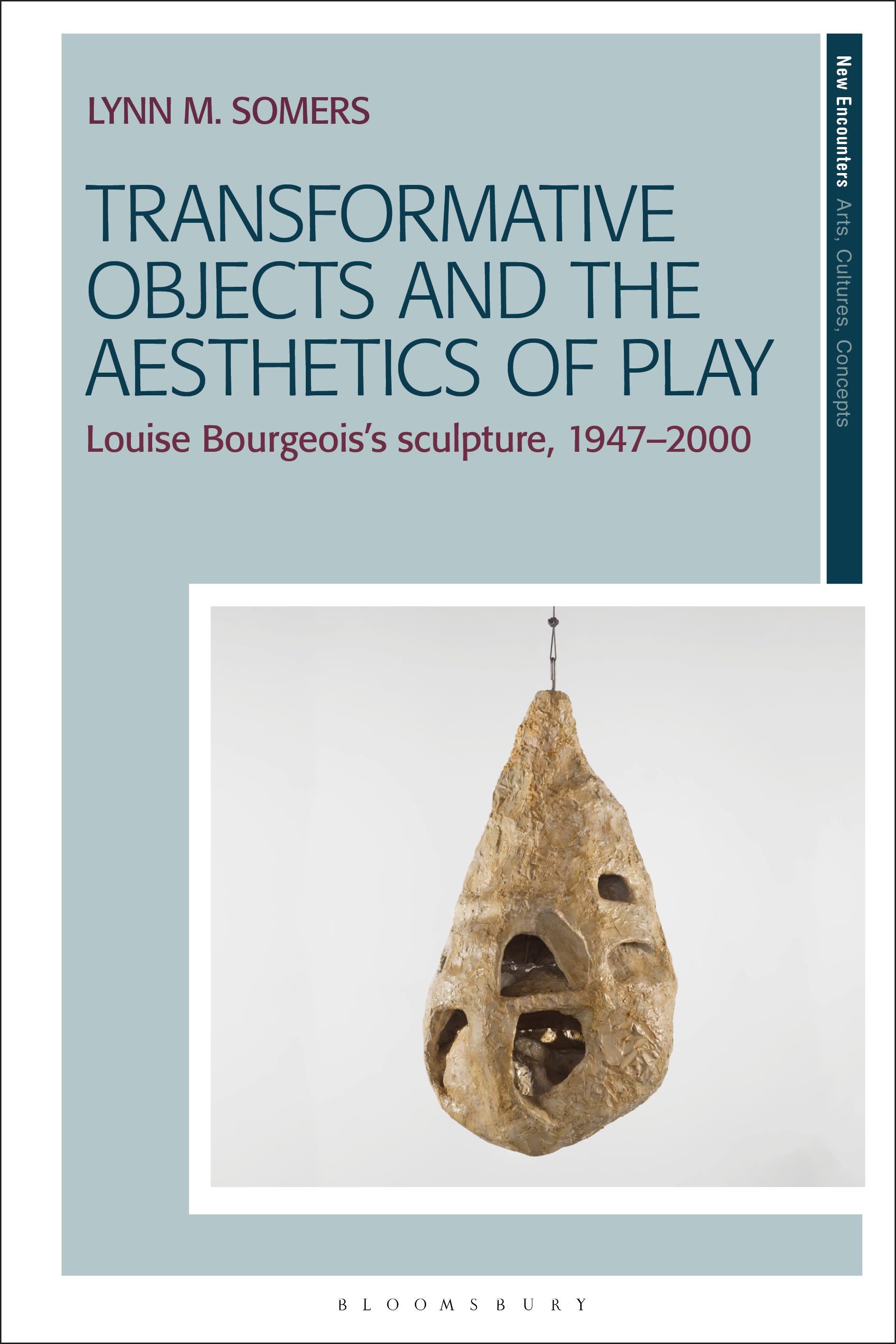
This book considers the sculpture of Louise Bourgeois (1911-2010) in light of psychoanalyst D. W. Winnicott's (1896-1971) radical ideas regarding transitional objects, potential space, and play, offering a model for exploring the complex and psychologically evocative work Bourgeois produced from 1947 to 2000.
Critical concepts from British object relational theories – destruction, reparation, integration, relationality and play – drawn from the writings of Winnicott, Melanie Klein, Marion Milner, and Christopher Bollas, among others, bear upon the decades-long study of psychoanalysis Bourgeois brought to her sculptural production that was symbolic, metaphorical, and most importantly, useful.
The book demonstrates how Bourgeois's transformative sculptural objects and environments are invested in object relations, both psychical and tangible, and explores Bourgeois's contention that the observer physically engage with the intricate sculptural objects and architectural spaces she produced. Each chapter focuses on a key body of work – Femme Maison, Personages, Lairs, Janus, and Cells – examining how these imaginative and playful objects are staged as embodied encounters in space and time to invoke the mutuality, reciprocity, and ambivalence of our object relationships.
Weaving a tapestry of aesthetic, cultural, and psychological encounters, Transformative Objects and the Aesthetics of Play addresses critical relationships among Bourgeois's work and that of other artists from Pieter Brueghel to Eva Hesse. It brings together practical, archival, and theoretical material, offering close examinations of historically situated objects and analyses of their complex affects and spatiality. Gathering critical perspectives from psychoanalysis, cultural analysis, feminist, queer, literary and affect studies, the book extends its specific art historical scope to investigate the crucial roles that art and cultural experience assume in everyday life.
Critical concepts from British object relational theories – destruction, reparation, integration, relationality and play – drawn from the writings of Winnicott, Melanie Klein, Marion Milner, and Christopher Bollas, among others, bear upon the decades-long study of psychoanalysis Bourgeois brought to her sculptural production that was symbolic, metaphorical, and most importantly, useful.
The book demonstrates how Bourgeois's transformative sculptural objects and environments are invested in object relations, both psychical and tangible, and explores Bourgeois's contention that the observer physically engage with the intricate sculptural objects and architectural spaces she produced. Each chapter focuses on a key body of work – Femme Maison, Personages, Lairs, Janus, and Cells – examining how these imaginative and playful objects are staged as embodied encounters in space and time to invoke the mutuality, reciprocity, and ambivalence of our object relationships.
Weaving a tapestry of aesthetic, cultural, and psychological encounters, Transformative Objects and the Aesthetics of Play addresses critical relationships among Bourgeois's work and that of other artists from Pieter Brueghel to Eva Hesse. It brings together practical, archival, and theoretical material, offering close examinations of historically situated objects and analyses of their complex affects and spatiality. Gathering critical perspectives from psychoanalysis, cultural analysis, feminist, queer, literary and affect studies, the book extends its specific art historical scope to investigate the crucial roles that art and cultural experience assume in everyday life.
Pagine: 328
Categoria: Konst, Design & Fotografi
e-ISBN: 9781350378889
Peso di spedizione: 1.2 kg
Spedito in: 1-2 giorni
Paga facilmente con carta, Klarna, Apple Pay o Google Pay. Non sei soddisfatto? Hai sempre 14 giorni per il rimborso. Leggi di più nei nostri termini. Per qualsiasi domanda, scrivici a hello@memmo.org.
Memmo rende lo studio più facile, ovunque tu sia nel mondo. Qui trovi i tuoi libri di testo e strumenti di studio intelligenti, tutto in un unico posto: riassunti, quiz, podcast e flashcard. E poi c'è Ted, il tuo compagno di studio che risponde a ogni tua domanda. Oltre 50.000 studenti studiano già qui: è stato creato per aiutarti a imparare più velocemente e a stressarti meno.