
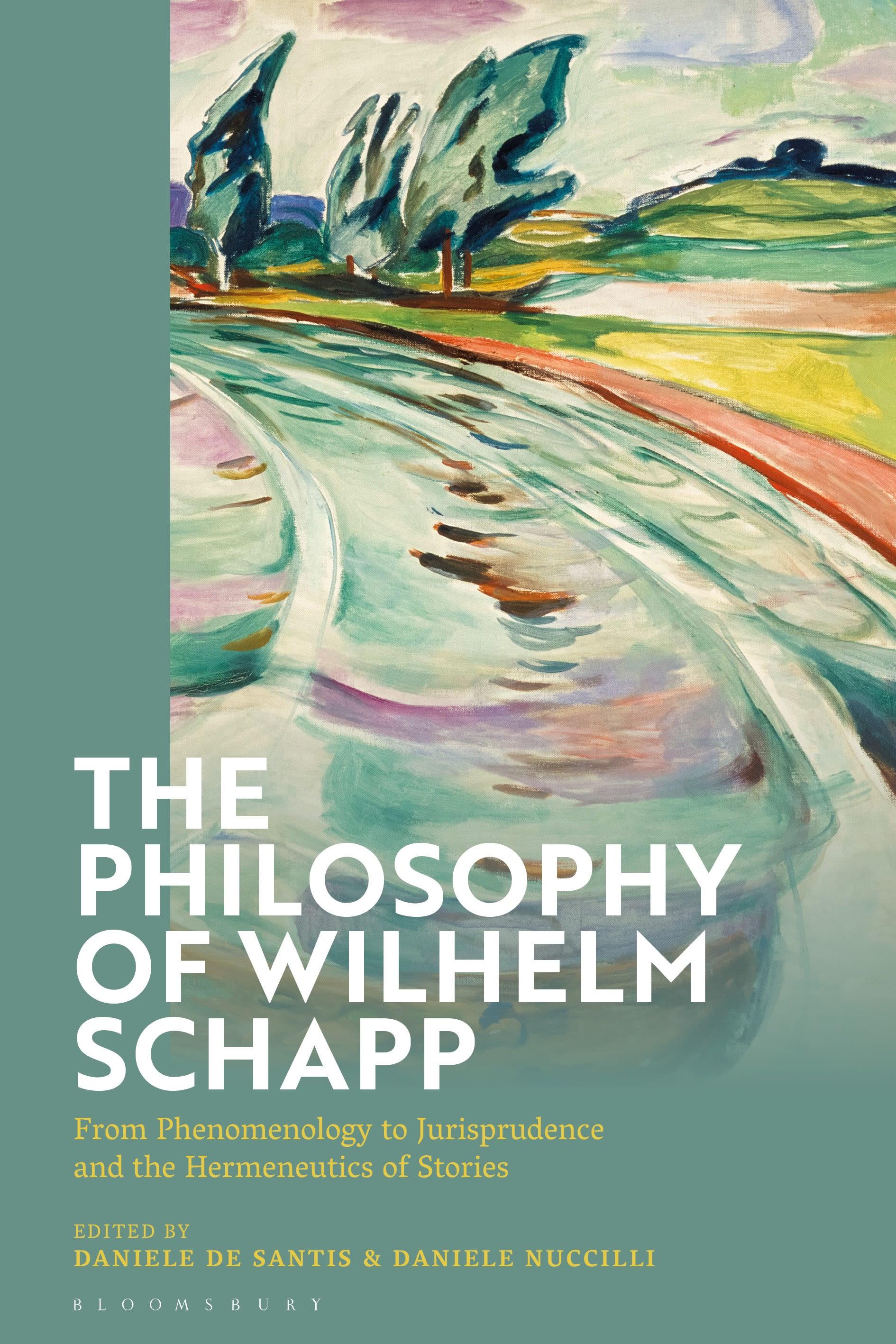
Despite studying with Heinrich Rickert in Freiburg, Wilhelm Dilthey in Berlin, and Edmund Husserl in Göttingen, Wilhelm Schapp (1884-1965) has, until now, been largely neglected in phenomenological scholarship. As the first English-language volume dedicated to Schapp's thought, this book seeks to correct this by investigating Schapp's pioneering philosophy, his relationship to his contemporaries, and what we can learn from his work today.
In three parts, leading international scholars introduce the key themes of Schapp's philosophy, from his early writings to his mature reflections. The first part explores his phenomenology of perception and the bodily dimension of our existence in the world. Focus then moves to Schapp's philosophy of law and his ideas on the problem of value-based experience, followed lastly by his hermeneutics of stories and the narrative essence of human beings. The volume closes with an autobiographical piece by Schapp himself. Translated here in English for the first time, Schapp retrospectively outlines his position in relation to Husserl and the phenomenological school more broadly.
Crossing the divide between continental and analytic philosophy, The Philosophy of Wilhelm Schapp not only provides a fresh insight into the early development of the phenomenological tradition, but also demonstrates the relevance of Schapp's thought to recent debates in areas from the philosophy of mind to the theory of contracts.
In three parts, leading international scholars introduce the key themes of Schapp's philosophy, from his early writings to his mature reflections. The first part explores his phenomenology of perception and the bodily dimension of our existence in the world. Focus then moves to Schapp's philosophy of law and his ideas on the problem of value-based experience, followed lastly by his hermeneutics of stories and the narrative essence of human beings. The volume closes with an autobiographical piece by Schapp himself. Translated here in English for the first time, Schapp retrospectively outlines his position in relation to Husserl and the phenomenological school more broadly.
Crossing the divide between continental and analytic philosophy, The Philosophy of Wilhelm Schapp not only provides a fresh insight into the early development of the phenomenological tradition, but also demonstrates the relevance of Schapp's thought to recent debates in areas from the philosophy of mind to the theory of contracts.
Paga facilmente con carta, Klarna, Apple Pay o Google Pay. Non sei soddisfatto? Hai sempre 14 giorni per il rimborso. Leggi di più nei nostri termini. Per qualsiasi domanda, scrivici a hello@memmo.org.
Memmo rende lo studio più facile, ovunque tu sia nel mondo. Qui trovi i tuoi libri di testo e strumenti di studio intelligenti, tutto in un unico posto: riassunti, quiz, podcast e flashcard. E poi c'è Ted, il tuo compagno di studio che risponde a ogni tua domanda. Oltre 50.000 studenti studiano già qui: è stato creato per aiutarti a imparare più velocemente e a stressarti meno.