
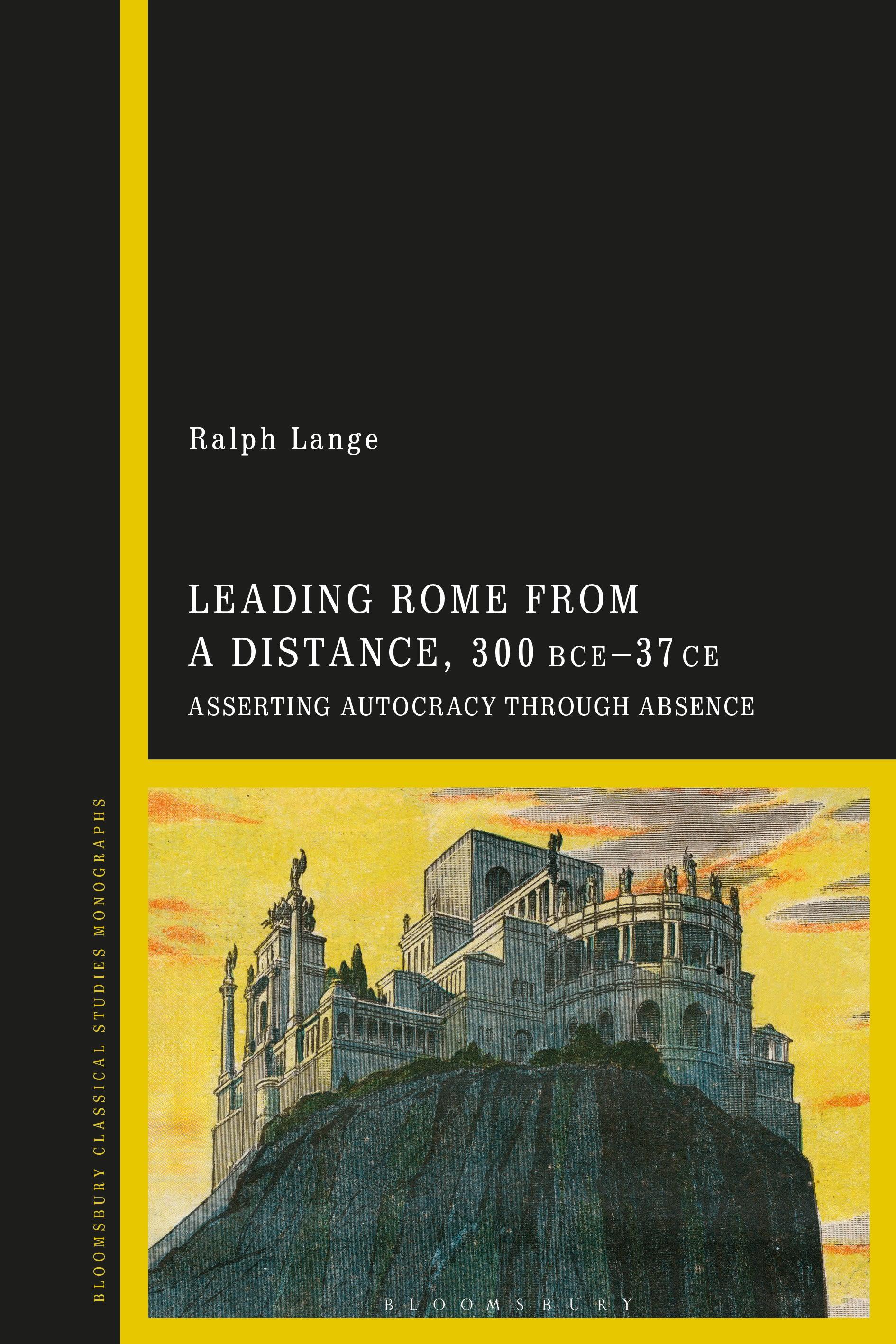
Roman political leaders used distance from Rome as a key political tool to assert pre-eminence.
Through the case studies of Caesar's hegemony, Augustus's autocracy, and Tiberius's reign, this book examines how these figures' experiences and manipulations of absence established a multipolar focus of political life centred less on the city of Rome, and more on the idea of a single leader.
The Roman expansion over Italy and the Mediterranean put the political system under considerable stress, and eventually resulted in a dispersal of leadership and a decentralization of power. Absent generals rivalled their peers in Rome for influence and threatened to surpass them from the provinces. Roman leaders, from Sulla to Tiberius, used absence as a mechanism to act autonomously, but it came at the cost of losing influence and control at the centre. In order to hold influence while being split off from the decision-making powers of the geographical nucleus that was Rome, communication channels to mitigate necessary absences were developed during this period, such as travel, intermediate meetings, letters (propaganda writings) and a complex network of mediators, ultimately forming the circle from which the imperial court emerged. Absent leadership, as it developed throughout the Late Republic, a hitherto neglected issue, eventually became a valuable asset in the institutionalising process of the autocracy of Caesar, Augustus, and Tiberius.
Through the case studies of Caesar's hegemony, Augustus's autocracy, and Tiberius's reign, this book examines how these figures' experiences and manipulations of absence established a multipolar focus of political life centred less on the city of Rome, and more on the idea of a single leader.
The Roman expansion over Italy and the Mediterranean put the political system under considerable stress, and eventually resulted in a dispersal of leadership and a decentralization of power. Absent generals rivalled their peers in Rome for influence and threatened to surpass them from the provinces. Roman leaders, from Sulla to Tiberius, used absence as a mechanism to act autonomously, but it came at the cost of losing influence and control at the centre. In order to hold influence while being split off from the decision-making powers of the geographical nucleus that was Rome, communication channels to mitigate necessary absences were developed during this period, such as travel, intermediate meetings, letters (propaganda writings) and a complex network of mediators, ultimately forming the circle from which the imperial court emerged. Absent leadership, as it developed throughout the Late Republic, a hitherto neglected issue, eventually became a valuable asset in the institutionalising process of the autocracy of Caesar, Augustus, and Tiberius.
Paga facilmente con carta, Klarna, Apple Pay o Google Pay. Non sei soddisfatto? Hai sempre 14 giorni per il rimborso. Leggi di più nei nostri termini. Per qualsiasi domanda, scrivici a hello@memmo.org.
Memmo rende lo studio più facile, ovunque tu sia nel mondo. Qui trovi i tuoi libri di testo e strumenti di studio intelligenti, tutto in un unico posto: riassunti, quiz, podcast e flashcard. E poi c'è Ted, il tuo compagno di studio che risponde a ogni tua domanda. Oltre 50.000 studenti studiano già qui: è stato creato per aiutarti a imparare più velocemente e a stressarti meno.