
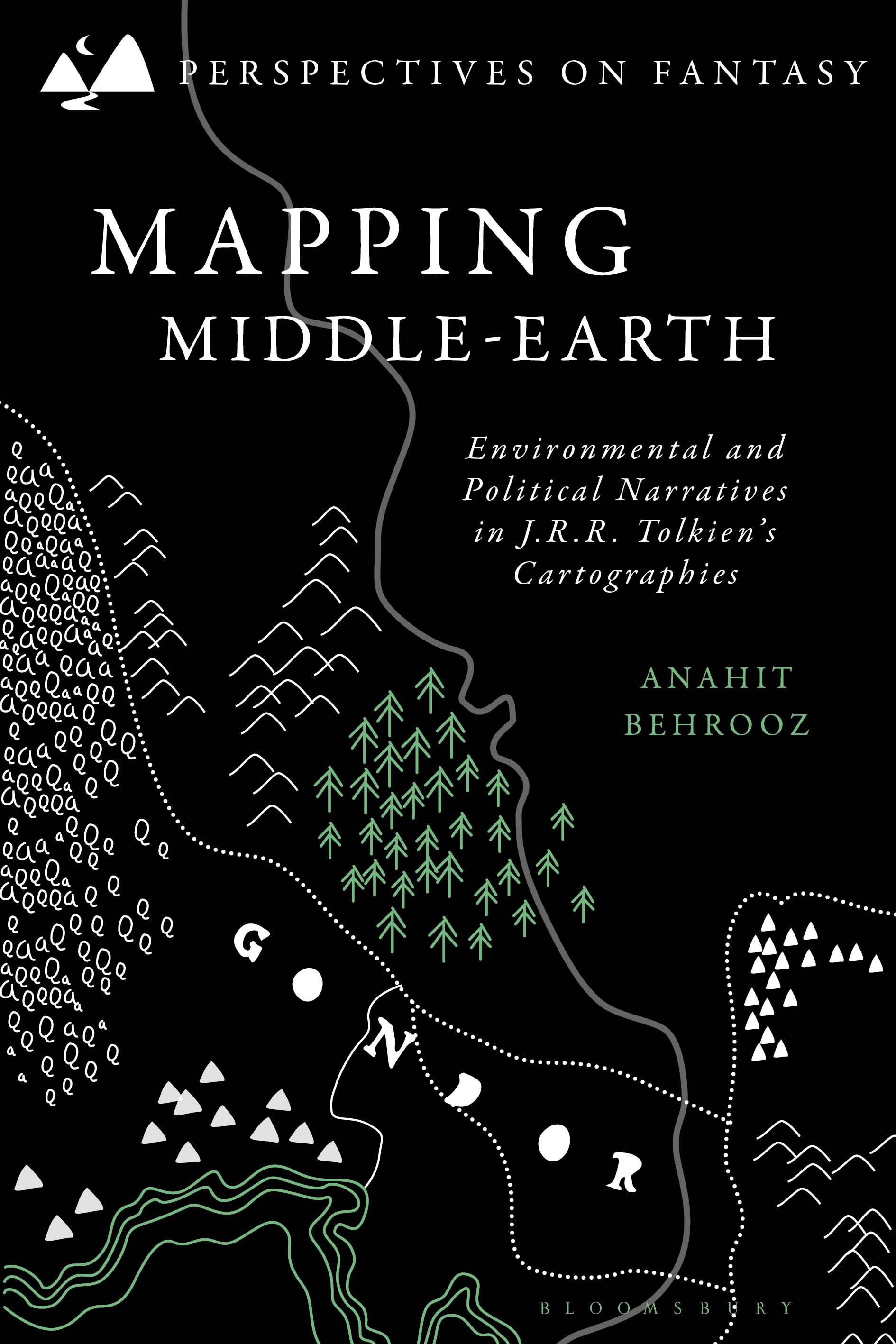
In this cutting-edge study of Tolkien's most critically neglected maps, Anahit Behrooz examines how cartography has traditionally been bound up in facilitating power.
Far more than just illustrations to aid understanding of the story, Tolkien's corpus of maps are crucial to understanding the broader narratives between humans and their political and environmental landscapes within his legendarium. Undertaking a diegetic literary analysis of the maps as examples of Middle-earth's own cultural output, Behrooz reveals a sub-created tradition of cartography that articulates specific power dynamics between mapmaker, map reader, and what is being mapped, as well as the human/nonhuman binary that represents human's control over the natural world.
Mapping Middle-earth surveys how Tolkien frames cartography as an inherently political act that embodies a desire for control of that which it maps. In turn, it analyses harmful contemporary engagements with land that intersect with, but also move beyond, cartography such as environmental damage; human-induced geological change; and the natural and bodily costs of political violence and imperialism. Using historical, eco-critical, and postcolonial frameworks, and such theorists as Michel Foucault, Donna Haraway and Edward Said, this book explores Tolkien's employment of particular generic tropes including medievalism, fantasy, and the interplay between image and text to highlight, and at times correct, his contemporary socio-political epoch and its destructive relationship with the wider world.
Far more than just illustrations to aid understanding of the story, Tolkien's corpus of maps are crucial to understanding the broader narratives between humans and their political and environmental landscapes within his legendarium. Undertaking a diegetic literary analysis of the maps as examples of Middle-earth's own cultural output, Behrooz reveals a sub-created tradition of cartography that articulates specific power dynamics between mapmaker, map reader, and what is being mapped, as well as the human/nonhuman binary that represents human's control over the natural world.
Mapping Middle-earth surveys how Tolkien frames cartography as an inherently political act that embodies a desire for control of that which it maps. In turn, it analyses harmful contemporary engagements with land that intersect with, but also move beyond, cartography such as environmental damage; human-induced geological change; and the natural and bodily costs of political violence and imperialism. Using historical, eco-critical, and postcolonial frameworks, and such theorists as Michel Foucault, Donna Haraway and Edward Said, this book explores Tolkien's employment of particular generic tropes including medievalism, fantasy, and the interplay between image and text to highlight, and at times correct, his contemporary socio-political epoch and its destructive relationship with the wider world.
Pagine: 200
Categoria: Litteraturvetenskap & Teori
e-ISBN: 9781350290785
Peso di spedizione: 1.2 kg
Spedito in: 1-2 giorni
Paga facilmente con carta, Klarna, Apple Pay o Google Pay. Non sei soddisfatto? Hai sempre 14 giorni per il rimborso. Leggi di più nei nostri termini. Per qualsiasi domanda, scrivici a hello@memmo.org.
Memmo rende lo studio più facile, ovunque tu sia nel mondo. Qui trovi i tuoi libri di testo e strumenti di studio intelligenti, tutto in un unico posto: riassunti, quiz, podcast e flashcard. E poi c'è Ted, il tuo compagno di studio che risponde a ogni tua domanda. Oltre 50.000 studenti studiano già qui: è stato creato per aiutarti a imparare più velocemente e a stressarti meno.